


More news on this day
An Envoy Air-operated American Airlines regional flight from Chattanooga to Chicago O’Hare diverted to Peoria International Airport this week as airspace congestion over northern Illinois and ongoing operational limits at O’Hare continued to disrupt regional domestic travel patterns at the height of the summer season.
Get the latest news straight to your inbox!
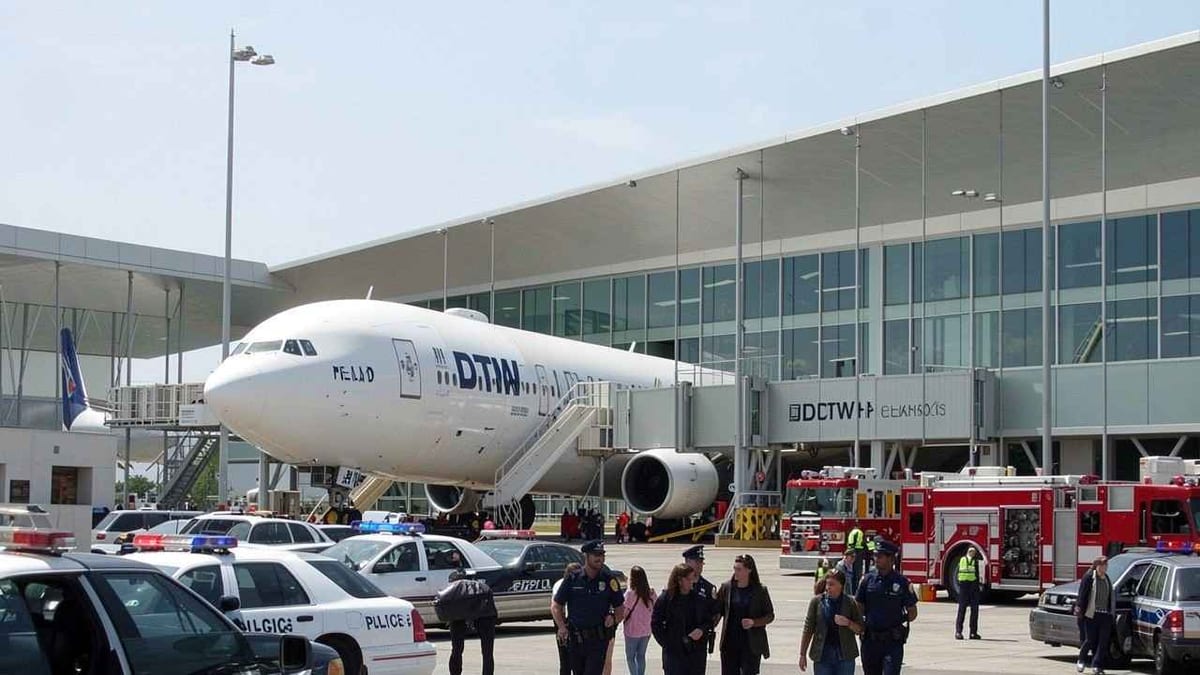
Regional American Eagle Flight Forced Off Course
The American Eagle service, operating as Envoy Air flight ENY3867 on the Chattanooga to Chicago route with an Embraer 170/175 aircraft type, was scheduled to arrive at Chicago O’Hare but instead diverted to Peoria International Airport. Publicly available flight-tracking information indicates the aircraft altered course as it approached congested airspace feeding into O’Hare, opting for Peoria as an alternate gateway within Illinois.
The diversion unfolded against a backdrop of elevated traffic levels and intermittent flow restrictions affecting arrivals into O’Hare. Real-time aviation dashboards in recent days have shown periodic arrival management programs and ground delays for Chicago, creating knock-on effects for shorter regional sectors. While diversions are not uncommon in peak summer, a Chattanooga to Chicago flight bypassing O’Hare for Peoria underscores how congestion can displace traffic to smaller airports in the same state.
Passengers on ENY3867 faced unscheduled time on the ground in Peoria while the carrier reviewed refueling, crew duty limits, and onward connections to Chicago and beyond. For many travelers booked through to other hubs or international destinations, the change translated into missed connections and rebooked itineraries on later flights, adding to the overall disruption associated with airspace saturation over Illinois.
The Embraer 170/175 family is widely used by Envoy Air and other American Eagle operators on regional routes into major hubs. Aircraft of this size are often deployed on high-frequency business and connection-heavy services into Chicago, meaning that a diversion of a single flight may represent only one visible example of a larger pattern of strain in the regional network.
O’Hare Capacity Limits and Summer Scheduling Pressure
The diversion took place just weeks into a new federal scheduling cap at Chicago O’Hare for the summer 2026 travel period. According to publicly available federal aviation planning material, O’Hare entered the season with peak-day schedules exceeding 3,000 daily operations, prompting regulators to impose limits on arrivals and departures in an effort to curb chronic delays. Airlines serving the airport have been trimming frequencies or upgauging aircraft sizes to fit within the new cap while maintaining capacity.
Industry schedule data for June and July 2026 shows major carriers cutting a share of domestic operations out of O’Hare or redistributing flights to nearby markets. Some networks now show reduced frequencies between Chicago and regional Illinois airports, including Peoria, compared with earlier planning cycles. At the same time, separate reporting indicates that thunderstorms and severe weather systems have added further stress on certain days, leading to ground stops and holding patterns for inbound flights.
For regional operators such as Envoy Air, the combination of structural scheduling caps and episodic weather or airspace flow constraints can leave limited room to absorb irregular operations. When metering programs slow arrivals into O’Hare or when arrival rates are reduced by storms, shorter regional flights are often among the first affected, as they are easier to delay or divert relative to longer-haul or international services.
A diversion to Peoria, rather than to a larger alternate in a neighboring state, also reflects the dense cluster of certified commercial airports within Illinois that can serve as pressure valves for O’Hare’s traffic. State transportation planning documents identify Peoria International among the facilities that help relieve pressure on the Chicago system during periods of high demand.
Peoria’s Role as an Alternate Gateway
Peoria International Airport, located roughly 160 miles southwest of Chicago, has long functioned as a regional commercial hub and as part of Illinois’s broader aviation network. Airport and state statistics show that Chicago O’Hare is Peoria’s single largest destination by passenger volume, with American and United linking the two airports through multiple daily frequencies in normal operating conditions.
That existing connectivity and infrastructure make Peoria a practical diversion point for aircraft originally bound for Chicago, particularly when crews and maintenance resources are already familiar with local procedures. The airport shares its airfield with a major Air National Guard facility and is designed to handle a mix of commercial, cargo, and military traffic, with runway and ramp capacity adequate for regional jets and narrowbody mainline aircraft.
From a passenger perspective, diversion to Peoria can offer a variety of recovery options. Travelers may be rebooked onto later flights from Peoria to Chicago once arrival rates at O’Hare improve, or they may be transferred to ground transportation for the remainder of the journey to the Chicago metropolitan area. During prolonged congestion, smaller airports like Peoria can also act as staging points for repositioning aircraft and crews to restore schedules once conditions stabilize.
The incident involving ENY3867 is one of several recent examples in which traffic bound for O’Hare has been temporarily rerouted through other Illinois airports. While each event affects a relatively small number of passengers, together they highlight how secondary airports play a strategic role in maintaining resiliency within the state’s aviation system.
Ripple Effects for Regional Travelers
For travelers across the Midwest, the diversion of a single regional flight can have outsized consequences when it occurs during a period of high connectivity. Short-haul routes such as Chattanooga to Chicago are often timed to feed morning or late-afternoon banks of departures from O’Hare to destinations across the United States and overseas. When a flight like ENY3867 is forced to divert, travelers with tight layovers may face missed long-haul departures, overnight stays, or rerouting through other hubs.
Recent summer travel seasons have already been characterized by heightened sensitivity to delays and cancellations, as airlines operate close to capacity with constrained fleets and staffing. Publicly available performance metrics for O’Hare show a modest share of flights canceled on a typical day, but even a small percentage can translate into thousands of disrupted passengers when concentrated around a busy hub. Regional carriers, which often fly multiple short segments per aircraft per day, may see their entire daily rotations affected when the first leg diverts or encounters extended holding.
In response, consumer advocates encourage passengers traveling through busy hubs during peak months to build in longer connection times and to monitor operational updates from carriers closely. They also note the importance of understanding airline policies on rebooking, meal vouchers, and overnight accommodations in the event of a diversion or missed connection. While the specific handling of ENY3867’s passengers depends on individual itineraries and ticket rules, the event fits into a broader pattern of summer disruptions that travelers are increasingly trying to anticipate.
The diversion has also renewed attention among frequent flyers to the role of alternate airports in their travel planning. Some travelers in Illinois and neighboring states have been experimenting with itineraries that begin or end at smaller airports to avoid the busiest peaks at O’Hare, even if that means an additional drive by car or bus. Events like the ENY3867 diversion may reinforce that strategy for those seeking more predictable journeys during high-demand travel windows.
Implications for Summer 2026 Air Travel in Illinois
The ENY3867 diversion from Chicago to Peoria illustrates how a single operational decision can offer a window into broader dynamics shaping air travel in Illinois this summer. With O’Hare subject to federal scheduling caps, airlines are continually balancing the need to maintain connectivity with the practical limits of the airfield, airspace, and air traffic control resources that support one of the nation’s busiest hubs.
Illinois aviation planning documents describe a network in which O’Hare accounts for a large share of the state’s passenger movements and aircraft operations, while secondary airports such as Peoria, the Quad Cities, and Rockford serve as important complements. When congestion or weather curtails O’Hare capacity, those secondary airports become more visible, whether as diversion fields or as departure points for travelers seeking alternatives to the main hub.
As the peak of the 2026 summer travel season unfolds, analysts expect continued variability in day-to-day performance at O’Hare as airlines and regulators adjust to the new operating environment. Diversions similar to Envoy Air flight ENY3867’s unexpected stop in Peoria are likely to remain part of the toolkit for managing congestion, even as carriers refine schedules and invest in operational resilience. For passengers, the episode serves as a reminder that in a tightly coupled air network, disruptions in one part of the system can quickly reshape journeys hundreds of miles away.