


More news on this day
An Envoy Air-operated American Airlines flight traveling from Knoxville to Chicago diverted to Fort Wayne International Airport this week, as air traffic congestion and weather-related constraints in the busy Midwest airspace triggered a second regional diversion affecting carriers serving Chicago O'Hare.
Get the latest news straight to your inbox!
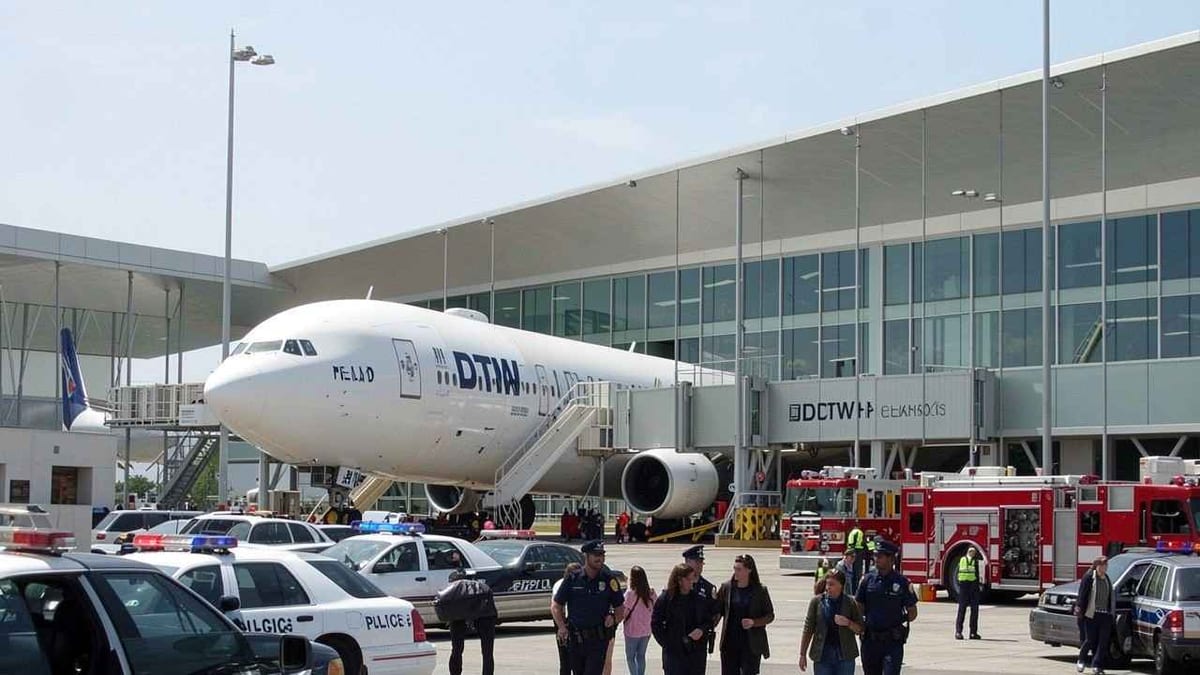
Regional Flight ENY3603 Rerouted Midjourney
Public flight tracking data shows American Airlines flight ENY3603, operated by regional affiliate Envoy Air with Embraer 170 and 175 equipment on the Knoxville to Chicago route, diverted from its planned arrival at Chicago O'Hare International Airport to Fort Wayne International Airport. The flight had been scheduled to operate into O'Hare, one of Envoy's key hubs, when it altered course and landed at Fort Wayne instead.
The diversion placed the aircraft at a smaller regional airport roughly 150 miles southeast of Chicago, a facility that often serves as an alternate when O'Hare operations slow or become capacity constrained. Available information indicates that the aircraft landed safely at Fort Wayne and that the diversion was handled as a routine operational adjustment rather than an in-flight emergency.
Envoy Air, a wholly owned regional subsidiary of American Airlines Group, operates a large fleet of Embraer 170 and 175 jets on short haul and medium haul routes into O'Hare and other major hubs. Recent company materials highlight Chicago as one of Envoy's core bases, underscoring the importance of reliable regional connectivity into the airport for both the airline and its passengers.
Midwest Weather and Airspace Constraints Build Pressure on O'Hare
The diversion unfolded against a backdrop of recurring air traffic management challenges across the Midwest. Recent operational plans and advisories from the Federal Aviation Administration's Air Traffic Control System Command Center describe continuing weather impacts and flow constraints affecting Chicago controlled airspace, with periods where arrival and departure routes are limited or rerouted to manage demand.
In the days leading up to the diversion, thunderstorms and convective weather patterns pushed through the region, prompting ground stops and extended delays for flights bound for O'Hare. Coverage from regional outlets has documented multiple instances of lengthy arrival holds and average delays reaching several hours for inbound traffic, particularly during evening peak periods when demand is highest.
Independent air travel disruption trackers have also noted that O'Hare has recently experienced elevated levels of delays and cancellations across both mainline and regional carriers, including Envoy Air and other American Airlines affiliates. These disruptions have placed additional strain on smaller diversion airports around the Midwest, which can see sudden spikes in arrivals when Chicago airspace becomes saturated.
Fort Wayne's Role as a Diversion and Relief Airport
Fort Wayne International Airport, while significantly smaller than Chicago O'Hare, plays a recurring role in regional traffic management during Midwest weather events and congestion episodes. Public flight status databases show regular scheduled service between Fort Wayne and O'Hare on a mix of regional operators, indicating that the airport is already integrated into Chicago focused route networks.
When O'Hare experiences volume restrictions, Fort Wayne can serve as a practical alternate with available runway capacity, ground handling capability for regional jets, and proximity that allows carriers to reposition aircraft and passengers once constraints in Chicago ease. Diversions to Fort Wayne may enable airlines to avoid extensive airborne holding or fuel intensive reroutes while keeping aircraft within a manageable distance of their intended hub.
For travelers, a diversion of this kind can result in missed connections and extended journey times, but it typically provides a controlled environment for managing operational delays. Passengers may be rebooked from the diversion airport or transported by ground or subsequent flights once conditions permit a return to normal schedules into O'Hare.
Second Regional Diversion Highlights Strain on Feeder Networks
The Envoy operated ENY3603 diversion is part of a broader pattern that has recently included another regional reroute tied to congestion and weather in the Chicago centered airspace. Publicly available reports point to at least one additional regional flight being diverted away from its planned Chicago arrival, reinforcing how quickly pressure on a major hub can cascade across smaller feeder routes.
Regional carriers such as Envoy Air function as critical connectors feeding passengers from smaller cities like Knoxville into large hub airports. When hubs face capacity limits, regional legs are often among the first to see diversions, cancellations, or extended holding, since their relatively short stage lengths leave less room for delay absorption and fuel contingency compared with long haul operations.
Travel industry analysts note that these knock on effects can ripple across multiple states as aircraft and crews fall out of position, leading to residual disruptions in subsequent rotations. Even a single evening of constrained arrivals into O'Hare can create follow on scheduling challenges for regional networks the next day, particularly for operators that concentrate a high percentage of flying in the Midwest.
What the Incident Signals for Summer Travel Through Chicago
The diversion of ENY3603 underscores the sensitivity of Midwest operations to summer weather and evolving airspace management strategies. With demand for air travel rising into the peak season, hub airports like O'Hare are expected to see continued high traffic volumes that test runway throughput and en route capacity.
Recent government consumer reports on air travel performance show that medium sized markets such as Knoxville typically post moderate on time statistics, yet their reliability is closely tied to the performance of the hubs they feed. As O'Hare contends with recurring convective weather and air traffic flow programs, travelers connecting through Chicago on regional affiliates may encounter more frequent delays, diversions, or schedule adjustments.
For passengers booked on Envoy operated and other regional flights into O'Hare, current guidance from airlines and travel advisers emphasizes monitoring flight status closely on the day of departure, allowing extra connection time when possible, and remaining prepared for potential rerouting to alternate airports such as Fort Wayne during periods of heavy congestion or storms over the Midwest.