


More news on this day
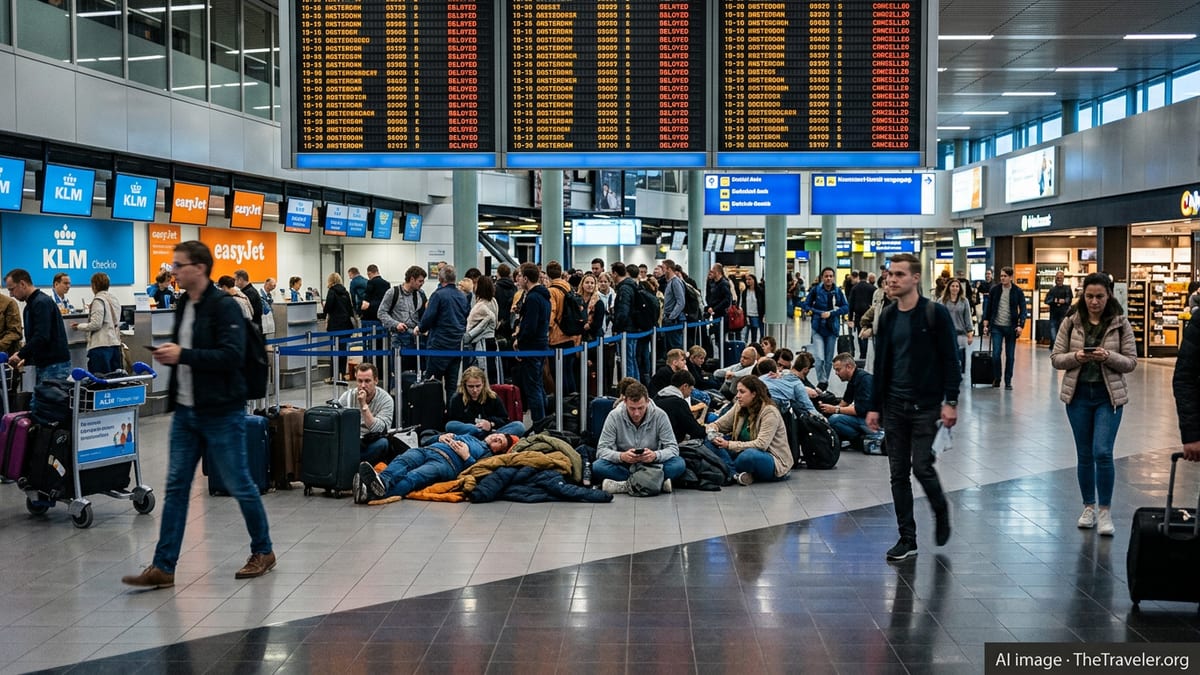
Hundreds of travelers have been left stranded across Europe as an intense heatwave and airspace bottlenecks trigger 3,410 flight delays and 140 cancellations in a single day, disrupting operations for Lufthansa, Finnair, Ryanair and other carriers at key hubs including Barcelona and Amsterdam.
Get the latest news straight to your inbox!
Heatwave and Airspace Bottlenecks Hit Key European Hubs
Publicly available disruption tracking and aviation data indicate that Western and Central Europe have entered one of the most difficult travel periods of the summer, with a heat dome parked over Spain, France and neighboring countries coinciding with capacity constraints in already busy airspace. Reports describe temperatures in parts of Spain and France above 40 degrees Celsius, prompting red heat alerts and operational restrictions that have rippled through airport schedules.
According to published coverage on the current heatwave, the combination of extreme temperatures and high seasonal demand has led to widespread disruption across major hubs, including Amsterdam Schiphol and Barcelona El Prat. In a recent 24 hour window, more than 3,100 flights were delayed or canceled across Europe, and the latest figures suggest that disruption has now climbed to at least 3,410 delayed and 140 canceled services as the weather pattern lingers.
Network overviews from Eurocontrol show that France and Spain are recurring hot spots for air traffic flow management delays, reflecting both capacity limits and staffing challenges in air traffic control centers serving dense holiday traffic. With additional pressure from the heatwave, these structural bottlenecks are translating into longer holding patterns, ground delays and last minute schedule changes that are stranding travelers far from their intended destinations.
In Austria and other Central European states, high temperatures and storm-related rerouting are adding to the strain. Flights crossing through affected airspace face restrictions on routing and altitude, which can compress available capacity and amplify knock-on delays for carriers across the continent.
Spain, France, Austria and the Netherlands Among the Worst Affected
Spain is among the hardest hit, with Barcelona, Madrid and other major airports experiencing repeated waves of delays. One recent tally cited in travel industry reporting pointed to hundreds of delayed departures and arrivals within Spain alone, as aircraft wait for departure slots or are forced to reroute around congested or weather-affected sectors of airspace.
France is also under severe pressure. Eurocontrol flash briefings highlight French airspace as a major source of en route delay minutes, especially in area control centers handling flows between Spain, the United Kingdom, Germany and Italy. When combined with heat-related limitations on airport operations, this has significantly reduced punctuality for flights touching Paris, Nice and regional French gateways.
In the Netherlands, Amsterdam Schiphol has again emerged as a critical node in the disruption. Earlier in June, industry reporting noted dozens of cancellations and many more delays centered on Amsterdam as airlines struggled with weather, staffing and broader network issues. The latest wave of disruption has extended that pattern, with delayed inbound aircraft leading to rolling knock-on delays for outbound services and complex rebooking challenges for connecting passengers.
Austria and neighboring Central European countries are seeing growing secondary impacts. As flights are rerouted to avoid congested or heat-affected corridors over Spain and France, traffic is being funneled through alternative paths over Central Europe. This can create sudden peaks in demand at Austrian and nearby air traffic control centers, adding minutes of delay per flight and pushing some services beyond scheduled crew duty limits.
Lufthansa, Finnair, Ryanair and Others Face Cascading Operational Strain
The disruption is being felt across a broad range of carriers, from full service network airlines to low cost operators. Data from recent weeks show that Lufthansa, Finnair, Ryanair and other major European brands have all recorded significant numbers of delayed and canceled departures as the heatwave and airspace constraints take hold.
For hub-and-spoke carriers such as Lufthansa and Finnair, delays on a single rotation can quickly cascade through multiple onward connections. Publicly available passenger accounts and airline messaging in recent days describe situations where an initial delay causes crews to approach duty time limits, forcing airlines to cancel services outright when replacement staff or aircraft are not immediately available.
Low cost carriers including Ryanair, which depend on tight aircraft turnaround times, are also vulnerable when congestion builds at airports like Barcelona and Amsterdam. If an aircraft arrives late from one sector due to weather or air traffic restrictions, the knock-on delay can quickly exceed EU passenger rights thresholds on the next leg, prompting complex decisions about compensation, rebooking and selective cancellations.
Beyond these headline carriers, regionals and leisure airlines that connect secondary European cities with beach and city-break destinations are reporting mounting disruption. With aircraft heavily committed to peak season schedules, there is little spare capacity to absorb delays, leaving many travelers facing overnight stays or lengthy overland detours.
Tourism and Passenger Experience Under Mounting Pressure
The timing of the disruption is particularly sensitive for Europe’s tourism industry. Late June is the start of the high summer travel period for many markets, with families, tour groups and long haul visitors converging on Mediterranean destinations. When flights into hubs such as Barcelona and Amsterdam are delayed or canceled in large numbers, it affects not just city arrivals but also onward domestic and regional connections.
Travel industry analysis notes that Spain’s tourism sector is especially exposed, given the heavy reliance on air access for coastal and island resorts. Hotels, cruise operators and local transport providers depend on predictable arrival flows, and sudden spikes in late arrivals or no shows can disrupt staffing and logistics well beyond the airport perimeter.
For passengers, the immediate impact has been long queues at check in and transfer desks, crowded terminal waiting areas and difficulties securing timely information on rebooking options. Some travelers have reported missing cruises, package tour departures or important events after initial delays turned into overnight cancellations when aircraft and crew were no longer in position.
Consumer advocates are reminding passengers that, under European passenger rights rules, airlines may be obliged to provide care, assistance and, in some cases, financial compensation when flights are significantly delayed or canceled for reasons within the carrier’s control. However, where airlines classify disruptions as the result of extreme weather or extraordinary circumstances, compensation may not apply, adding to frustrations for affected travelers.
Outlook for the Coming Days and Advice for Travelers
Meteorological forecasts indicate that the current heatwave affecting Spain, France and other Western European countries is likely to ease partially after June 26, though high temperatures may persist in some regions. Aviation analysts caution that even as temperatures moderate, schedules are likely to remain fragile, with aircraft and crews still out of their normal rotations and airports working through backlogs.
Network data from Eurocontrol show that, in previous summers, periods of intense weather, industrial action or technical problems have often produced lingering effects for several days, particularly when they interact with peak holiday traffic. With demand for summer 2026 travel running at or above pre pandemic levels, there is little slack in the system to absorb shocks.
Travelers already booked to fly in or through Europe in the coming days are being advised by airlines and travel agencies, via public updates, to monitor flight status closely, allow additional time at airports and consider flexible routing where possible. In some cases, carriers have encouraged customers to rebook to less busy days or times without additional fees in order to reduce pressure on the most congested travel windows.
Industry observers suggest that this latest episode of disruption underscores the vulnerability of European aviation to combined stresses from climate related weather extremes and structural capacity limits in key airspace corridors. For now, passengers stranded in places like Barcelona and Amsterdam are focused on finding a seat on the next available flight, while operators and regulators face renewed questions about how to build more resilience into Europe’s crowded skies.