


More news on this day
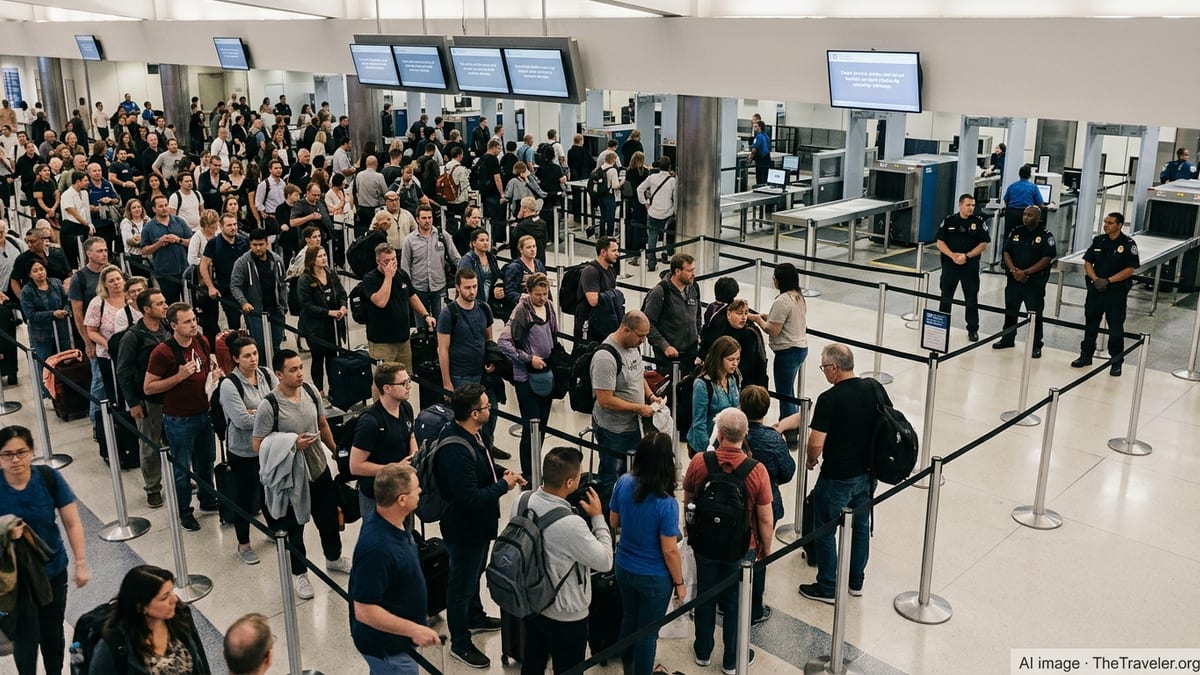
An equipment-related telecommunications failure tied to the Philadelphia-area air traffic control system disrupted operations at Philadelphia International Airport on Monday, Sept. 21, 2026, setting off widespread delays and cancellations that rippled across major Northeast airports and continued even after flights began moving again.
Get the latest news straight to your inbox!
What happened at PHL and why it spread beyond Philadelphia
Published coverage indicates the disruption originated when a primary communications circuit serving the Philadelphia Terminal Radar Approach Control (TRACON) failed, and the system’s switch to a backup path exposed a second problem: a severed fiber optic line. With key communications degraded, the Federal Aviation Administration (FAA) issued traffic management measures that affected Philadelphia’s arrival flow and, by extension, schedules throughout the region.
The outage was not isolated to one airport. Reports indicate the same Philadelphia-area facility supports air traffic management for multiple busy Northeast corridors, which helps explain why ground stops and delays were experienced at airports including Newark Liberty International, LaGuardia, and John F. Kennedy International, alongside Philadelphia.
Although airlines and airports resumed operations later in the day, air traffic disruptions of this type tend to create a backlog: aircraft and crews end up out of position, inbound flights arrive late, and gates fill, all of which can extend delays well past the end of the initial technical event.
FAA ground stop and the scale of delays and cancellations
During the disruption, the FAA implemented ground stops and ground delay programs for Philadelphia and other Northeast airports, temporarily limiting or halting arrivals and restricting departures to manage traffic safely while telecommunications were restored.
At Philadelphia International Airport, publicly available flight-tracking data and local reporting indicated several hundred delayed flights and roughly a couple hundred cancellations by late Monday, with average delays measured in hours at points during the afternoon. Even after the most restrictive measures were lifted, delays continued into the evening as airlines worked through disrupted aircraft rotations and crew schedules.
Across the broader Northeast network, the day’s impact was even larger. National reporting described extensive cancellation totals at Newark and significant knock-on effects throughout the New York City metro area’s airports, a sign of how tightly linked the region’s airspace and airline schedules are, particularly on high-frequency routes.
What may have caused the outage: circuit failure and a cut fiber line
Coverage from multiple outlets described a two-part breakdown: an aging or failing primary circuit and a backup fiber connection that was unavailable because it had been cut. This meant redundancy did not work as intended at the moment it was needed most, forcing air traffic managers to slow or pause flights while communications stability was restored.
Separate reporting attributed the fiber damage to construction activity in New Jersey near rail infrastructure, with telecommunications providers and transportation-related entities referenced in published accounts. While the precise chain of responsibility has been described differently across outlets, the consistent takeaway is that an external fiber cut compounded an internal equipment failure, producing an outsized operational hit.
The event also drew renewed attention to the resilience of air traffic control telecommunications, particularly for high-density Northeast airspace where even short outages can cascade into daylong schedule disruptions.
What travelers flying through Philadelphia should do next
For travelers flying to, from, or connecting through Philadelphia International Airport in the next day or two, the most useful step is to verify a specific flight’s status before leaving for the airport, since rolling delays can cause late gate changes, aircraft swaps, and revised departure times. The FAA’s airport status pages and airline apps can show whether a flight is operating, delayed, or canceled.
Passengers dealing with cancellations may want to compare same-day alternatives through nearby airports in the region, if feasible. In the Northeast, that can include Baltimore-Washington, Washington Reagan, New York-area airports, or other mid-Atlantic options, though those airports can also experience residual congestion after a major airspace disruption.
Travelers already at the airport typically get the clearest guidance by monitoring their airline’s rebooking options in-app and checking updated boarding times. During systemwide irregular operations, seats on later flights can fill quickly, and rebooking queues can stretch, making digital self-service tools especially important.
Why this matters for the Northeast travel corridor
Philadelphia is a key airport for domestic connections and serves as a major base for American Airlines, so large-scale disruption there quickly affects connecting itineraries nationwide. When inbound aircraft arrive late or are canceled, downstream flights can be delayed even in cities far from the original outage.
The Northeast is also one of the most air-traffic-constrained regions in the country, with tightly scheduled peak-hour banks and limited flexibility when communications or weather issues arise. A telecom outage that triggers ground stops can rapidly spill into neighboring airspace sectors and airports, amplifying passenger impacts.
With operations resuming, the immediate crisis may pass quickly, but Monday’s outage underscores how a single point of failure in communications infrastructure can ripple across an entire region’s air travel, particularly during busy weekday schedules.