

More news on this day
Etihad Airways has emerged from the last year as one of the industry’s standout performers, posting its strongest profits on record and accelerating a growth strategy that positions the Abu Dhabi carrier for even larger milestones in 2026.
Get the latest news straight to your inbox!
Record-breaking profits cap a rapid financial turnaround
Publicly available financial disclosures show that Etihad Airways has moved decisively into a new phase of profitability after years of restructuring. For the 2024 financial year, the airline reported a profit after tax of about 1.7 billion dirhams, or roughly 476 million dollars, supported by solid passenger and cargo revenues and a sharply higher level of flying activity.
That momentum has continued. Company updates for 2025 indicate that Etihad delivered a net profit of approximately 2.6 billion dirhams, the highest in its history and a significant increase on 2024. The airline also reported improving profit margins as traffic volumes rose faster than costs and as its fleet and network were more tightly optimized.
Industry analysts point to several drivers behind this jump in performance: disciplined capacity growth, a sharper focus on origin-and-destination traffic to and from Abu Dhabi, and a strategy that emphasizes high-yield markets rather than pure scale. After a period of network retrenchment earlier in the decade, Etihad has been rebuilding its long-haul connectivity with a clearer eye on profitability.
The carrier’s financial upswing is taking place against a backdrop of improving industry economics. Forecasts from the International Air Transport Association suggest that global airline profitability is stabilizing and even edging higher into 2025 and 2026, providing a supportive environment for well-positioned carriers such as Etihad that have already completed major restructuring efforts.
Expansion in passengers, destinations and fleet
Traffic growth has been central to Etihad’s recent success. Reports on the airline’s results show a double-digit increase in passenger revenue in 2024 compared with 2023, supported by a near 30 percent rise in available seat kilometers and a load factor approaching the high eighties. That combination of fuller planes and more capacity has allowed the carrier to capture returning demand across both leisure and corporate segments.
By 2025, Etihad’s network reached more than 80 destinations, up from the mid-60s just a few years earlier. New and restored routes across Africa, Southeast Asia and Europe have widened its reach, while additional frequencies on existing city pairs have increased flexibility for travelers connecting through Abu Dhabi. Market commentary indicates that the airline is targeting more than 100 destinations by 2026 as part of its medium-term plan.
Fleet expansion is keeping pace with that network push. Etihad has focused on a mix of fuel-efficient widebody aircraft for long-haul routes and new-generation single-aisle jets for regional and medium-haul flying. Recent additions include more Boeing 787 Dreamliners and the introduction of Airbus A321LR aircraft, which allow the carrier to operate longer routes with smaller gauge planes while maintaining its premium product standards.
The airline’s seven-year Journey 2030 strategy, first outlined in 2023, calls for roughly doubling the fleet and significantly increasing passenger numbers by the end of the decade. The last year’s strong results and aircraft commitments suggest that Etihad is now firmly in the execution phase of that plan, with the next 24 months expected to bring some of its most visible growth.
Key milestones already set for 2026
As Etihad looks toward 2026, several announced developments highlight how the airline expects to build on its recent performance. In the United States, the carrier is expanding its presence with a new nonstop service between Abu Dhabi and Charlotte Douglas International Airport in North Carolina, scheduled to begin in May 2026. The route is set to become Charlotte’s first direct link to the Middle East and one of its longest flights.
The Charlotte service will be operated with Boeing 787-9 aircraft and will raise Etihad’s footprint in the US market to six cities. Travel industry coverage notes that the airline sees North America as a crucial growth region, both for point-to-point traffic and for onward connections between the US, the Indian subcontinent and Southeast Asia.
Beyond North America, Etihad has outlined plans to expand seasonally and year-round into additional leisure and emerging business destinations by 2026. These include added capacity to Indian Ocean resorts and Southeast Asian beach hubs, as well as increased frequencies on popular European routes linked to Abu Dhabi’s growing appeal as both a city-break destination and a stopover point.
Internally, 2026 is also expected to be a year where further fleet deliveries and cabin upgrades come together. Industry reports indicate that Etihad aims to continue refreshing its long-haul cabins and rolling out its latest business and economy products more consistently across the network, which could support further yield improvements if demand remains robust.
Strategic focus on Abu Dhabi hub and Journey 2030 goals
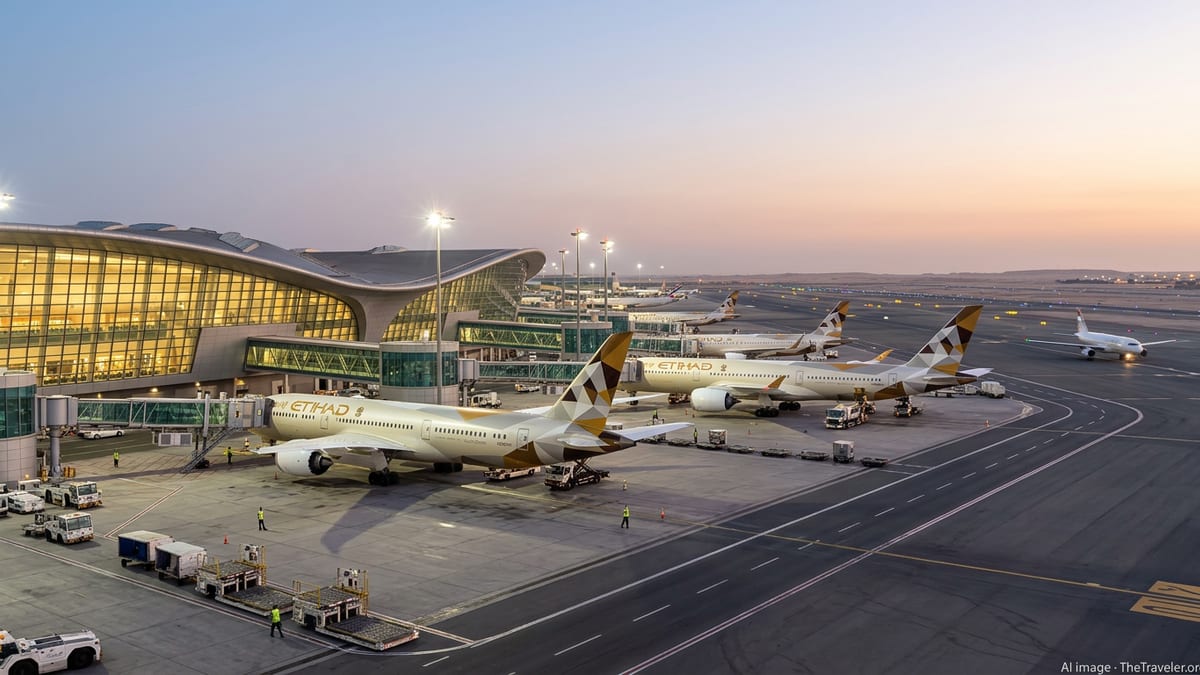
Etihad’s current growth phase is closely tied to Abu Dhabi’s broader aviation and tourism strategy. The opening of the new Terminal A at Zayed International Airport in late 2023 provided the infrastructure needed to handle a larger and more complex hub operation, including improved connections and a modernized passenger experience. The terminal also introduced an expanded US preclearance facility for Etihad’s North American flights, a feature that the airline uses as a competitive differentiator.
The Journey 2030 roadmap sets ambitious targets: significantly higher passenger volumes, a larger fleet and a wider range of destinations, all while maintaining or improving profitability. Public remarks from the airline’s leadership and shareholder representatives emphasize that growth must be sustainable, with discipline around cost control, fleet efficiency and environmental performance.
A central objective is to draw more visitors into Abu Dhabi rather than rely solely on pure connecting traffic. To that end, Etihad has deepened coordination with the emirate’s tourism authorities and hospitality sector, promoting stopovers and longer stays. Increased non-oil economic activity linked to aviation and tourism has been described in local business coverage as a key pillar of Abu Dhabi’s diversification plans through 2030.
This hub-focused strategy has also guided recent route decisions. New services have tended to favor cities that either have strong point-to-point demand into Abu Dhabi, fit well into the banked-wave connection structure at Zayed International Airport, or both. The result is a network that aims to be more balanced and resilient than in the airline’s earlier rapid-growth phase.
Sustainability, efficiency and what travelers can expect
Etihad has framed its renewed profitability as inseparable from its efficiency and sustainability initiatives. The airline operates one of the youngest long-haul fleets in the Gulf region, leaning heavily on composite-bodied aircraft such as the Boeing 787 that burn less fuel per seat than older types. It has also participated in high-profile sustainable aviation fuel trials and invested in operational measures to reduce emissions where possible.
For passengers, the last year’s performance and the 2026 outlook translate into a denser network, more choice of schedules and upgraded onboard products. Travel reviews and industry reports note improvements in premium cabins, refreshed lounges at Abu Dhabi’s hub and enhancements to digital services such as mobile booking, rebooking tools and biometric-supported airport journeys.
Fares will continue to be influenced by global fuel prices, competitive dynamics and capacity levels, but analysts generally view Etihad’s current position as one where it can compete aggressively without sacrificing margins. As more aircraft join the fleet and additional routes open, travelers may see further promotional activity, especially on newer city pairs where the airline is building brand awareness.
Looking at the airline’s trajectory since 2023, the last year has effectively confirmed that its turnaround is complete and that a new growth chapter is underway. If current plans hold, 2026 could mark another step change in Etihad’s scale and visibility, with record profits, a larger global footprint and a more prominent role for Abu Dhabi in long-haul travel networks.