


More news on this day
United Arab Emirates air capacity is climbing to fresh highs as Etihad Airways finalises a major new widebody aircraft order, marking a decisive shift in Gulf aviation strategy after recent regional conflicts and pandemic-era retrenchment.
Get the latest news straight to your inbox!
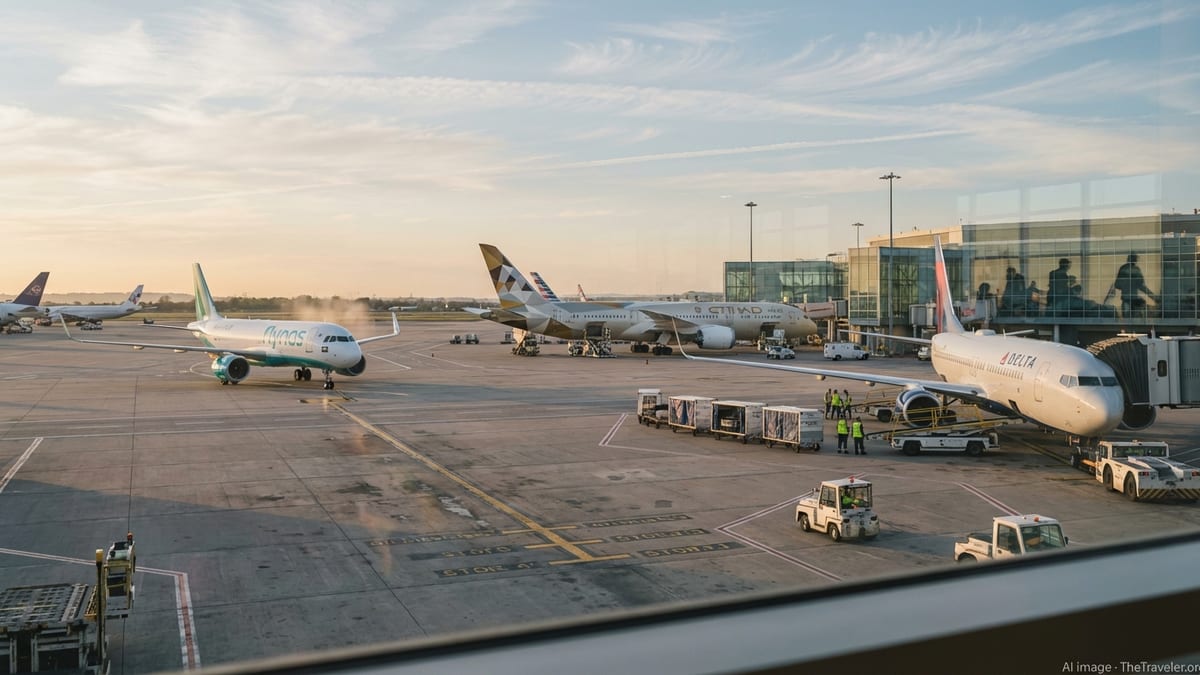
Widebody Commitment Signals New Phase of Growth
Etihad Airways has moved from exploratory talks with Airbus and Boeing to a concrete new widebody commitment that locks in the long-haul backbone of its next expansion cycle. Published information from the Dubai Airshow and subsequent manufacturer disclosures indicates the Abu Dhabi carrier has firmed an order that adds double-digit A330neo and A350-1000 passenger jets, alongside A350 freighters, to its pipeline from the late 2020s.
The latest deal builds on earlier announcements that Etihad would grow its Airbus widebody fleet by 32 aircraft, combining new orders and leases. Industry data shows this includes six A330-900s, at least seven incremental A350-1000s and additional A350 freighters, supplementing an existing backlog of widebody Boeing 787s and restructured 777X commitments. Together, these moves represent one of the most assertive fleet renewal and growth programs currently under way in the Gulf.
Fleet databases and airline disclosures suggest Etihad is now operating just over 120 aircraft across its Airbus and Boeing families, with widebodies such as the A350-1000, A380, 777-300ER and 787 Dreamliner forming the core of its intercontinental network. The new order extends that trajectory, creating a delivery stream toward 2030 that is designed to support higher frequencies into key markets in Europe, North America and Asia while offering flexibility to redeploy capacity as regional conditions change.
UAE Capacity Surpasses Earlier Conflict Peaks
The confirmation of Etihad’s latest widebody order coincides with a measurable rebound in overall seat supply into and out of the UAE after the combined shocks of the Covid-19 pandemic and the regional instability that followed the outbreak of conflict in Gaza in October 2023. Airline schedules and aviation analytics show that, by late 2025, international seat capacity through hubs like Abu Dhabi, Dubai and Sharjah had surpassed both pre-pandemic levels and the peaks seen before earlier regional flashpoints.
While some routes in the Eastern Mediterranean and Levant experienced temporary reductions or equipment downgrades during periods of heightened security tension, carriers based in the UAE continued to redirect capacity toward high-demand markets in Europe, South Asia and Southeast Asia. Publicly available data from air travel consultancies indicates that, on several major long-haul corridors, total UAE-originating capacity in 2025 was tracking well ahead of 2019 despite ongoing conflict-related disruptions elsewhere in the Middle East.
Etihad’s own performance underscores this wider trend. Reporting from Gulf-based business outlets shows that the airline raised passenger numbers by more than 20 percent in 2025 and revised its longer-term ambitions upward to about 38 million passengers annually by 2030. That growth profile, combined with Emirates’ and flydubai’s ongoing expansion and the continued scaling up of Air Arabia’s operations in Sharjah and Abu Dhabi, is helping to push overall UAE flight capacity to levels not previously reached even during earlier oil-fueled travel booms.
Abu Dhabi Bets on Hub Ambitions and Diversified Demand
The new widebody order is also closely tied to Abu Dhabi’s broader economic diversification goals and its intention to compete more directly with Dubai as a global transfer and destination hub. Government strategy documents and airline presentations outline a Journey 2030 blueprint that aims to nearly double Etihad’s fleet to around 200 aircraft and substantially increase annual passenger throughput at Abu Dhabi’s Zayed International Airport.
Central to that plan is a shift toward more point-to-point traffic anchored in Abu Dhabi, rather than relying predominantly on transfer flows between Europe, Asia and Australasia. The additional A330neo and A350-1000 aircraft provide the range and right-sized capacity to serve emerging mid-haul and long-haul markets where demand is growing but remains volatile, including secondary cities in Europe, South Asia and East Asia.
Industry commentary suggests the carrier is also positioning itself to capture a larger share of premium and corporate travel, which has rebounded unevenly since the pandemic. New-generation widebodies with lower unit costs and higher cabin density allow Etihad to offer more competitive fares while investing in upgraded business and premium economy products. This mix is intended to differentiate Abu Dhabi from both rival hubs in the Gulf and fast-growing competitors in Turkey and Saudi Arabia.
Balancing Boeing and Airbus as Market Dynamics Shift
Etihad’s latest moves reflect a recalibration of its long-standing dual-supplier strategy. Aviation reference materials and fleet trackers indicate that, in recent years, the airline has trimmed part of its earlier Boeing 777X order while topping up its Airbus widebody commitments. At the same time, it still holds a significant backlog of Boeing 787s and a smaller orderbook for the 777X, preserving future optionality across both manufacturers.
This balancing act is shaped by several external factors. Delivery timelines for the Boeing 777X remain subject to certification milestones, while demand for efficient, mid-sized widebodies such as the A330neo and A350-1000 has strengthened as airlines rebuild long-haul networks with an eye to fuel burn and environmental performance. By pairing additional Airbus capacity with existing Boeing orders, Etihad can mitigate program-specific risk and better match aircraft types to route profiles.
The diversification extends to freighter capacity as well. Public information from Airbus shows that Etihad has included A350F cargo aircraft in its widebody expansion, aligning Abu Dhabi with the expected growth of e-commerce and high-value freight flows between Asia, the Gulf and Europe. The combined passenger and cargo orders enhance the UAE’s role as a logistics gateway at a time when geopolitical tensions and maritime disruptions are prompting some shippers to shift volumes back toward air transport.
Regional Competition Intensifies as Capacity Rises
The surge in UAE capacity and Etihad’s renewed commitment to widebodies come amid intensifying competition across the wider Gulf and Middle East. National strategies in Saudi Arabia and Qatar envision major increases in long-haul connectivity, with new and existing carriers planning substantial widebody additions of their own. Analysts note that this could lead to periods of overcapacity on some trunk routes, particularly between Europe and the Gulf, if demand growth slows.
For now, however, long-haul travel appetite into and through the Gulf remains robust, supported by tourism initiatives, relaxed visa regimes and the positioning of Gulf hubs as convenient stopovers between continents. Etihad’s order, finalized in the context of this strong demand cycle, suggests confidence that Abu Dhabi can capture a larger share of connecting flows while building out its profile as a destination in its own right.
With deliveries for the new widebody aircraft scheduled to ramp up from the latter part of this decade, the UAE’s seat capacity is set to climb further, extending the lead over previous peaks recorded before past regional conflicts and the pandemic. How profitably that capacity can be deployed will depend on the evolution of global demand, fuel prices and geopolitical risk, but the direction of travel for Etihad and its home market is clearly toward a larger role in global aviation.