


More news on this day
Technip Energies, Airbus, Safran and agricultural cooperative Tereos are joining forces on a new sustainable aviation fuel project in France, signaling a fresh push to scale low‑carbon fuels for European aviation and to better connect domestic biomass resources with the needs of airlines and aircraft manufacturers.
Get the latest news straight to your inbox!
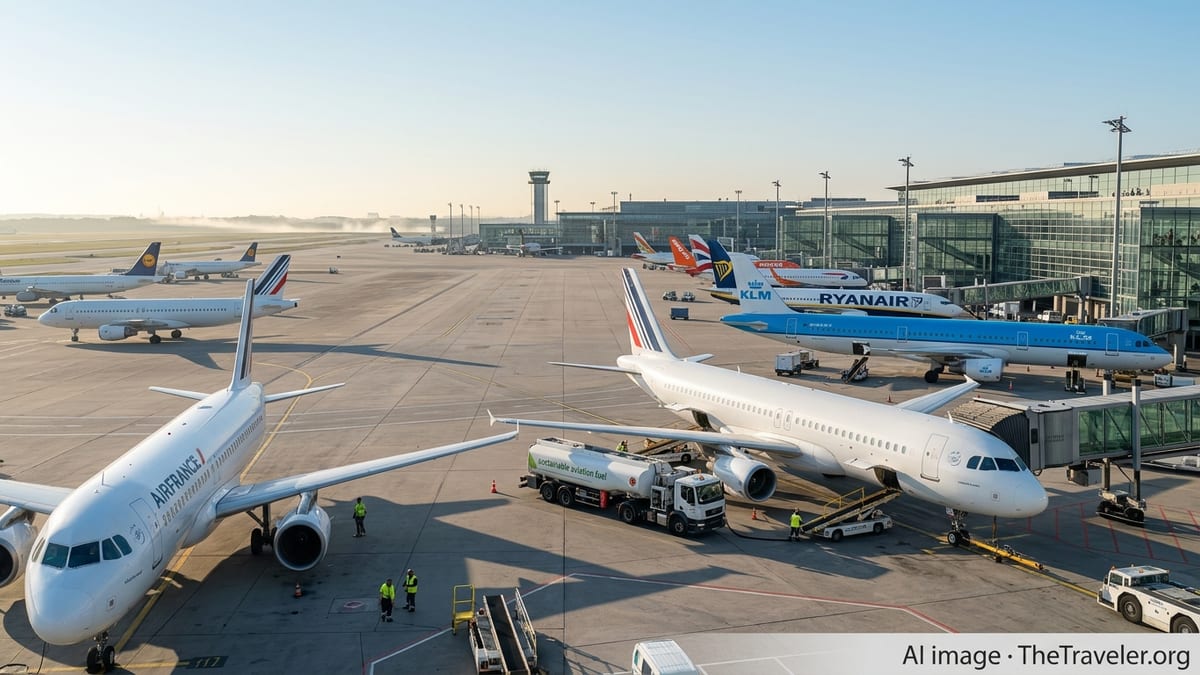
A new French consortium targeting cleaner jet fuel
According to published corporate information and recent industry coverage, the four companies have agreed to cooperate on the development of a commercial-scale sustainable aviation fuel, or SAF, production project on French soil. The initiative brings together Technip Energies’ process engineering capabilities, Airbus and Safran’s role as major aviation and propulsion manufacturers, and Tereos’ position as a leading sugar and starch producer with access to large volumes of agricultural feedstock.
The project is described in public materials as an early-phase industrial effort, focused on assessing the technical, economic and regulatory conditions for a new SAF plant in France. Initial work is understood to include site and technology selection, analysis of feedstock availability, and alignment with emerging European mandates that will progressively increase the share of SAF in jet fuel supplied at EU airports.
The partnership reflects a wider shift in the aviation sector, where manufacturers and energy specialists are collaborating more closely to accelerate new fuel projects. Airbus has been promoting SAF as a key decarbonisation lever alongside fleet renewal and operational improvements, while Safran has been developing engines designed to operate with higher blends of alternative fuels. Bringing a dedicated fuel technology player and an agricultural cooperative into the same consortium aims to bridge gaps that have often slowed SAF roll-out.
Although detailed timelines and financial terms have not been publicly disclosed, sector observers note that the grouping of these four industrial players suggests an ambition to move beyond pilot scale and toward a project capable of supplying significant volumes of SAF into the French and wider European market.
Leveraging French biomass and process technology
Tereos’ involvement points to a strategy that leans on domestic biomass resources. The group is one of Europe’s largest processors of sugar beet, cereals and other crops, producing sugar, starches and ethanol. Industry analysts suggest that existing agricultural supply chains and biorefining infrastructure could be adapted to produce sustainable feedstock streams for aviation fuels, provided they meet emerging sustainability criteria and avoid competition with food production.
Technip Energies, headquartered in the Paris region, has in recent years built a portfolio of projects in low-carbon fuels, including sustainable aviation fuel plants based on hydroprocessed esters and fatty acids (HEFA) and advanced biofuels. Publicly available project lists show the company working on several SAF facilities in Europe, giving it experience in licensing technologies, integrating complex process units and navigating environmental permitting.
By combining these strengths, the French consortium is expected to evaluate different technology routes, from conventional bio-based pathways using waste lipids or agricultural residues to more advanced concepts that could eventually integrate e-fuels produced from renewable electricity and captured carbon dioxide. The choice of route will be shaped by feedstock availability, life-cycle emissions performance and the need to comply with European rules on advanced fuels.
Reports also highlight that any future plant would need to be compatible with existing jet fuel infrastructure. SAF produced in France would likely be blended with conventional kerosene and supplied through established storage and pipeline systems, an approach already used at several European airports where initial SAF deliveries are taking place.
Responding to tightening European climate rules
The timing of the initiative aligns with new European Union regulations that require a rising share of SAF in jet fuel uplifted at EU airports over the next decades. Under these rules, fuel suppliers will be obliged to blend in a minimum share of sustainable fuels, with specific sub-targets for more advanced and synthetic options. Public policy briefings indicate that France, home to major aviation and energy players, is keen to host additional production capacity to secure supply and protect competitiveness.
Industry coverage notes that the French government has previously identified SAF as a strategic sector for industrial policy and climate planning, with support mechanisms being designed to de-risk early projects. In that context, a high-profile consortium uniting Technip Energies, Airbus, Safran and Tereos could be well placed to benefit from future tenders or funding instruments intended to scale domestic low-carbon fuel output.
For Airbus and Safran, anchoring new SAF capacity in their home market also supports their broader decarbonisation roadmaps. Airbus has been conducting test flights with higher shares of alternative fuels and has committed to ensuring that its current and upcoming aircraft families can operate on 100 percent SAF once regulations and fuel availability allow. Safran, for its part, has been validating engine performance on alternative fuels and exploring designs aimed at improved efficiency and lower life-cycle emissions.
Stakeholder analyses suggest that a French-based SAF project of this kind could become a reference for how manufacturers and fuel producers cooperate to meet regulatory targets, share project risks and align technical standards across the value chain.
Scaling up to close the SAF supply gap
Despite rapid growth in announced projects, SAF today still represents only a small fraction of global jet fuel consumption. Aviation sector studies consistently underline a significant gap between the volumes needed to follow net-zero pathways and the capacity currently under construction. Production costs, feedstock constraints and project financing risks are among the main barriers cited.
Supporters of the new French initiative argue, in publicly available commentaries, that long-term offtake commitments from aviation stakeholders and clearer policy frameworks are essential to make such projects bankable. While no specific offtake agreements have been detailed for the Technip Energies, Airbus, Safran and Tereos effort, the presence of large industrial players on both the technology and demand sides is seen as an important signal to investors.
Analysts also point out that clustering SAF production close to existing industrial and logistics hubs could lower costs. France hosts major refining and petrochemical platforms, as well as extensive port and pipeline networks, which could be leveraged for both feedstock sourcing and product distribution. If a site is ultimately selected within such an ecosystem, it could benefit from shared infrastructure and energy services.
In the longer term, the project could contribute to building a broader French and European SAF ecosystem, encouraging additional investments in feedstock aggregation, by-product valorisation and related technologies such as carbon capture. Observers note that early plants often play a catalytic role, helping to standardise contracts, certification practices and operational know-how that subsequent projects can replicate.
Implications for travelers and the wider aviation market
While sustainable aviation fuel has little visible impact on the passenger experience, it is increasingly part of the climate strategies airlines highlight to travelers. Public communications from carriers and manufacturers indicate a growing use of SAF on specific routes, corporate travel programs that include low-carbon fuel contributions, and ticket options that allow customers to support SAF purchases.
If the French project advances to construction and operation, it could provide additional volumes of SAF that airlines using French airports can incorporate into their fuel mix. This would support efforts by both full-service and low-cost carriers to reduce the carbon intensity of flights, especially on short and medium-haul routes where alternative propulsion options are limited in the near term.
Sector commentators caution, however, that even a successful plant would only cover a share of expected demand. Achieving climate targets will require a combination of measures, including continued efficiency improvements, fleet renewal, air traffic management upgrades and, over time, new propulsion concepts. SAF projects like the one being explored by Technip Energies, Airbus, Safran and Tereos are viewed as a central, but not solitary, pillar of this transition.
For now, the collaboration underscores how France’s aviation, energy and agricultural sectors are beginning to align around large-scale solutions to decarbonise flight. As feasibility work progresses, attention will turn to concrete investment decisions, permitting milestones and the eventual timeline for bringing the country’s next generation of sustainable aviation fuel capacity online.