


More news on this day
European travelers will continue to be eligible for up to €600, roughly $696, in compensation for long flight delays under a new political deal to overhaul the European Union’s air passenger rights regime, ending years of debate over whether payouts should be scaled back.
Get the latest news straight to your inbox!
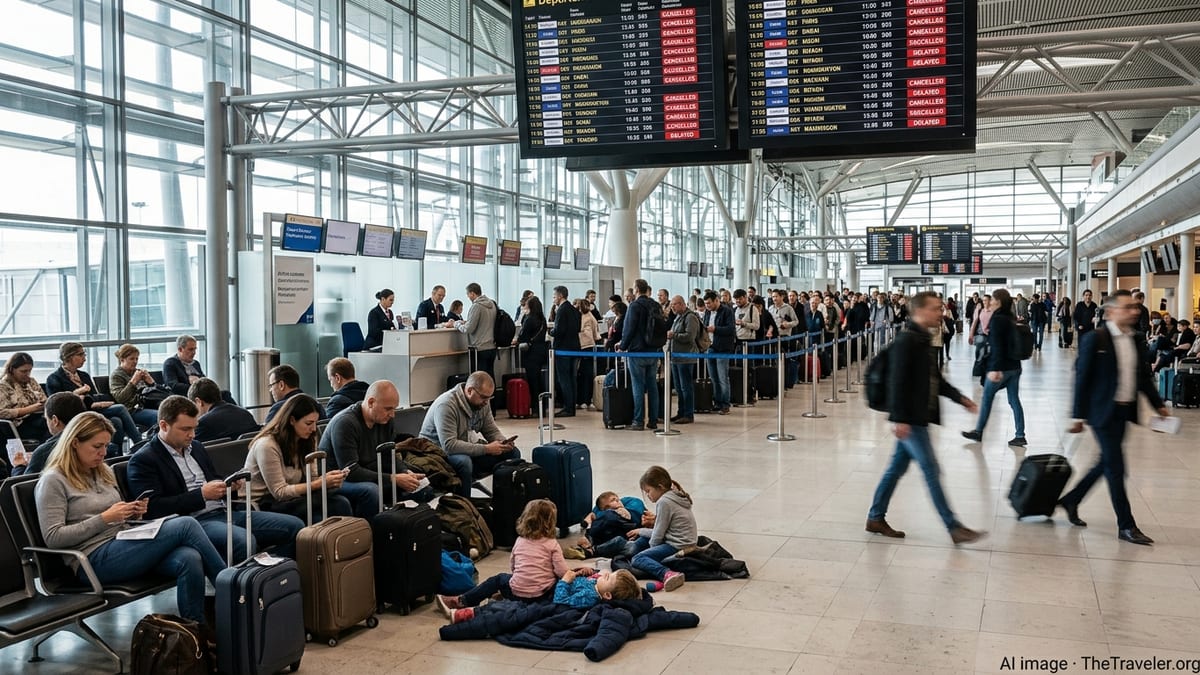
Decade‑long reform fight ends with compensation intact
After more than a decade of stalled talks, EU institutions have reached a provisional agreement that updates the bloc’s core air passenger rights rules without cutting the most high‑profile benefit: cash compensation for severe delays and cancellations. According to publicly available information from the European Parliament and Council, negotiators agreed to preserve the existing three‑hour delay threshold that unlocks compensation and to keep the current payout bands of €250, €400 and €600 depending on flight distance.
The decision caps a prolonged tug‑of‑war between consumer advocates, who argued that strong financial penalties are needed to deter poor performance by airlines, and several member states and industry groups that had pushed to reduce costs for carriers. Earlier proposals floated by national governments would have raised delay thresholds and introduced lower compensation tiers, particularly on long‑haul routes, but these ideas did not survive the final compromise.
Published coverage of the deal indicates that the preserved ceiling of €600 continues to apply to the longest journeys, generally those exceeding 3,500 kilometers, while medium‑ and short‑haul itineraries remain covered by lower amounts. For travelers whose flights arrive more than three hours late for reasons within an airline’s control, the rules effectively lock in one of the world’s most generous standard compensation schemes.
EU legislative documents describe the agreement as a landmark refresh of Regulation 261/2004, the 2004 law that first established common compensation rules for denied boarding, cancellation and long delay. Over time, court rulings and differing national interpretations created uncertainty, prompting calls from both passengers and airlines for clearer, updated legislation.
New rules clarify delays, rerouting and extraordinary circumstances
Beyond preserving headline compensation amounts, the new air travel rights package seeks to clarify when and how passengers are entitled to care, rerouting and refunds. Parliament briefings explain that airlines will face stricter deadlines to inform travelers about disruptions and to outline options for reimbursement or alternative transport, with standardized communication expected within a few days of an incident.
The deal also refines the concept of “extraordinary circumstances,” a key carve‑out that releases airlines from having to pay compensation when delays are caused by events beyond their control. According to summaries of the agreement, the legislation will include an open but more detailed list of such events, typically citing severe weather, natural disasters, security risks, armed conflict and strikes affecting airports or air traffic control. By contrast, most technical issues with aircraft or staffing problems are generally treated as within the airline’s responsibility.
Rerouting obligations are strengthened as well. Publicly available Council information shows that if a carrier cannot provide a suitable alternative flight within a set timeframe after a major disruption, passengers will gain clearer rights to arrange their own transport and seek reimbursement. This is intended to avoid situations where travelers are left stranded while airlines delay decisions on rebooking.
At the same time, member states secured language allowing carriers in some long‑haul disruption cases to reduce compensation by half if rerouting is offered and the final arrival delay is limited to a shorter window, typically up to four hours. Consumer groups had warned that such provisions risked eroding protections, but lawmakers ultimately accepted a narrowly defined reduction mechanism in exchange for keeping the overall compensation framework and three‑hour trigger intact.
Cabin baggage, seating and price transparency under the spotlight
While financial compensation dominated headlines, the updated rules also tackle other pain points for travelers, particularly around cabin baggage, seat allocation and the transparency of ticket prices. Reports from European outlets note that the final text stops short of enshrining an unconditional right to carry a standard cabin bag free of charge, a key demand from some members of the European Parliament.
Instead, the compromise focuses on clearer pricing information. Airlines and online platforms will be required to present fares that include a typical carry‑on option as the default in search results, making it easier for travelers to compare like‑for‑like offers instead of encountering a base fare that excludes most baggage. Ancillary charges for additional bags, seat selection or priority boarding will need to be disclosed in a way that allows passengers to understand the true cost of a trip before purchase.
The reform does, however, introduce new guarantees around seating for certain passengers. According to legislative summaries, carriers will no longer be allowed to charge extra solely to ensure that children sit with accompanying adults or that people with disabilities or reduced mobility are seated with companions who assist them. This responds to widely reported cases in which families and vulnerable travelers were separated unless they paid premium fees.
Observers of the process indicate that these changes reflect a broader push in Brussels to address widespread consumer frustration with complex fare structures and aggressive unbundling. By tying transparency obligations to a high‑profile overhaul of passenger rights, EU lawmakers aim to bring more consistency across airlines and booking channels.
What the deal means for non‑EU travelers and the next steps
The preserved compensation rules apply not only to EU citizens but to most passengers departing from airports in the bloc, regardless of nationality. Under the longstanding framework, flights leaving an EU or European Economic Area country are covered whether the operating carrier is European or not, and inbound flights are covered when operated by EU or EEA airlines. The new agreement keeps that geographic logic in place, so non‑European travelers flying from EU hubs such as Paris, Amsterdam or Frankfurt will continue to benefit from up to €600 in compensation when eligible.
For travelers connecting through Europe on multi‑segment journeys, the clarified rules on missed connections and through‑tickets are expected to play an important role. Parliament documents suggest that when all legs are booked under a single contract, compensation calculations and assistance will generally consider the delay to the final destination rather than to an intermediate stop, a point that has often been contested in past disputes.
The deal reached between the European Parliament and Council still needs to pass formal approval stages before the updated regulation can enter into force. According to institutional timelines, final texts will be subject to legal and linguistic checks, after which the law will be published and a transition period will begin, giving airlines, airports and national enforcement bodies time to adjust procedures and information systems.
Once implemented, the package will represent the first major refresh of EU air passenger rights in more than twenty years, keeping intact a headline compensation level of up to €600, or about $696, while layering on new transparency obligations and clarifications. For frequent flyers into and within Europe, the outcome signals that despite sustained pressure from parts of the aviation industry, the bloc is not yet ready to dilute one of its most visible consumer protections.