


More news on this day
American Airlines customers heading into the late 2020s are flying under a tighter set of federal refund rules and a familiar patchwork of airline benefits, making it more important than ever to understand what cash refunds, vouchers and services they can expect when trips are disrupted.
Get the latest news straight to your inbox!
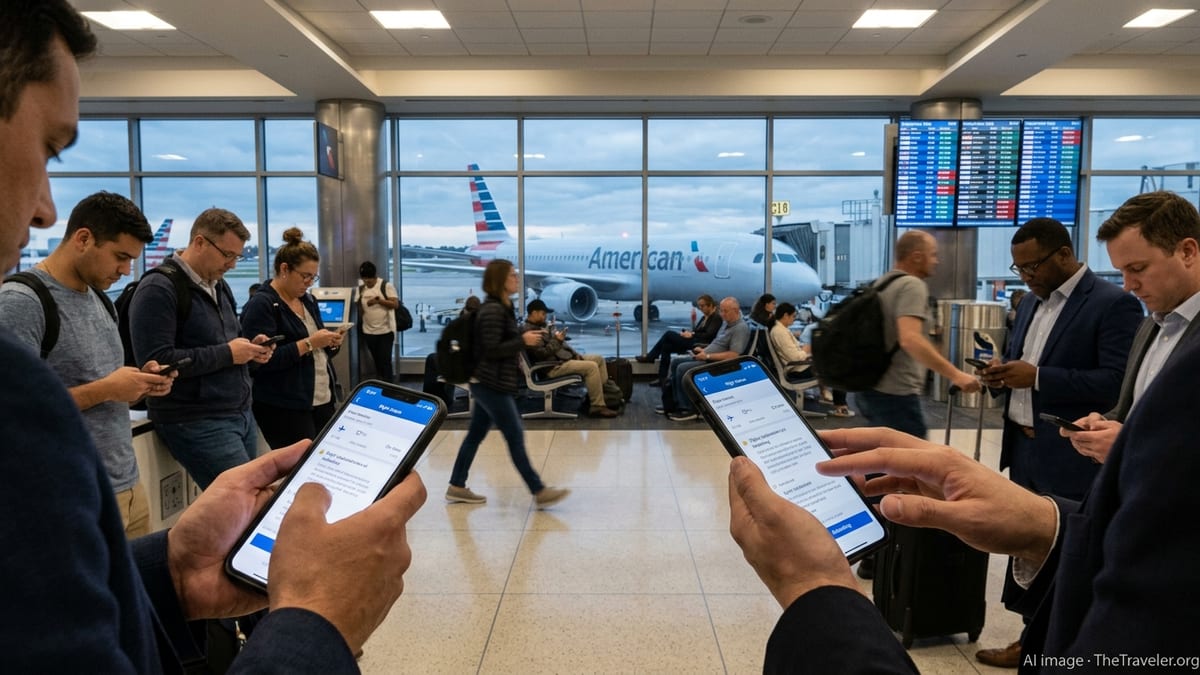
How New Federal Refund Rules Shape What You Are Owed
For American Airlines passengers in 2026, the baseline protections come from federal regulations rather than the airline’s goodwill. A final rule from the U.S. Department of Transportation requires automatic cash refunds when a carrier cancels a flight or makes a significant schedule change and a traveler does not accept alternative transportation, a voucher or other form of credit. The policy applies to flights to, from or within the United States and covers tickets bought directly from airlines or through third parties.
The rule, which completed its phase-in during 2024, defines for the first time what counts as a cancellation or a significant change, providing clearer rights than in the past. Under these standards, if American cancels your flight entirely, moves your departure or arrival by a large amount of time, adds extra connections, or switches you to a lower class of service and you decline the new itinerary, you are generally entitled to a refund of the unused portion of your fare, including mandatory taxes and most fees. Refunds must be made in cash back to the original form of payment unless you voluntarily choose a voucher instead.
These federal rules sit on top of American’s own contracts and customer-service promises. While the law does not require cash compensation for the time lost in a delay, it does require that when American is obligated to refund, the refund comes automatically once you decline rebooking or credits. Travelers are no longer expected to navigate complex claim forms simply to get money back for a trip they did not take.
The rules are especially relevant on multi-leg itineraries. If American makes a significant change that disrupts a connection and you ultimately choose not to travel, the airline is generally expected to return the price paid for the unused segments. Documentation such as receipts and itinerary records remains essential if you later contest how much of the ticket price is considered unused.
American’s Own Policies on Delays and Cancellations
Separate from federal refund rights, American Airlines sets out its own commitments in its customer service plan and conditions of carriage. Publicly available versions of those documents show that when a delay or cancellation is controllable, the airline typically offers rebooking on the next available American or partner flight at no additional cost, along with food vouchers and hotel accommodation if an overnight stay is required.
American distinguishes between disruptions within its control and those outside it. Issues such as crew scheduling and most mechanical problems are generally treated as controllable, while severe weather, air-traffic control restrictions and security events fall outside the airline’s responsibility. For uncontrollable disruptions, American usually still rebooks passengers, but lodging and meal costs are usually left to the traveler, apart from limited waivers during major events announced through travel notices.
The airline’s conditions of carriage indicate that its primary obligation in severe disruptions is to transport passengers to their next stopover or final destination, rather than to compensate them financially for delays. When American cancels a flight or makes a significant change and you decide not to travel, the carrier’s published policies reference refunds of the ticketed fare in line with federal rules, but when you choose to continue, the airline generally frames hotel and meal support as a customer-service commitment rather than a legal entitlement.
American’s policies can also vary on international routes, especially where local regulations such as Canadian or European rules layer additional protections on top of U.S. standards. Travelers departing from or arriving in jurisdictions with stricter passenger rights may find that compensation for long delays, not just refunds for cancellations, is sometimes available under those local regimes rather than American’s U.S. policies.
What You Can Expect During a Controllable Delay
When a disruption is coded as within American Airlines’ control and keeps passengers grounded for hours, the airline’s customer service plan describes a more generous set of options. Reports indicate that if a delay at a hub or diversion point stretches beyond several hours, American often issues meal vouchers and, when an overnight stay becomes unavoidable, hotel vouchers along with transportation to and from the hotel where practical.
The airline’s publicly posted commitments indicate that if no American-operated flights are available until the following day, staff may rebook travelers on partner airlines without additional fare. That type of rebooking is not automatic and tends to depend on inventory and operational flexibility on the day of travel, but it has become a common practice for long, controllable disruptions on busy routes.
Despite these commitments, passengers in 2026 are cautioned not to expect automatic cash payouts simply because a delay exceeds a certain number of hours. Federal dashboards comparing major U.S. carriers show that American, like most large airlines aside from specific exceptions, does not promise routine cash compensation for time lost during long but ultimately completed trips. Instead, its support usually comes in the form of vouchers, hotel rooms, meals and occasional goodwill credits such as frequent flyer miles when travelers file complaints after the fact.
Travelers are also reminded that many of American’s benefits require interaction with airport agents or customer relations. Vouchers for meals or hotels are typically issued at the airport or by phone when the disruption occurs. If the airline runs out of prearranged hotel rooms during large-scale events, passengers sometimes need to book their own lodging and later seek reimbursement, which American reviews under its internal standards for what counts as reasonable expense.
Uncontrollable Disruptions and What Is Not Covered
From summer thunderstorms to winter storms and air-traffic control slowdowns, many American Airlines delays in 2026 are categorized as outside the carrier’s control. In such situations, American’s public documents make clear that while the airline will work to rebook travelers on the next available flight, it generally does not assume responsibility for hotel rooms, meals or incidental costs like ground transportation.
Travelers stranded overnight by weather at hub airports such as Dallas Fort Worth or Charlotte can therefore face a gap between expectations and what American is formally prepared to cover. The airline’s written guidance notes that passengers are responsible for their own overnight accommodations and related expenses when the root cause lies outside the airline’s control, though agents may assist in locating hotels or provide limited courtesy vouchers during particularly disruptive events.
Because of this, many consumer advocates point to travel insurance and certain premium credit cards as an important backstop. These products can reimburse hotel, meal and transportation costs during severe delays that do not trigger airline compensation. The distinction between controllable and uncontrollable causes has become a central factor in whether American offers more than basic rebooking, and passengers often do not see how a disruption is coded unless they ask an agent or later review correspondence.
Even in uncontrollable situations, the federal refund rule can still apply if the delay effectively becomes a cancellation or significant schedule change and the passenger decides not to travel. In that case, a traveler who declines American’s alternative itinerary can look to the DOT framework for a cash refund of the unused portion of the fare, rather than expecting the airline to reimburse the out-of-pocket costs of weather-related delays.
How to Claim Refunds, Vouchers and Reimbursement in 2026
For passengers on American Airlines in 2026, the practical challenge is turning rights and policies into actual money back or concrete support. When a flight is cancelled or significantly changed and you choose not to travel, the first step is to decline any proposed rebooking or credits and request a refund through American’s official channels. Under current rules, the refund should be processed automatically once the airline records that you are not accepting an alternative.
For controllable delays where you still travel, it often falls to the passenger to ask specifically about hotel and meal support while the disruption is unfolding. At airports, this usually means visiting a gate or customer service desk as soon as it is clear that a missed connection or overnight stay is inevitable. Travelers are encouraged to keep boarding passes, delay notifications and receipts for any expenses they cover themselves, since these can support later reimbursement claims or complaints.
After travel, customers who believe American did not honor its published commitments can submit a claim through the airline’s customer relations department, attaching documentation and a clear timeline of the disruption. If the response is unsatisfactory, U.S. passengers have the option of filing an online complaint with the Department of Transportation, which tracks patterns and can enforce compliance with refund obligations and customer service plans.
The combined effect of stricter federal rules and American’s own written policies means that, in 2026, passengers are better positioned to recover the cost of trips they no longer take, but cash compensation for time lost to delays remains limited. Knowing when a disruption crosses the line into a significant change that justifies a refund, and when it stays in the realm of customer service gestures, is key to understanding what travelers on American Airlines are truly owed.