


More news on this day
Royal Caribbean has offered a rare behind-the-scenes look at its signature AquaTheater, detailing how a deep pool, hydraulic lifts and a small city of backstage specialists combine to stage some of the most complex shows at sea.
Get the latest news straight to your inbox!
A Pool That Transforms into a Stage
Publicly available specifications show that the AquaTheater on Royal Caribbean’s Oasis class ships is built around what the line describes as the largest and deepest performance pool at sea, reaching depths of about 17 to 18 feet. The pool sits at the stern in an open-air amphitheater and is framed by two towering diving platforms that rise roughly 10 meters above the water.
The centerpiece is a system of underwater stage lifts that can raise and lower large sections of the pool floor. Engineering case studies from suppliers indicate that multiple independent platforms can create a solid stage, a shallow performance area or a full-depth dive pool, sometimes shifting configurations between acts in a single show. This ability to reconfigure the basin lets the venue support everything from trampolines and slacklines to high diving and synchronized swimming.
Royal Caribbean’s own promotional materials describe the AquaTheater as a venue where platforms, lighting elements and water effects continually appear and disappear from view. Behind-the-scenes video segments highlight banks of motors, hydraulics and automation controls positioned beneath and around the pool, moving scenery and stage decks in choreographed sequences that must be precisely timed with the performers above.
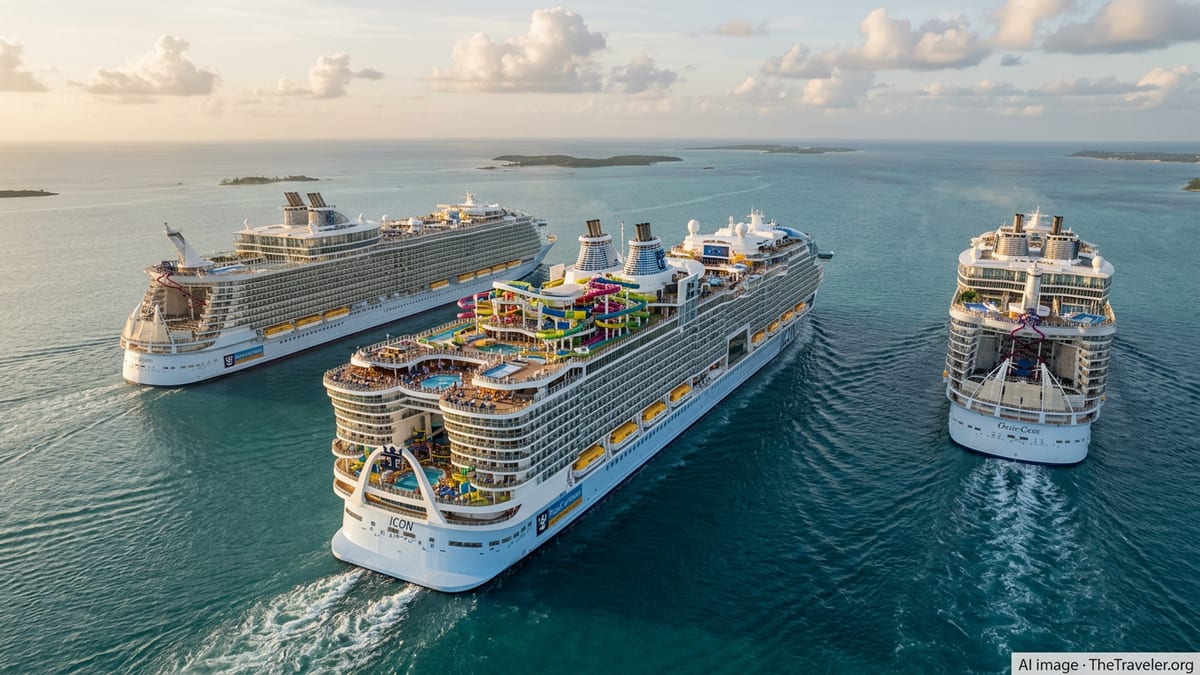
The design has gradually expanded to the enclosed AquaTheater inside the glass-and-steel AquaDome on the line’s new Icon class ships. In that configuration, the water stage is wrapped by an indoor neighborhood of bars and dining, but the same core idea remains: a deep pool that transforms into a multi-level stage in full view of a stadium audience.
Hydraulics, Automation and Hidden Machinery
Technical descriptions from marine-equipment manufacturers point to a complex lift system under the AquaTheater’s pool, with multiple synchronized platforms driven by heavy-duty hydraulic cylinders. These lifts are engineered to work in a saltwater or chlorinated environment, while supporting the weight of performers, scenery and large volumes of water above.
According to those accounts, each lift can travel several meters vertically, locking into place to create a firm performance surface or dropping away to reveal open water. Supporting machinery is placed in sealed pits and service corridors that surround the pool, where engineers can access pumps, valves and control cabinets without interrupting rehearsals or performances.
Automation appears to play a central role in show operations. Behind-the-scenes footage from Royal Caribbean’s entertainment videos shows operators at control consoles, running preprogrammed cues that coordinate lighting, fountains, lifts and sound. These cues are tested extensively before public performances, allowing the production team to monitor lift positions, speed and load while performers rehearse complex dives and stunts.
Specialized lighting and projection systems are also woven into the technical backbone. High-output fixtures ring the amphitheater, illuminating both the water and the audience seating, while show-specific elements such as programmable fountains and mist curtains allow designers to shape the pool surface itself into a visual effect. In the indoor AquaDome, the theatrical rig appears to extend into the overhead structure, where moving lights and rigging tracks are integrated into the glass canopy.
Safety Layers Above and Below the Surface
Job descriptions and training materials for AquaTheater technical staff outline a strong emphasis on safety protocols. Stage technicians assigned to the venue are expected to hold scuba or open-water certifications, enabling them to perform underwater inspections and maintenance on the pool’s moving components. These technicians work alongside dedicated dive teams, riggers and stage managers who specialize in aquatic environments.
Reports from frequent cruisers and technical theater enthusiasts highlight visual safety cues that are built into the venue, including colored signal lights and in-pool indicators that help divers confirm that the pool floor is locked in its diving position. Observers note that these systems are visible from the deck and appear to be used as an additional check before high dives and aerial elements.
Published coverage of past incidents across the industry underscores the level of redundancy built into modern aquatic stages. While specific internal procedures are not publicly listed in detail, information released about training and qualifications indicates that Royal Caribbean layers human oversight on top of mechanical safeguards, combining automation limits, pre-show checks and on-the-fly monitoring by crew.
Audience management is another safety component. Seating charts and cruise planning guides point out that front rows are part of a designated “splash zone,” and guests are often advised to arrive early and follow crew instructions for entering and exiting the amphitheater. In the enclosed AquaDome venues, capacity is controlled through reservations, which also help the production team plan for crowd flow and emergency egress.
A Production Hub Rivaling Land-Based Theaters
Royal Caribbean’s entertainment overviews describe a portfolio of more than 160 shows fleetwide each year, with AquaTheater productions among the most technically demanding. The line operates a shoreside entertainment studio complex where casts rehearse aquatic and acrobatic routines before joining their assigned ships, allowing them to fit into an established technical framework on board.
Once on the vessel, AquaTheater performers work within a production structure similar to that of large land-based theaters, but with added marine-specific roles. There are stage managers, automation and lighting operators, sound engineers, riggers and dive team members, many of whom cross-train to understand the interactions between water, staging and aerial elements.
Published profiles of shipboard entertainment staff describe tightly scheduled days of safety drills, rehearsals and maintenance alongside nightly shows. Casts run through dry-land training and pool sessions, while technicians routinely cycle the lifts and water effects without an audience to monitor performance and identify issues. The goal, according to these accounts, is to keep the venue in a constant state of readiness despite the wear of salt air, motion and heavy use.
The technical standards applied to the AquaTheater appear to match those of major production houses ashore, with added complexity from the ship’s movement and the corrosive marine environment. Every cue that audiences see on stage is supported by backstage teams tracking weather conditions, sea state and equipment status in real time.
Evolving Shows and New Venues at Sea
Program guides and cruise reviews suggest that AquaTheater shows continue to evolve as new ships launch. Early Oasis class productions focused heavily on diving and synchronized swimming, while more recent offerings layer in street-style dance, aerial harness work and trampoline elements that take advantage of the reconfigurable pool deck.
Each vessel carries its own signature production tailored to the hardware on board, with show concepts ranging from 1980s-inspired spectacles to story-driven acrobatic pieces. In the AquaDome on Icon class ships, the enclosed space and advanced rigging enable more intricate lighting and multimedia designs, bringing the aesthetic closer to arena-style shows on land.
Construction updates and shipyard coverage of new builds such as Star of the Seas show how the AquaTheater concept is being integrated from the earliest design phases. The installation of the massive AquaDome structure, for example, is described as a key milestone that allows interior teams to begin fitting out the venue’s pool, lifts and technical grid.
For travelers, the recent behind-the-scenes material offers context for what they see from the stands: a venue where water level, stage height and even the shape of the performance space can change from one moment to the next. While the spectacle may last less than an hour, the systems that support it occupy multiple decks and involve a sizable share of the ship’s entertainment workforce, making the AquaTheater one of Royal Caribbean’s most distinctive technical achievements at sea.