


More news on this day
Travelers connecting through Guangzhou Baiyun International Airport faced long queues, missed connections and overnight waits after widespread disruptions left 23 flights cancelled and 326 delayed across routes linking China with Southeast Asia and Africa.
Get the latest news straight to your inbox!
Major Hub Hit by Wave of Disruptions
Guangzhou Baiyun International Airport, one of Asia’s busiest aviation hubs and a core base for several Chinese carriers, experienced significant operational disruption as dozens of flights were either cancelled outright or heavily delayed. Publicly available flight-tracking boards for departures and arrivals showed a cluster of affected services grouped around peak evening and late-night banks, where connections from across China typically feed into international departures.
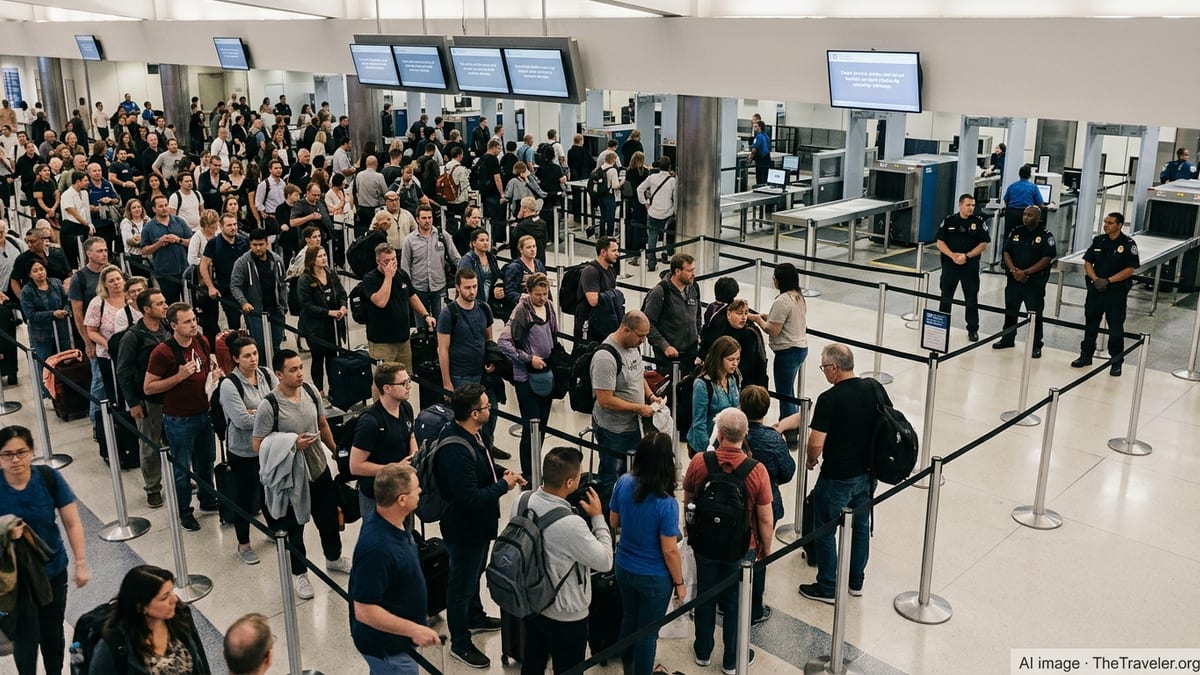
While irregular operations are not uncommon during the summer storm season in southern China, the scale of the latest disruption, involving more than 300 delayed flights alongside targeted cancellations, left large numbers of passengers congregating around gate areas, transfer counters and airline service desks. Images circulating across social platforms indicated departure halls with extended lines and passengers resting on luggage trolleys and terminal floors as they waited for rebooking or updated departure times.
Guangzhou Baiyun serves as a primary gateway between mainland China and Southeast Asia, as well as a growing transit point for connections to Africa. Any sustained disruption at the airport tends to cascade through regional networks, particularly when delays occur across several major airlines at once.
Key Chinese Carriers Adjust Regional Networks
The latest round of irregular operations centered on flights operated by China Eastern Airlines, Air China, China Southern Airlines and Hainan Airlines, which together carry a large proportion of passengers moving between China and nearby markets. Public timetables and recent schedule updates show that these carriers have been actively fine-tuning capacity on regional routes, adding frequencies on some corridors while trimming or consolidating others.
According to available airline data, China Southern remains the dominant operator at Guangzhou Baiyun, using the airport as its primary hub for both domestic and international traffic. Air China, China Eastern and Hainan also operate a mix of point-to-point and connecting services through Guangzhou, with aircraft rotating to cities across East and Southeast Asia, and onward to long-haul destinations. When a disruption affects several of these carriers simultaneously, spare aircraft and crew to backfill lost capacity can be limited, increasing the risk that initial delays turn into cancellations.
Recent industry reports indicate that Chinese airlines have been navigating a complex environment of fluctuating demand, evolving bilateral agreements and changing slot allocations across Asia. These factors, combined with localized weather or air traffic constraints, can result in sudden schedule changes, particularly around busy holiday or travel periods.
Routes to Cambodia, Vietnam and Malaysia Among Those Affected
Among the routes impacted by the disruption at Guangzhou were services connecting China with Cambodia, Vietnam and Malaysia, key leisure and business markets that rely heavily on short- to medium-haul flights. Flight listings for Baiyun highlight a dense web of routes into cities such as Phnom Penh and Siem Reap, Hanoi and Ho Chi Minh City, as well as Kuala Lumpur and other Malaysian gateways, served by a mix of Chinese and regional airlines.
Travelers heading to or transiting from these destinations reported missed connections and rebookings onto later departures as airlines reshuffled their schedules. Some passengers were routed through alternative hubs in mainland China, while others were offered itineraries via third-country airports in Southeast Asia, adding hours to journey times.
Analysts note that Southeast Asia remains one of the most competitive and rapidly expanding segments of China’s outbound market. When capacity is disrupted at a major hub like Guangzhou, it can quickly affect tour groups, independent travelers and migrant workers who rely on tightly timed connections and limited travel windows.
Singapore and Kenya Links Face Knock-On Delays
The disruption also affected links between Guangzhou and Singapore, a key financial and aviation center in Southeast Asia, as well as connections to Kenya, an important African gateway for Chinese business and trade. Published schedules show multiple Chinese carriers operating services into Singapore and cooperating with partner airlines there, forming part of wider networks that extend to South Asia, Oceania and beyond.
Kenya-bound travelers typically connect in Guangzhou onto services operated either directly by African carriers or via Chinese airlines feeding into regional hubs. When departure times from Baiyun slip, passengers risk missing onward legs and facing lengthy waits for the next available seat. Travel forums in recent months have highlighted a pattern of last-minute schedule adjustments on some China-Africa routes, making tight connections particularly vulnerable when delays occur at a major hub.
Although long-haul flights are often prioritized for departure once operating conditions improve, even relatively minor ground holds at Guangzhou can cause arrival times to drift outside established connection windows. This, in turn, forces airlines to decide between holding onward flights for connecting passengers or preserving network punctuality, with both choices creating additional disruption elsewhere.
Passengers Navigate Rebookings, Vouchers and Overnight Stays
As cancellations and delays accumulated, many passengers at Guangzhou Baiyun were left to navigate a patchwork of rebooking options, hotel arrangements and meal vouchers. Travel discussion boards and social media posts suggest that experiences varied significantly depending on the airline, ticket type and whether multiple legs were booked on a single itinerary or through separate purchases.
Some travelers reported being moved to flights the following day, with accommodation offered near the airport in selected cases. Others described having to secure hotels independently and then seek reimbursement later. Passengers holding separate tickets for onward journeys, particularly regional low-cost segments, expressed concern about losing nonrefundable bookings when initial flights from Guangzhou were cancelled.
Consumer advocates generally advise passengers in such situations to document all expenses, keep boarding passes and delay notifications, and consult airline policies and local regulations on compensation. For international journeys spanning multiple carriers and jurisdictions, determining eligibility for refunds or other remedies can be complex, and travelers often rely on travel insurance or credit card protections to cover additional costs.
The latest disruption at Guangzhou Baiyun underscores the vulnerability of tightly scheduled regional and long-haul networks to concentrated periods of operational stress. As flight volumes through the airport continue to recover and expand, observers note that resilience measures, clear communication and flexible rebooking options will remain central to maintaining traveler confidence on routes linking China with Southeast Asia and Africa.