


More news on this day
Air travelers across Europe faced a fresh wave of disruption today as operational data showed 2,296 flights delayed and 87 cancelled across key markets including Spain, the United Kingdom, France, Türkiye, Germany, Greece, the Netherlands and Ireland, unsettling schedules for major airlines such as British Airways, Lufthansa, KLM, Ryanair and Turkish Airlines at hubs in London, Paris, Madrid and other cities.
Get the latest news straight to your inbox!
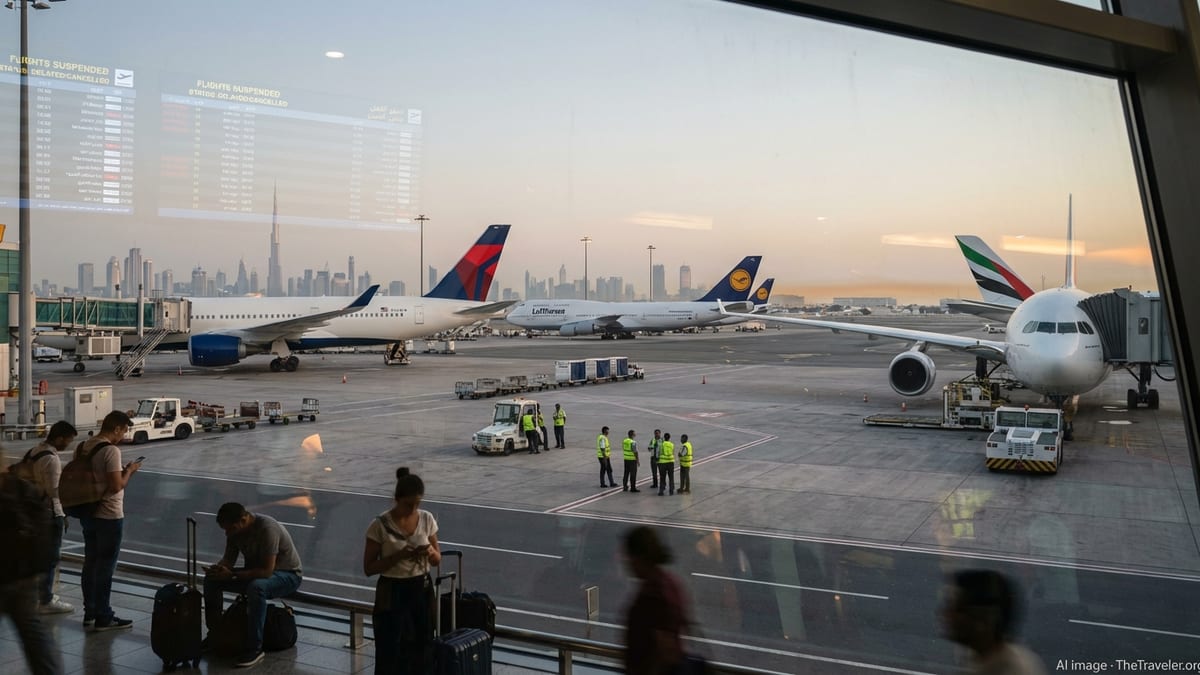
Delays Mount Across Europe’s Busiest Hubs
The latest figures point to a broad-based spike in disruption rather than issues isolated to a single airport or carrier. Industry tracking platforms indicate that delays have built steadily through the day at major airports serving London, Paris, Madrid, Amsterdam, Frankfurt, Istanbul and Dublin, with knock-on effects across intra-European and transatlantic networks.
Publicly available performance dashboards for European air traffic show that the number of delayed flights today stands significantly above the seasonal norm, adding pressure to an aviation system already operating close to capacity. Even modest schedule disruptions are translating into long queues at check-in and security, congested departure boards and late-arriving aircraft struggling to return to timetable.
Airports serving the capitals of Spain, France, the Netherlands and the United Kingdom appear to be among the most affected. Data compiled by consumer rights platforms and aviation analytics providers point in particular to heavy delays at London Heathrow and Gatwick, Paris Charles de Gaulle, Madrid Barajas and Amsterdam Schiphol, where dense networks of short-haul services make operations especially vulnerable to cascading knock-on effects.
In Ireland, publicly available flight status information indicates delays spreading across Dublin’s short-haul European routes, contributing to the wider tally of disrupted services. Similar patterns are visible at major German hubs, as well as at Istanbul and other key airports in Türkiye, where traffic flows between Europe, the Middle East and Asia are already under strain from ongoing airspace and routing constraints.
Major Carriers Struggle To Keep Schedules Intact
Timetable and status snapshots show that the disruption is affecting a broad mix of network and low-cost carriers. British Airways, Lufthansa, KLM, Ryanair and Turkish Airlines are all reporting delayed or cancelled flights on routes linking London, Paris, Madrid, Amsterdam and other major cities, with services to and from hub airports particularly exposed.
For British Airways, the latest issues come on top of an already demanding operating environment at Heathrow, where recent reports have highlighted higher-than-usual levels of lateness and selected cancellations on both European and long-haul routes. Publicly available coverage indicates that other full-service carriers, including Lufthansa and KLM, are facing similar pressures at their respective hubs in Germany and the Netherlands as delays ripple through tightly timed wave patterns.
Low-cost operators are not immune. Ryanair, which runs one of the largest intra-European networks, appears prominently in daily disruption tallies, reflecting the sheer volume of its schedule across Spain, the United Kingdom, Ireland, Greece and other markets. Turkish Airlines, meanwhile, continues to navigate a complex operating backdrop on flights connecting European cities with Istanbul and onward destinations, where re-routings and longer flight times can amplify the impact of even relatively small schedule upsets.
The breadth of carriers affected underscores that today’s problems are network-wide rather than confined to any single company. With many airlines running trimmed but still intense summer-shoulder schedules, individual incidents such as weather cells, crew rotation challenges or airport flow restrictions can rapidly propagate across multiple brands and countries.
Underlying Pressures: Capacity, Weather and Airspace Constraints
Analysts have for months been flagging structural strains in Europe’s aviation system, warning that a combination of high demand, constrained airport capacity and chronic air traffic management bottlenecks could leave the network vulnerable to bouts of intense disruption. Recent European aviation overviews point to continued growth in flight numbers compared with last year, even as air navigation and airport systems work to reduce delays.
Weather remains a persistent factor. Localized storms, low visibility and shifting wind patterns can trigger temporary flow restrictions at hub airports, cutting the number of arrivals or departures permitted per hour and forcing carriers to hold or reschedule flights. When these restrictions occur at several airports simultaneously, the impact can be felt across the continent within hours.
Ongoing airspace and routing challenges also play a role. Extended detours around sensitive regions have increased average flight times on some Europe to Asia and Middle East routes, adding complexity to crew and aircraft planning. Industry and regulatory updates in recent weeks describe a landscape in which longer routings and heightened fuel-use considerations have effectively become part of baseline network planning rather than short-lived exceptions.
In response, some airlines have already pared back secondary routes or adjusted frequencies to build extra resilience into their systems. However, today’s figures suggest that even with these measures, the combination of high traffic volumes and structural constraints can still lead to widespread disruption when conditions tighten.
Impact on Passengers and What Travelers Can Expect
For passengers, the immediate impact of today’s disruption is being felt in longer-than-expected journey times, missed connections and last-minute changes to plans. Airport departure boards across Europe are showing waves of delays of 30 minutes or more, while some travelers are facing outright cancellations and the need to be rebooked on later services.
EU and UK air passenger rights frameworks give many travelers entitlements to care, rerouting and, in certain circumstances, financial compensation when flights are significantly delayed or cancelled for reasons within airlines’ control. Consumer advocacy platforms tracking today’s events are highlighting these rights and encouraging passengers to retain documentation of their disruption, including boarding passes and written confirmation of delays or cancellations.
Operational updates published by carriers advise travelers to monitor their flight status closely, use airline apps or digital tools where available, and allow extra time at the airport, especially for departures from the most affected hubs. With aircraft and crews out of position, some delays are likely to continue into the evening as airlines work to reset their operations and restore normal rotations.
Travel industry observers note that today’s disruption comes early in the main summer season, raising concerns that similar episodes could recur if underlying capacity and airspace issues are not eased. For now, passengers planning to travel within or through Europe in the coming days are being urged by publicly available guidance to stay flexible, keep a close eye on schedules and be prepared for itinerary changes as airlines and airports navigate a challenging operating environment.