


More news on this day
Air travel across Europe has been hit by another severe day of disruption, with live tracking data showing 2,911 delayed flights and 83 cancellations in just 24 hours across London and 15 other major airports.
Get the latest news straight to your inbox!
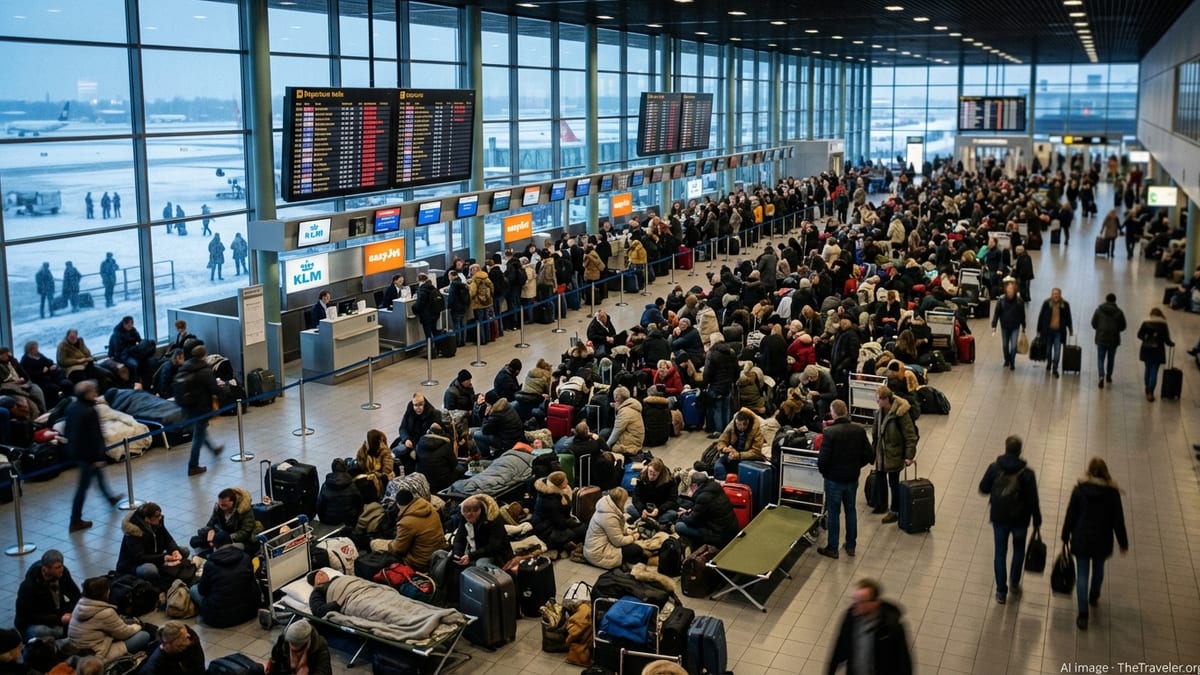
Sharp Spike in Disruptions Across Key European Hubs
Publicly available disruption trackers for 30 August 2026 indicate that a cluster of large European airports, including London Heathrow, London Gatwick, London Luton, Dublin, Paris Charles de Gaulle, Amsterdam Schiphol, Frankfurt, Madrid Barajas and Barcelona El Prat, collectively recorded 2,911 delayed departures and 83 cancellations in a single day. The pattern mirrors a broader summer of operational strain, but the latest figures stand out as one of the heaviest single-day hits to European schedules this peak season.
Coverage from European travel outlets notes that the most severe congestion was concentrated at hubs that are already operating close to capacity during August, compounding the effect of even modest disruption. Longer queues at check-in and security, aircraft and crew out of position, and tighter turnaround times all helped convert short operational problems into substantial delays.
Reports also highlight the disproportionate impact on large point-to-point carriers. According to published tallies, easyJet registered the highest number of late services among European airlines on the day, with more than 550 delayed flights and dozens of cancellations, followed by Ryanair and Air France. British Airways, KLM, Jet2 and Vueling were also listed among the most affected carriers serving the disrupted airports.
The combined effect for passengers was a patchwork of missed connections, overnight stays, and last-minute rebookings across Europe’s main holiday and business routes. Even where flights eventually operated, extended holding patterns and turnaround delays pushed arrivals well beyond scheduled times.
Operational Strains, Weather and Airspace Issues Converge
The latest wave of 2,911 delays and 83 cancellations did not arise in isolation. Throughout August, European networks have been absorbing pressure from several overlapping factors: local technical failures, staff shortages, storms, and wider airspace constraints linked to geopolitical tensions. Taken together, these have eroded schedule resilience and increased the likelihood that a local issue will ripple quickly across the continent.
Recent data from compensation and disruption monitoring platforms illustrates this broader context. On 25 August 2026, for example, operational problems at Rome Fiumicino and 12 other airports affected 1,946 flights, including 1,871 delays and 75 cancellations, with many services delayed by more than an hour. Publicly available summaries describe long rebooking lines and difficulties for passengers making onward connections across Europe.
Just a day earlier, more than 2,100 flights across Europe were reported disrupted after a technical issue at the United Kingdom’s National Air Traffic Services coincided with a tightening jet fuel supply. The worst delays centered on the London system and Manchester, with low cost carriers among those recording the largest number of late services. Analysts note that fuel constraints made it harder for airlines to add spare capacity or reposition aircraft quickly once problems emerged.
Longer-term airspace changes have also continued to weigh on schedules. According to information compiled by passenger-rights organizations, restrictions affecting routes over parts of the Middle East and neighboring regions led to thousands of impacted flights in recent months, including dozens of cancellations and hundreds of delays at major hubs such as Istanbul, London Heathrow and Athens. Reroutings and longer flight times have reduced slack in airline operations, leaving networks more exposed when local storms or technical issues hit European airports.
Earlier Disruptions Set the Stage for a Difficult Summer
Observers point out that Europe entered August 2026 with its aviation system already tested by months of sporadic disruption. In early June, a sudden strike at Belgian air navigation provider Skeyes effectively closed national airspace for part of the day and disrupted 6,793 flights across at least 13 countries, including the United Kingdom, France, Germany, the Netherlands, Spain, Italy and Greece. Flight-tracking tallies for that event show more than 6,100 delays and over 600 cancellations, underscoring the knock-on effect when a central corridor in European air traffic is restricted.
Elsewhere, localized incidents have repeatedly spilled over into wider networks. At Barcelona El Prat, a control-tower power failure on 12 August combined with an ongoing ground-handling strike to trigger a wave of cancellations, diversions and long delays at the height of the holiday season. Data cited in travel-industry coverage show elevated disruption on routes to and from Barcelona in the days following the outage, with nearby hubs such as Amsterdam Schiphol also experiencing higher-than-normal cancellation counts.
In parallel, a series of strong summer storms has affected operations across Central and Western Europe. Airport and airline updates from cities such as Zurich and Rome describe periods where lightning risk or heavy rain temporarily halted ramp operations, triggering backlogs that lasted for much of the day. Zurich Airport, for example, reported that unusual weather, airspace restrictions and ongoing geopolitical conflicts combined with high demand to create challenging operating conditions during the peak holiday period.
Against this backdrop, the 2,911 delays and 83 cancellations recorded across London and 15 other airports on 30 August are being viewed by analysts as part of a cumulative pattern rather than an isolated spike. Each new incident now feeds into a system that has limited spare aircraft, tight staffing and busy skies.
Impact on Airlines and Passenger Rights
The latest disruption has again drawn attention to how European carriers manage recovery and what protections are available to travelers when flights do not operate as planned. Publicly available assessments from passenger-rights platforms emphasize that the causes of delays and cancellations determine whether financial compensation is available under European Union and United Kingdom regulations, commonly described as EC 261 and UK 261.
In cases where technical issues within airline control, staffing shortages or broader operational challenges cause major delays or cancellations, passengers on eligible itineraries may be entitled to fixed-sum compensation, sometimes reaching several hundred euros per person. This was highlighted in analysis of the 25 August disruption at Rome Fiumicino, where reports indicated that operational and staffing factors played a significant role, potentially opening the door to compensation claims for some affected travelers.
When extraordinary circumstances such as severe weather, airspace closures or airport-wide security incidents are the primary drivers, compensation is less likely, although airlines are still expected to provide care. That generally includes food and drinks during long waits, accommodation and transport during overnight delays, and a choice between rebooking and refund where flights are canceled.
Consumer guidance published in recent weeks encourages passengers caught up in Europe’s summer disruptions to keep boarding passes and receipts, formally request written explanations of the reason for delay or cancellation, and use online tools to check whether their flights meet compensation thresholds. Several platforms have reported a surge in queries following major events, including the Skeyes strike in June, the UK air traffic and fuel issues in late August, and the latest multi-airport disruption affecting London and other hubs.
What Travelers Can Expect in the Coming Weeks
Looking ahead to the final stretch of the summer season, airlines and airports are expected to remain under pressure as they work through backlogs and manage continued high demand. Industry reports suggest that staffing levels in some ground-handling and air traffic roles remain tight, particularly at large hubs, limiting the scope for rapid recovery when irregular operations occur.
At the same time, schedules for early September continue to reflect robust leisure and business demand across Europe, leaving little unused capacity. Analysts note that, in this context, even localized disruptions at one or two key airports can quickly produce broader knock-on effects, especially when combined with longer routings around constrained airspace.
Publicly available travel advisories encourage passengers to build more flexibility into their itineraries while disruption levels remain elevated. Recommended steps include allowing additional time for connections, monitoring flight status through airline apps and independent trackers, checking airport departure and arrival pages frequently, and familiarizing oneself with compensation and care entitlements before traveling.
For now, the figures from 30 August 2026 underline how quickly Europe’s tightly scheduled aviation system can tip into widespread disruption. With 2,911 delayed flights and 83 cancellations logged across a single day, the latest episode adds to a summer defined by repeated shocks to one of the world’s busiest air travel regions.
Travel And Tour World coverage of 2,911 delays and 83 cancellations across Europe
AirHelp analysis of Rome Fiumicino disruption on 25 August 2026