


More news on this day
European air travel experienced another day of disruption as 1,692 flights were delayed and 95 cancelled across ten countries, affecting services operated by Air France, Iberia, Air Baltic and several other carriers at major hubs including Paris, Madrid and Zurich.
Get the latest news straight to your inbox!
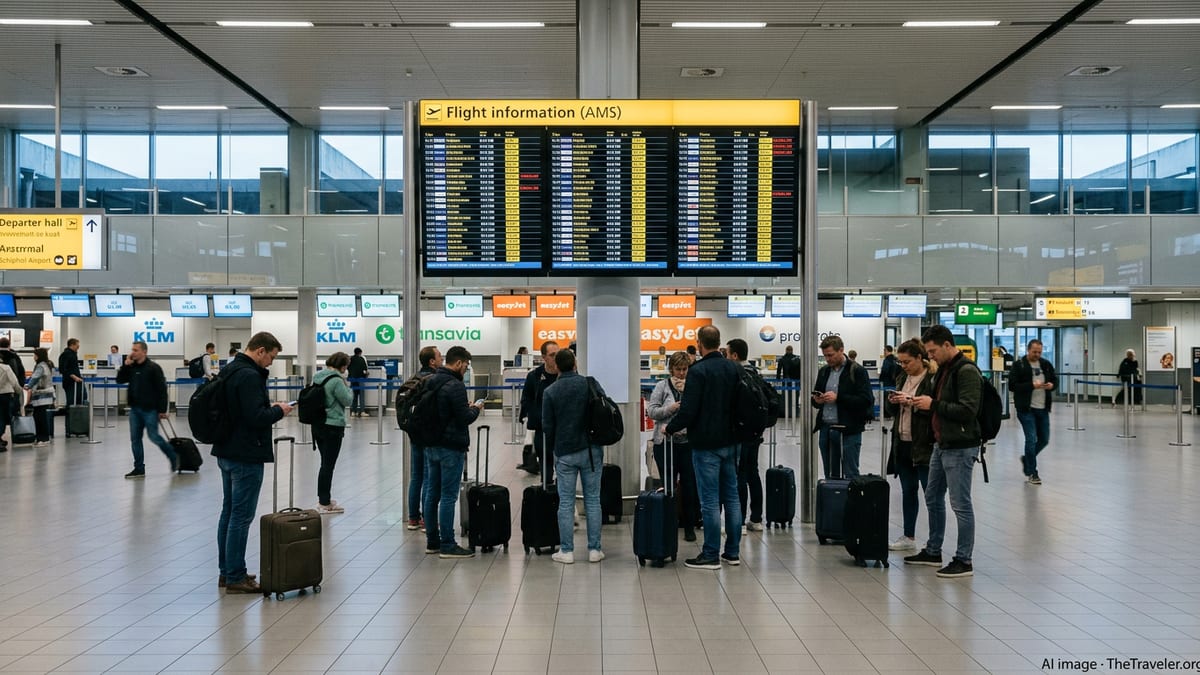
Network-Wide Disruptions Stretch Across Ten European Countries
Publicly available operational data compiled on July 7 indicate that the latest wave of disruption spanned France, Spain, Austria, Switzerland, Norway, Italy, Ireland, Russia, the Netherlands and the United Kingdom. The figures point to a broad-based network issue rather than a problem confined to a single airport or airline, with delays and cancellations spread across both intra-European and some longer-haul services.
Reports from industry trackers describe a pattern of rolling hold-ups, with aircraft and crew out of position contributing to knock-on delays throughout the day. While the number of cancellations, at 95, remained relatively modest compared with the total schedule, the 1,692 delayed flights translated into crowded terminals, missed connections and extended waiting times at some of Europe’s busiest airports.
Published coverage links the disruption to a combination of air traffic flow management constraints, congestion at key hubs and local operational challenges in certain airspace sectors. This mirrors broader trends flagged in recent Eurocontrol network performance briefings, which have highlighted recurrent bottlenecks and rising delay minutes at several large European airports.
Air France, Iberia, Air Baltic and a range of other European and non-European airlines were among the carriers with affected services on the day, according to the disruption tallies. The impact varied by operator, with some airlines seeing clusters of delayed departures at their main hubs while others reported scattered issues across the continent.
Paris, Madrid, Zurich And Other Major Hubs Under Pressure
The disruption was particularly visible at leading European gateways. Paris Charles de Gaulle and Madrid-Barajas featured prominently in the day’s delay statistics, reinforcing a pattern seen in earlier operational reports this year in which both airports have periodically faced heavy traffic loads and capacity constraints.
In Paris, publicly available tracking data show that delays affected a mix of domestic French, intra‑Schengen and long‑haul services. Air France, which uses Charles de Gaulle as its main hub, faced schedule pressure as late‑running inbound flights cascaded into outbound delays. Secondary airports serving the French capital, such as Orly, also saw knock‑on effects on some Iberia and other European services.
Madrid-Barajas experienced a similar picture, with Iberia and other group carriers contending with late departures and crowded peak periods. According to aggregated delay counts, Madrid was among the airports with the highest number of affected flights on July 7, only slightly behind Paris in some tallies. Congestion at the Spanish hub also had repercussions for connections to other European cities, including routes into central and northern Europe.
Zurich, Vienna, Amsterdam, Dublin, London Heathrow, Barcelona, Nice, Oslo, Vnukovo and Catania were also cited in disruption summaries as airports experiencing notable operational strain. In Zurich and Vienna in particular, a relatively small number of cancellations combined with a high proportion of delayed flights, contributing to packed gate areas and tight transfer windows for connecting passengers.
Air France, Iberia, Air Baltic And Others Record Significant Delays
The July 7 figures underline how dispersed disruptions can be across multiple airline groups even when total cancellation counts remain below 100. According to detailed breakdowns referenced in travel industry reporting, Air France and its partners saw a substantial number of delayed departures from Paris and other French airports, reflecting their deep integration into the European hub network.
Iberia similarly recorded elevated disruption across its Madrid-based operations. Previously published performance analyses for Iberia’s key Madrid routes have shown generally strong on‑time statistics over recent months, but network‑wide stress events such as this can quickly erode punctuality across multiple rotations in a single day.
Air Baltic, which maintains a presence at several Western and Central European airports, was reported to have 39 delayed flights and 6 cancellations associated with the day’s disruption, with services touching Zurich, Vienna, Paris Charles de Gaulle and Catania among those affected. For a relatively smaller carrier, that concentration of delays can represent a significant share of the daily schedule and complicate aircraft allocation in subsequent days.
Other European groups, including low-cost operators and legacy network airlines, also appeared in the disruption tables, though often with fewer outright cancellations and more instances of moderate departure or arrival delays. The pattern aligns with recent Eurocontrol briefings that have shown rising average delay minutes per flight for several airline groups operating in congested airspace sectors.
Underlying Causes: Airspace Constraints And Seasonal Congestion
While a single triggering incident was not identified in public reporting for July 7, the disruption unfolded against a backdrop of seasonal traffic growth and known airspace constraints. Eurocontrol’s latest network performance snapshots for June 2026 point to elevated air traffic flow management delays at locations including Zurich Airport, Madrid area control and Paris Charles de Gaulle, highlighting structural capacity pressures in the run‑up to the peak summer travel period.
Industry analyses note that even minor operational disturbances in such an environment can quickly ripple across the network. Factors such as temporary staffing imbalances, localized weather issues, runway works or sector capacity restrictions can lead to flow control measures that slow traffic, ultimately materializing as delays and, in some cases, preventative cancellations.
Airlines have also been operating more tightly optimized schedules in response to strong post‑pandemic demand, which leaves less slack in the system when disruptions occur. Late‑running aircraft can be difficult to reset without cancelling rotations, particularly for carriers with complex hub‑and‑spoke systems centred on airports like Paris and Madrid.
Observers point out that recent months have seen multiple days with very high delay counts across Europe, often without a single dominating cause such as a major strike or storm. Instead, the picture is one of cumulative strain across infrastructure, air traffic management and airline resources, with events such as July 7 serving as visible spikes in a broader trend.
What The Disruption Means For Travellers
For passengers, the immediate impact of the latest disruption included missed connections, last‑minute rebookings and extended waiting times at airports. With airline apps and departure boards frequently updating throughout the day, travellers on affected Air France, Iberia, Air Baltic and other European flights were often asked to remain near gates while revised departure times were confirmed.
Travel advice circulated by passenger‑rights groups and airline watchdogs in response to similar events this year has emphasized the importance of monitoring flight status closely, checking available rebooking options online and keeping records of boarding passes and receipts for any out‑of‑pocket expenses. Under European passenger protection rules, some travellers on cancelled or heavily delayed flights may be eligible for compensation or reimbursement depending on the cause of the disruption and the notice provided.
Analysts warn that further days of elevated disruption remain possible as the European peak summer season progresses, particularly at pressure points such as Paris, Madrid and Zurich. Eurocontrol’s forward‑looking traffic assessments for 2026 anticipate continued growth in flight numbers, which could exacerbate the effect of any new operational challenges in the weeks ahead.
For now, the July 7 figures serve as a reminder that even in the absence of headline‑grabbing strikes or severe weather, Europe’s tightly woven aviation network remains vulnerable to widespread delays and scattered cancellations, with knock‑on effects for airlines and passengers across the continent.