


More news on this day
Passengers traveling through Sharjah International Airport in the United Arab Emirates have faced significant disruption after six flights were cancelled and 28 delayed, affecting services operated by Air Arabia and several other regional and international carriers.
Get the latest news straight to your inbox!
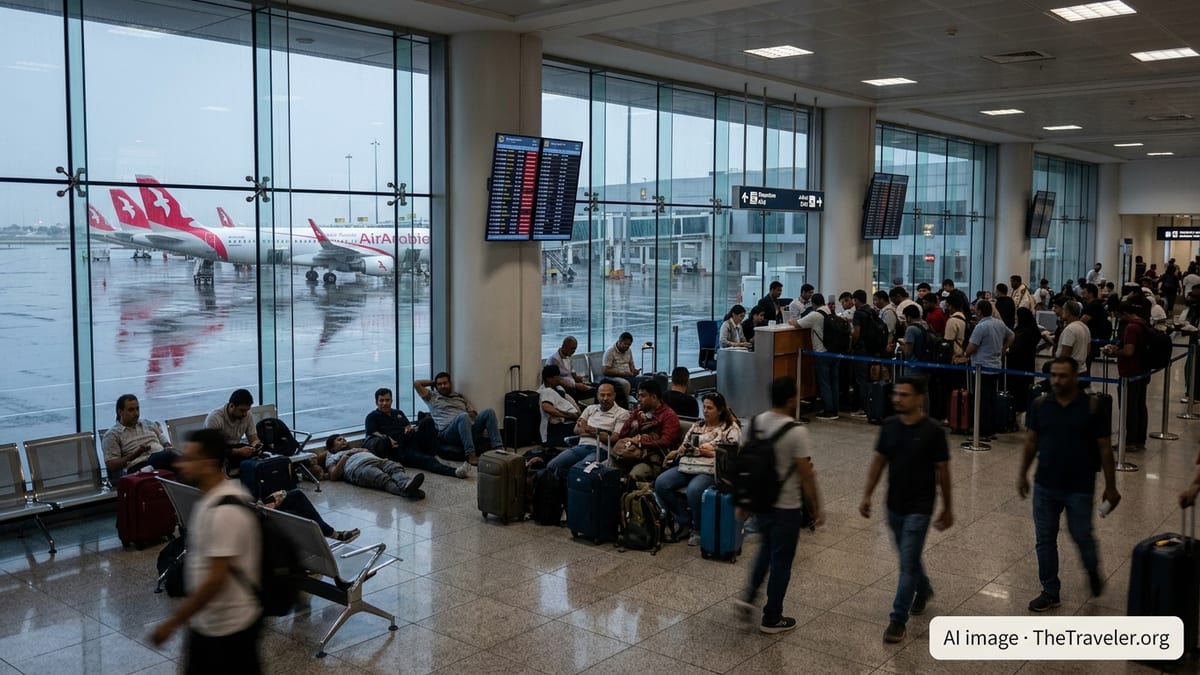
Operational Disruption Hits Key UAE Gateway
The disruption unfolded as Sharjah International Airport, one of the UAE’s busiest low cost hubs, reported a cluster of cancellations and delays concentrated over a short operating window. Publicly available flight status data shows six departures and arrivals were cancelled outright, while 28 more experienced delays of varying duration.
The pattern of disruption has been most visible across Air Arabia’s network, reflecting the airline’s role as the primary operator at Sharjah. However, schedules for other carriers using the airport, including regional and South Asian airlines, have also recorded knock on delays as aircraft, crews and airport resources were reallocated.
While exact delay times have varied from short holds to extended waits, the combined effect has been a ripple of missed connections, rebookings and overnight stays for passengers using Sharjah as either an origin, destination or transfer point.
Sharjah International Airport, which serves millions of travelers each year, plays a critical role in linking Gulf passengers to destinations across the Middle East, North Africa, South Asia and parts of Europe. Any concentrated disruption at the airport therefore tends to reverberate widely across regional travel plans.
Air Arabia Among Most Affected Carriers
As Sharjah’s largest airline and home based operator, Air Arabia has been among the most affected carriers. Flight tracking platforms and airport departure boards have indicated a series of Air Arabia services either cancelled or subject to prolonged delay, particularly on routes linking Sharjah with busy leisure and labor corridors in South Asia and the Middle East.
The low cost carrier, which operates an extensive point to point network from Sharjah, typically runs tight turnarounds that can magnify the impact of even relatively brief operational disruptions. When an early sector is delayed or cancelled, subsequent rotations using the same aircraft can experience knock on schedule changes throughout the day.
Reports indicate that Air Arabia has been working within the parameters of its published policies to reaccommodate affected passengers on the next available flights or offer alternatives where possible. For some routes, however, limited seat availability and high seasonal demand have made same day rebooking difficult, resulting in longer wait times for travelers.
Other airlines serving Sharjah, including carriers from India and the wider Gulf region, have also recorded delays, although on a smaller scale relative to Air Arabia’s large presence at the airport.
Passenger Experience: Queues, Missed Connections and Rebookings
For travelers on the ground, the operational issues have translated into lengthy queues at check in counters, transfer desks and customer service points, as well as crowded waiting areas around affected departure gates. Social media posts and traveler forums describe passengers attempting to sort out alternative connections, request refunds or secure overnight accommodation after missing onward flights.
Some passengers connecting through Sharjah on long haul itineraries reported particular concern about tight layovers, with delays on inbound flights reducing already short transfer windows. In several cases, missed onward departures have required full itinerary changes or extended stopovers while seats are found on later services.
Publicly available guidance from consumer and travel rights organizations notes that entitlements for compensation or assistance can vary depending on the carrier’s conditions of carriage, the cause of disruption and the jurisdictions involved. Passengers are frequently advised to keep records of boarding passes, delay notifications and any additional expenses incurred while waiting for rebooking or refunds.
Travelers using Sharjah in the coming days are being encouraged by published advisories and airport information channels to monitor flight status closely before leaving for the terminal, arrive early for check in, and allow extra buffer time for connections where possible.
Potential Causes and Broader Regional Context
Published coverage on Gulf aviation indicates that airports across the region have faced sporadic operational challenges in recent months, including periods of adverse weather, airspace congestion and infrastructure strain during peak travel seasons. These broader pressures can contribute to clusters of cancellations and delays when combined with local operational constraints.
Sharjah’s role as a major low cost hub adds another layer of complexity. High aircraft utilization, concentrated departure banks and strong seasonal demand can leave limited slack in the system to absorb disruptions. When several flights are affected in quick succession, recovery can take multiple rotations as airlines work aircraft and crews back into position.
Industry analysts have also pointed to the interconnected nature of Middle East air networks, where delays or disruptions at one gateway can quickly affect neighboring hubs through shared routes, code shares and passenger flows. In that context, irregular operations at Sharjah can have an outsized impact on regional itineraries, especially for budget conscious travelers who rely heavily on point to point services via Air Arabia and similar carriers.
Although the immediate disruption centers on a defined set of cancelled and delayed flights, the situation underscores the continued vulnerability of tightly scheduled low cost networks to sudden operational shocks, whether caused by local factors or wider regional events.
What Impacted Travelers Should Do Next
For passengers already affected by the Sharjah cancellations and delays, travel experts recommend first confirming the latest status of their specific flight through airline apps, airport boards or official customer communication channels. Once a cancellation or significant delay is verified, travelers can then explore rebooking, rerouting or refund options based on their ticket conditions.
Publicly available information on airline policies typically outlines whether passengers may switch to a later flight without additional fare, accept travel credit for future use, or request a refund in cases where the carrier is unable to operate the original service. Some travelers may also be eligible for meals, hotel stays or ground transport assistance, particularly when disruptions extend overnight.
Looking ahead, the disruption at Sharjah serves as a reminder for travelers planning itineraries through busy hubs to build in generous connection times, especially when using separate tickets or combining low cost carriers. Travel insurance with clear coverage for delays, missed connections and cancellations can also provide an additional layer of financial protection when schedules unravel unexpectedly.
With Sharjah International Airport working to stabilize operations and airlines adjusting schedules, passengers passing through the UAE gateway in the near term are likely to see more normalized operations, though many will still be feeling the after effects of the latest wave of cancellations and delays on their travel plans.