


More news on this day
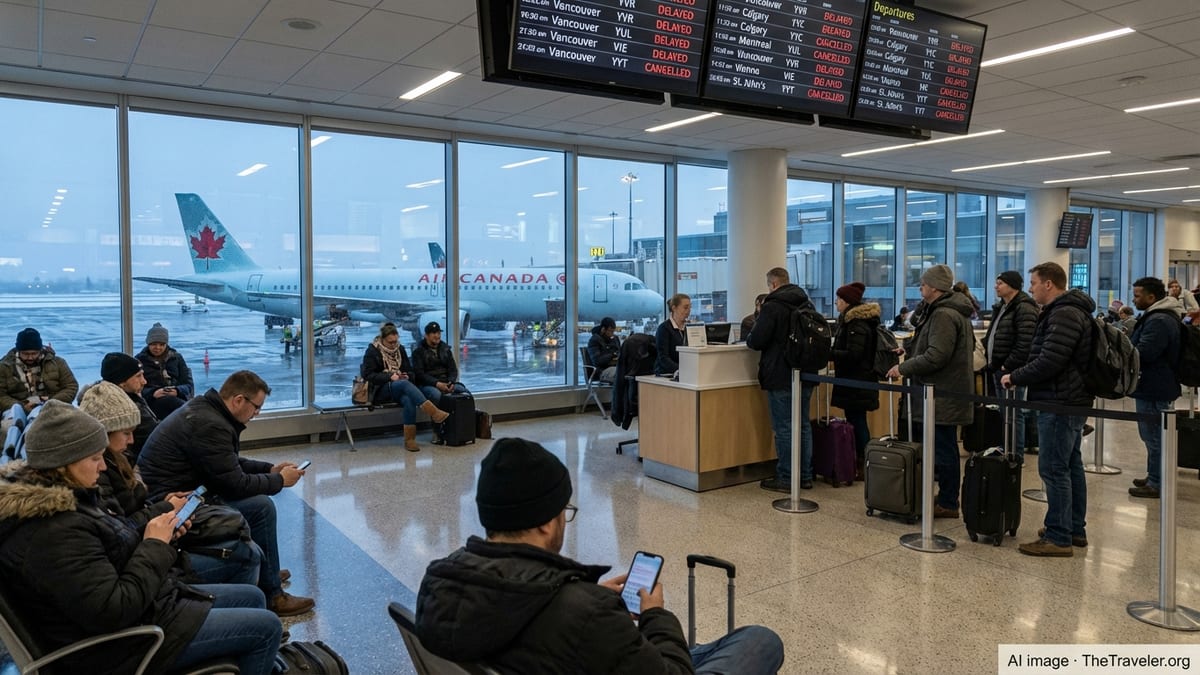
Air passengers across Canada faced another day of severe disruption as publicly available flight-tracking data showed 71 cancellations and at least 245 delays affecting services in and out of major hubs including Vancouver, Toronto, Montreal and Ottawa.
Get the latest news straight to your inbox!
Major Hubs From Vancouver to Montreal See Schedules Unravel
Data compiled from live flight-tracking platforms on July 8 indicates that flight disruptions were spread across the country’s busiest airports, with Vancouver, Toronto Pearson, Montréal–Trudeau and Ottawa among the hardest hit. While the precise totals varied by airport through the day, combined counts reached 71 cancellations and 245 delays across the national network.
Regional and connector routes bore a significant share of the impact. Flights operated by Jazz under the Air Canada Express banner, Porter Airlines services linking Toronto’s Billy Bishop Airport with Ottawa and Montreal, and PAL-operated regional segments all featured prominently in the lists of delayed or cancelled departures and arrivals. These flights often act as critical feeders into longer-haul itineraries.
The result for travellers was a patchwork of revised departure times, rolling delays and last-minute cancellations that rippled through the schedule. Early-morning disruptions on domestic routes in particular created knock-on effects throughout the day as aircraft and crews fell out of position for subsequent legs.
In Vancouver and Montreal, travellers arriving from or connecting to western and Atlantic Canada faced some of the longest waits. Short-haul flights to and from cities such as Nanaimo, Quebec City and Fredericton, frequently operated by regional partners, showed repeated status changes before finally departing late or being scrubbed altogether.
Multiple Carriers Affected, With Regional Partners in the Spotlight
The disruption was not confined to a single airline. Publicly available boards and trackers showed cancelled or significantly delayed flights involving Air Canada mainline, Jazz-operated Air Canada Express services, Porter Airlines and PAL-operated connections, among others. In several cases, a mainline carrier’s logo masked operations actually flown by a regional partner, underscoring the interconnected nature of Canada’s aviation network.
Flights marketed by Air Canada but operated by Jazz or PAL appeared repeatedly among delayed and cancelled services at Ottawa and Montreal. Similarly, Porter flights serving secondary routes and cross-country connections experienced schedule changes that left some passengers seeking alternative options or extended layovers.
The shared reliance on regional affiliates means a disruption in one part of the system can quickly spread. When a Jazz or PAL flight is cancelled on a feeder route into a hub such as Toronto Pearson or Montréal–Trudeau, affected travellers may miss onward connections to western Canada, the United States or overseas destinations, compounding the total number of disrupted journeys beyond the raw cancellation count.
For airlines, rebooking passengers at short notice has become increasingly complex as summer loads run high and spare seats are limited. That reality has made even modest schedule changes more painful for travellers, who often find that the next available flight is already close to full.
Operational Strain, Fuel Pressures and Tight Crewing Drive Disruption
While airlines cited a range of causes on flight status boards, industry coverage in recent weeks has pointed to several underlying pressures converging on Canadian carriers this summer. Elevated jet fuel costs and an ongoing fuel supply crunch have already prompted some airlines to announce seasonal route adjustments and capacity trims on less profitable segments heading into the winter period.
At the same time, the industry is still grappling with tight crew availability, particularly among regional operators. Public discussion around recent cancellations on certain Jazz-operated routes has referenced staffing constraints and qualification issues on specific aircraft types, which can limit the flexibility to add extra sections or quickly swap equipment when flights go off schedule.
Weather continues to play a role as well, especially where thunderstorms or low-visibility conditions slow operations at major hubs. Even when only a handful of flights are cancelled for safety or operational reasons, the need to sequence arriving and departing aircraft more conservatively can quickly generate waves of delays that spread across the network.
Experts following the sector note that strong demand has encouraged airlines to keep schedules tight, leaving less slack in the system. With aircraft operating near full utilization and load factors remaining high, any single point of failure, from a ground equipment issue to a late inbound crew, can cascade into the kind of broad disruption seen across Canada’s airports.
Travellers Weigh Options Under Canada’s Passenger Protection Rules
The recurring pattern of cancellations and rolling delays has renewed focus on what options travellers have when their plans are derailed. Canada’s Air Passenger Protection Regulations set out minimum standards of treatment and, in some cases, compensation when flights are cancelled or significantly delayed for reasons within an airline’s control and not related to safety.
Consumer-rights portals and legal guidance note that larger carriers, a category that includes Air Canada, WestJet, Flair, Air Transat and Porter, face more stringent rebooking and compensation obligations than smaller operators. For eligible disruptions that fall within airline control, passengers may be entitled to rebooking on the next available flight, meal vouchers, hotel accommodation and, in some circumstances, financial compensation based on delay length.
However, publicly available commentary from travellers and advocates suggests that navigating these rules in practice can be challenging. The classification of a delay or cancellation, whether attributed to weather, safety or operational factors, often determines what support is offered, and disputes about the cause are common.
With disruptions now a frequent feature of peak travel periods, passenger advocates urge travellers to document all communications, keep receipts for out-of-pocket expenses and familiarize themselves with both federal regulations and airline-specific policies before filing claims.
Summer Travel Outlook Remains Uncertain as Demand Stays High
The latest wave of cancellations and delays comes amid persistent reports that domestic airfares remain elevated compared with last year, even as fuel costs fluctuate. Industry analysts say ongoing strong demand has given carriers little incentive to cut ticket prices, while operational challenges and fuel constraints have limited how much additional capacity can be added.
For travellers, this combination of higher fares and reduced schedule resilience has raised the stakes of any disruption. Passengers paying more for summer journeys are often finding that alternative same-day options are scarce or unaffordable once their original flight is cancelled.
There are signs that airlines are attempting to adjust by trimming some weaker routes and consolidating traffic on busier corridors, particularly heading into the winter season. Yet in the short term, those changes may mean fewer backup options when flights go wrong, especially from smaller cities that rely heavily on a single carrier or regional partner for connectivity.
With the heart of the summer travel period still ahead, reports indicate that Canadian airports and airlines remain under close scrutiny from regulators, consumer advocates and the travelling public. As disruptions such as today’s 71 cancellations and 245 delays demonstrate, the country’s air transport system continues to operate under considerable strain, leaving passengers to navigate an environment where even routine trips can quickly become unpredictable.