


More news on this day
Europe’s most visited cruise ports are entering a new phase of tourism management in 2026, as cities from Venice to Santorini and Barcelona turn to targeted access fees and passenger levies to rein in overtourism without abandoning the economic benefits of the cruise industry.
Get the latest news straight to your inbox!
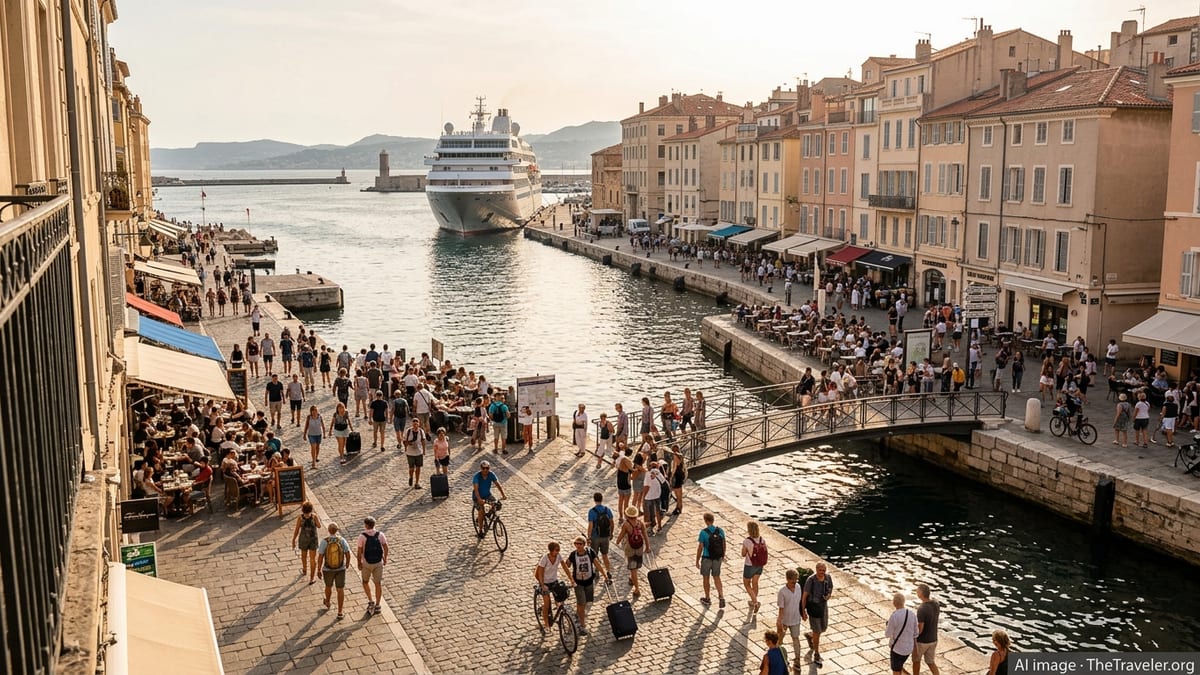
Venice Extends Access Fee Experiment Into 2026
Venice remains at the center of the European debate over how to balance mass tourism with fragile urban heritage. After several years of discussion and limited trials, the city has moved ahead with an expanded access fee for day visitors, including many cruise passengers whose itineraries feature only a few hours inside the historic center.
Public information on the city’s dedicated access-fee portal shows that the policy is framed as an experiment that continues into 2026, focused on selected peak days and daytime hours when visitor pressure is highest. The fee applies to people entering the historic center without an overnight booking, with exemptions for residents, commuters and specific categories of travelers. Cruise passengers who disembark for the day fall squarely into the target group for the measure.
The access fee is separate from Venice’s existing accommodation tax and is explicitly described in city documents as a tool to better manage tourist flows and discourage unplanned day trips. Cruise lines now inform passengers in pre-departure materials that they may need to register and pay the fee for days covered by the scheme, integrating the city’s rules into the broader cruise experience.
The symbolism of Venice’s policy shift is significant for the wider industry. The city has already diverted large cruise vessels away from the historic lagoon, and the access fee further signals that mass day-tripping, long viewed as a low-cost way to “see Venice in a day,” now carries a clearer financial and administrative cost.
Barcelona Raises Charges as It Tightens Grip on Day Visitors
On the western Mediterranean, Barcelona is using tax policy to push the cruise sector toward what local planning documents describe as “higher-quality, lower-impact” tourism. The city is part of the broader Catalan tourism tax system, but it applies its own surcharge that will increase in stages through 2026.
Information from the Catalan Tax Agency outlines higher rates for visitors staying in city accommodation after April 2026, and municipal tourism planning reports highlight cruise passengers as a distinct category. Earlier white papers on tourism taxation have already referenced an 8 euro per passenger daily charge for cruise visitors as a benchmark figure, and Barcelona’s more recent policy documents link rising taxes to pressure on local services and public space, particularly around the waterfront and the historic center.
Although the structure differs from Venice’s access fee, the practical impact for cruise travelers is similar: short, high-intensity visits that place strain on city infrastructure are no longer treated as free public goods. Cruise operators selling Mediterranean itineraries that include Barcelona are beginning to emphasize longer stays, bundled public-transport tickets and staggered excursions to demonstrate that they can align with the city’s management goals.
The tax changes come on top of separate moves to limit bus congestion from cruise terminals and to redistribute tourist flows away from the most saturated central districts. Industry analysts suggest that, taken together, these measures could gradually shift the profile of cruise calls toward fewer but higher-spending passengers who stay longer on shore.
Santorini Adopts Daily Passenger Cap and New Cruise Levy
In Greece, Santorini has become a case study in how small islands are responding to years of intense cruise growth. Local and national frameworks have now embedded a firm daily cap of 8,000 cruise visitors, a figure that planning documents indicate remains in place for 2026 after being trialed in earlier seasons.
Travel industry reports and destination briefings state that the island has added a dedicated cruise passenger levy on top of the numerical cap. For peak summer days in 2026, visitors who disembark from cruise ships are charged around 20 euros per person, collected via cruise lines or port agents and earmarked for infrastructure, environmental management and crowd-control projects.
Schedules published by specialist cruise-planning sites show that the cap is already influencing the composition of ship calls. Santorini is due to receive fewer ships in 2026 than in 2025, even as Greek cruise traffic hits record levels elsewhere. On some days fewer, larger vessels are scheduled, but overall passenger numbers are kept within the 8,000-person ceiling.
Local tourism analysis notes that the island continues to grapple with bottlenecks such as limited tender capacity and the cable car up to Fira. By pairing a strict numerical limit with a per-passenger fee, authorities are signaling that mass, short-stop calls will be more tightly managed, while cruise passengers who do come ashore will be expected to contribute more directly to the costs of preserving the caldera landscape and village infrastructure.
Amsterdam and Northern Ports Lean on Per-Passenger Taxes
Further north, northern European cruise gateways are building on more established cruise tax frameworks rather than introducing entirely new instruments. Amsterdam, in particular, has been applying a daily tourist tax to sea and river cruise passengers who moor within the city boundaries since 2019, according to public financial reports from the Port of Amsterdam.
Those documents indicate that the city charges a per-person, per-day levy on transit passengers, collected from cruise operators and passed to municipal coffers. The measure forms part of a wider strategy that includes limits on the number of cruise calls at central terminals and long-term plans to relocate or reduce cruise berths near the historic core.
Port tariff booklets for upcoming seasons show that Amsterdam couples this passenger tax with differentiated port dues that reward cleaner ships and penalize more polluting ones. The result is a combined price signal: operators pay more for bringing large numbers of short-stay passengers to the city, but can reduce some of those costs by deploying more efficient vessels and adjusting itineraries.
Other northern ports, from German North Sea cities to Baltic capitals, are watching the Amsterdam model closely. While not all have introduced explicit cruise passenger taxes, several have raised port fees or environmental surcharges, moving in the same direction as Mediterranean destinations that are experimenting with direct per-person levies.
Cruise Industry Faces Patchwork of Local Rules and Higher Costs
Together, these measures amount to a growing patchwork of cruise taxes and access controls across Europe in 2026. Rather than a single, continent-wide policy, the emerging pattern is highly local, with each port designing its own combination of per-passenger fees, access limits, port dues and operational restrictions.
Industry commentary suggests that cruise lines are responding in three main ways. First, itineraries are being adjusted to spread calls over more ports and days, reducing pressure on the most contested destinations. Second, ships are staying longer in port or using overnight calls, allowing passengers to explore beyond peak midday hours and making tax payments feel more aligned with time spent ashore. Third, operators are increasingly marketing shore excursions that highlight less-visited neighborhoods, rural hinterlands or cultural experiences that promise a lighter footprint.
Travel advisors note that for individual passengers, the new levies often add only a modest amount to the overall price of a cruise holiday, especially on higher-end itineraries. However, for budget-conscious travelers and mass-market lines operating very large ships, the combination of multiple local taxes across a route can become a noticeable line item, particularly when several ports in a single voyage now apply per-person charges.
For European destinations, the political test of these policies will come over the next few peak seasons. If access fees and cruise taxes help stabilize visitor numbers, fund visible improvements and maintain local support for tourism, they are likely to become a more permanent fixture of the cruise landscape. If they fail to shift behavior or are seen as mere revenue tools, pressure may grow for even stricter caps or outright reductions in cruise traffic.