


More news on this day
Europe’s new biometric Entry/Exit System was meant to modernise border control and tighten security. Instead, its rushed rollout has produced hours-long queues, missed flights and mounting frustration for non-EU travellers, with governments and industry now warning that disruption could stretch well beyond the 2026 peak season.
Get the latest news straight to your inbox!
From Digital Fix to Operational Headache
The Entry/Exit System, or EES, is the European Union’s new automated database for recording border crossings by non-EU nationals entering and leaving the Schengen area. It replaces manual passport stamps with biometric enrolment, capturing fingerprints and facial images alongside passport details at airports, ports and land frontiers.
The project was sold as a way to improve security, prevent overstays and eventually speed up checks. Official planning documents describe it as a cornerstone of a wider digital border ecosystem that will feed into the upcoming European Travel Information and Authorisation System. In practice, full activation in April 2026 followed a staggered rollout that began in October 2025, leaving countries and operators to adjust procedures on the fly while still handling near-record passenger volumes.
As the system expanded to cover all external Schengen crossings this spring, reports across Europe highlighted a sharp increase in processing times. Airport associations pointed to data showing that border control throughput had in some cases slowed by 50 to 70 percent compared with pre-EES conditions, turning peak arrival waves into bottlenecks.
Travel industry briefings describe a basic pattern behind the disruption. The first encounter with EES is the most time-consuming, as officers must capture biometrics and create a new file for each traveller. When several planeloads of passengers arrive simultaneously, those enrolments stack up, lengthening queues and pushing airport infrastructure beyond its intended capacity.
Hours-Long Queues Become the New Normal
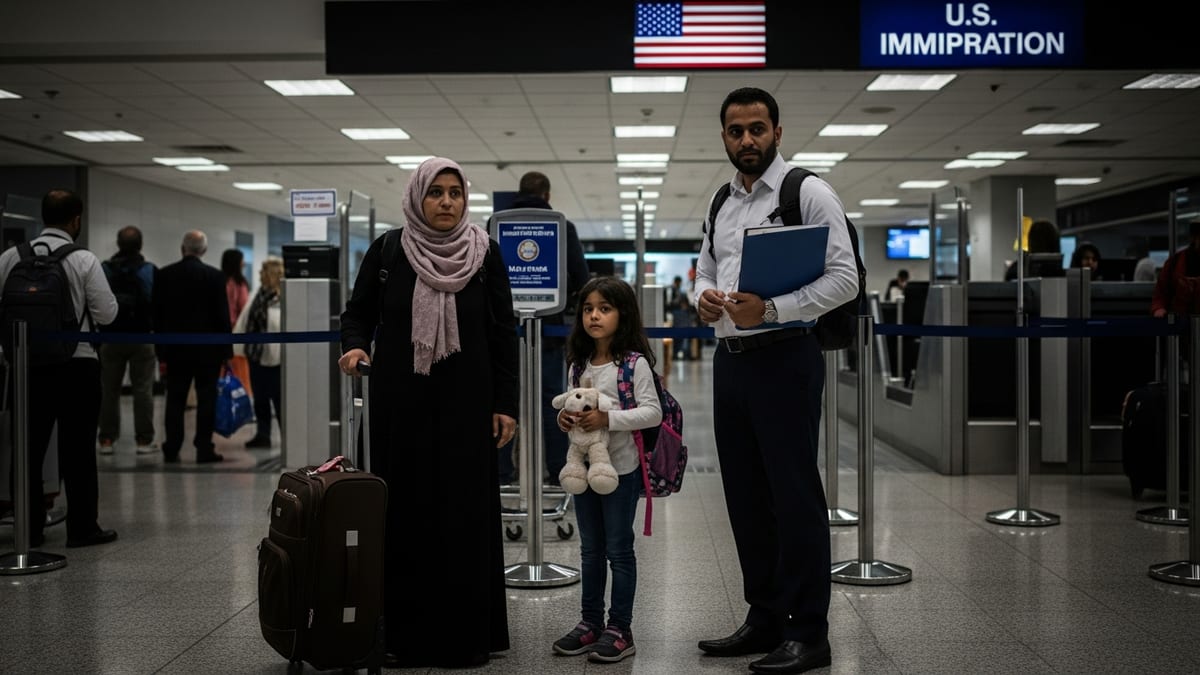
For passengers, the most visible symptom of EES teething problems has been the return of border queues measured in hours rather than minutes. Reports from major hubs in France, Spain, Italy and the Netherlands describe lines for non-EU arrivals stretching across hallways and into gate areas, with waiting times of two to three hours now regularly cited during busy periods.
Accounts gathered by travel media and consumer sites point to even more severe peaks. In some locations, queues of four to six hours have been reported during weekend surges, particularly where several long-haul flights land close together. Missed connections, rebooked itineraries and abandoned short-break trips have become recurring themes in these early months of full operation.
Industry bodies representing airports and airlines have issued joint statements warning that, without further flexibility, summer 2026 could see widespread disruption at Schengen entry points. Analyses shared with European policymakers warn that some terminals are already operating at or beyond their design capacity for manual intervention, leaving little room to absorb glitches or surges in passenger traffic.
Consumer research cited by European travel publications indicates that anxiety about border delays is starting to influence booking decisions. Surveys carried out this year suggest that a significant minority of would-be visitors have postponed or rerouted trips because of concerns about EES queues, particularly at the busiest Mediterranean gateways.
Technical Glitches and Patchy Implementation
Behind the scenes, many of the problems stem from the complexity of integrating a new biometric system across 29 participating countries, each with its own infrastructure, staffing levels and border management culture. Publicly available assessments point to uneven training, inconsistent use of contingency measures and varying interpretations of how strictly rules should be enforced during the transition.
Technical reliability has also become a major talking point. Travel sites and passenger forums describe fingerprint scanners timing out, facial-recognition cameras failing to register images and local systems struggling to communicate with central databases at peak times. In some cases, airport authorities have reportedly suspended biometric capture temporarily to clear mounting queues, reverting to manual workarounds that undercut the original efficiency goals.
There are also growing complaints about data quality and record-matching. Travellers who believed they had completed the one-time registration requirement have reported being asked to repeat the full biometric process on subsequent trips, suggesting that their profiles were not correctly retrieved or had been duplicated. This not only adds time at the border but also raises questions about how robustly the system will track movements once volumes increase further.
Border management specialists note that such issues are not unique to Europe. Comparable systems in other regions have also experienced early technical setbacks and public backlash. The concern in the EU context is that the Entry/Exit System went live just as international travel demand rebounded, leaving little margin for phased testing before being exposed to full-scale holiday traffic.
Airlines, Ports and Governments Scramble to Adapt
As delays mount, responsibility for managing the fallout is being shared uneasily between national governments, airports, airlines and ferry and rail operators. Travel associations have urged wider use of the contingency options written into EES rules, such as simplified processing for low-risk passengers when queues exceed a set threshold or temporary adjustments to how data is captured.
Some airports have adjusted queuing layouts, recruited additional staff or reconfigured e-gate areas to handle the new requirements. Yet industry analyses argue that infrastructure changes alone cannot solve the immediate problem, particularly at constrained legacy terminals or crowded ferry ports. Several Italian gateways, including those serving Rome, have publicly signalled that they may need to limit or suspend full EES checks at times to avoid gridlock during the busiest weeks.
Airlines have responded by revising passenger guidance and, in some cases, schedule planning. Carriers serving leisure-heavy routes are advising non-EU customers to arrive much earlier at departure airports for flights into the Schengen area, and to build in generous buffers for self-planned connections. Corporate travel managers are likewise being warned that same-day meetings or tight itineraries involving Schengen entry may no longer be realistic through at least the end of this summer.
National transport ministries and the European Commission, under pressure from both industry and travellers, have signalled support for fine-tuning the rollout. Public comments highlight efforts to improve system stability, update software and share best practices between member states. However, there is little indication that the underlying framework will be paused or reversed; instead, the emphasis is on learning by doing while the system remains active.
No Quick Return to the Old Stamp-and-Go
For visitors planning travel to Europe, the most important message emerging from recent coverage is that the Entry/Exit System is here to stay. Officials continue to frame EES as a central pillar of the bloc’s long-term border and migration strategy, designed to work in tandem with forthcoming electronic travel authorisations and other digital tools.
Experts in border technology point out that the data generated by EES could eventually allow for more automation and pre-clearance, potentially leading to smoother experiences once the system stabilises. Over time, repeat travellers whose biometrics are already in the database may be able to move through dedicated lanes or upgraded e-gates more quickly than under the previous stamp-based regime.
In the short term, however, the reality for many non-EU nationals is less optimistic. With airlines and airport groups warning that significant queues are likely to persist through at least the 2026 summer season, travellers are being urged to treat border checks as a major time variable rather than an afterthought. That means allowing extra time at arrival points, reconsidering tight layovers and staying alert to changing procedures at specific airports and ports.
The transition to digital borders was always likely to be complicated. Europe’s experience with EES shows how quickly theoretical efficiency gains can be overshadowed by implementation gaps and real-world passenger flows. As the system beds in, the challenge for authorities will be to turn a messy launch into a stable, predictable process without further eroding the confidence of the millions of visitors the continent depends on each year.