

More news on this day
Germany’s position as a leading aviation bridge between Europe and the Middle East is set to strengthen in summer 2026, as Lufthansa Group carrier Eurowings deepens its network to the United Arab Emirates, Jordan, Egypt, Lebanon and other key markets, extending Dubai services and consolidating new links to Abu Dhabi and Amman.
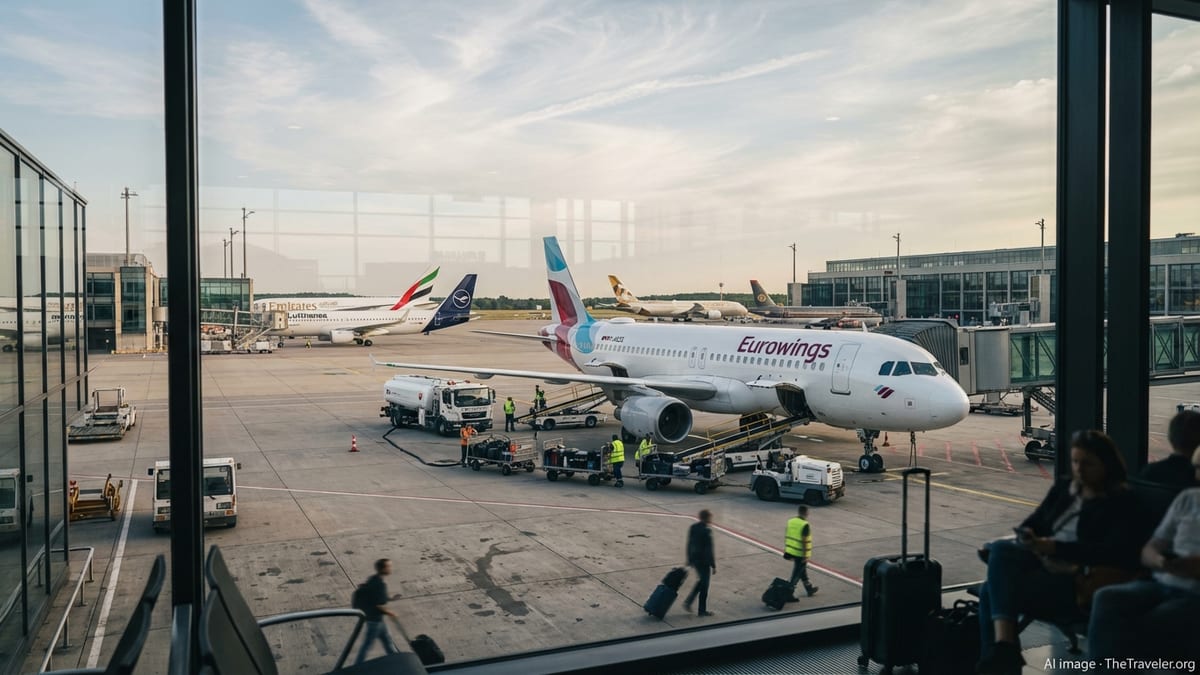
Germany Emerges as a Premier Gateway to the Middle East
Eurowings’ latest schedule moves underscore Germany’s growing importance as a transfer and destination hub for Middle Eastern travelers seeking access to Europe. Building on recent seasons that have seen rapid capacity growth to the Gulf and the Levant, the airline is now treating the region as a core pillar of its medium‑haul strategy rather than a niche winter add‑on.
For summer 2026, Berlin Brandenburg Airport in particular is being positioned as a springboard for traffic to and from the UAE and neighboring markets. The carrier has committed to its most extensive Berlin schedule yet, with a larger based fleet and a broader array of European connections that enable smooth same‑day itineraries from Dubai and Abu Dhabi deeper into the continent.
This development comes as Middle Eastern governments, including the United Arab Emirates, Jordan, Egypt and Lebanon, continue to court German carriers and airports as neutral, reliable partners amid shifting regional travel flows. The result is a network architecture where Germany not only feeds classic holiday demand, but also serves visiting‑friends‑and‑relatives and business traffic in both directions.
Industry observers say this has strategic implications for competition with traditional Gulf super‑hubs. As point‑to‑point and short‑haul connections proliferate, more travelers are starting and ending their journeys in Germany, reinforcing its position as a standalone aviation market rather than merely a spoke for long‑haul transfers via the Gulf.
Dubai Services Pushed Beyond the Traditional Winter Peak
At the center of Eurowings’ Middle East expansion is Dubai, long the airline’s flagship Gulf destination. What began as a strong winter sun route has now been extended into the shoulder months, with the carrier confirming that Berlin–Dubai flights will run through at least June 2026, rather than winding down at the end of the winter season as in previous years.
From Berlin, Eurowings is operating up to 11 weekly flights to Dubai through the end of April, before trimming to six weekly services in May and June. This still represents a material increase in capacity compared with earlier years and reflects confidence that demand to the emirate is shifting from purely seasonal leisure travel to a more balanced mix of tourism, trade and family visits.
Dubai links from other German cities, including Stuttgart, Cologne/Bonn, Düsseldorf and Hanover, also remain a cornerstone of the program. Eurowings’ recent ramp‑up has delivered record numbers of Dubai frequencies across its German bases, giving travelers in multiple regions of the country direct access to the United Arab Emirates without routing via Frankfurt or Munich.
Tourism officials on both sides view the extended season as a way to smooth demand and promote Dubai beyond its classic winter profile. May and June departures appeal to travelers looking for shorter breaks, lower hotel rates and a slightly less crowded city, while still capitalizing on Dubai’s extensive retail, events and family attractions.
Abu Dhabi Consolidates a New Direct Link to Berlin
Complementing the Dubai network is Eurowings’ new connection between Berlin and Abu Dhabi’s Zayed International Airport, which launched in late 2025 and is expected to play an important role throughout the 2025/26 winter and into summer 2026 scheduling decisions. The three‑times‑weekly service has already been welcomed by Abu Dhabi authorities as a vital new European link.
The route, flown with Airbus A320 aircraft, gives Germany’s capital region direct access to the UAE’s seat of government and a rapidly evolving cultural and entertainment hub. For Abu Dhabi, Berlin offers a strong blend of political, business and tourism demand, adding depth to a European network that has traditionally leaned heavily on other gateways.
While Eurowings has not yet detailed all seasonal adjustments beyond spring 2026, executives have signaled that robust bookings and reduced competition from some legacy rivals are encouraging the airline to consider additional capacity. The Berlin–Abu Dhabi pairing also helps diversify Germany–UAE traffic beyond Dubai, aligning with broader efforts by the Emirates to distribute visitor flows between their major cities.
For passengers in Jordan, Egypt, Lebanon and neighboring countries, Abu Dhabi provides another potential one‑stop option into Germany when regional conditions allow, supporting the wider ambition of Middle Eastern states to embed Germany more deeply into their air transport networks.
Amman and the Levant Strengthen Ties with German Regions
Jordan and other Levant markets are also central to Eurowings’ strategy. A new Stuttgart–Amman service, introduced in late 2025, is designed to make the Jordanian capital more accessible to travelers from southern Germany while offering Jordanian passengers a direct link into one of the country’s key industrial regions.
The route operates up to twice weekly and targets both leisure and visiting‑friends‑and‑relatives traffic, including Jordanians with ties to Germany’s automotive heartland and German travelers drawn to Jordan’s archaeological sites and desert landscapes. Timings are arranged to enable daytime travel in both directions, an important consideration for families and older passengers.
Elsewhere in the Levant, Eurowings and fellow Lufthansa Group airlines have in recent seasons reinforced connectivity to Beirut and Erbil, alongside classic holiday destinations in Egypt. When conditions permit, this network provides a lattice of options that allow travelers from across the region to route through multiple German airports, reducing dependence on single‑hub routings via Istanbul or the Gulf.
Policymakers in Jordan, Lebanon and Egypt have supported this diversification by working closely with German partners on traffic rights and airport incentives. The result is a growing sense that Germany is not just a distant European market, but a close and increasingly familiar gateway integrated into the region’s travel patterns.
Balancing Growth Ambitions with a Volatile Regional Backdrop
The Middle East’s geopolitical volatility remains an unavoidable backdrop to Eurowings’ expansion. In late February 2026, Lufthansa Group carriers temporarily suspended services to several regional destinations, including Amman and Beirut, and stopped using certain airspaces following a flare‑up in regional tensions. Flights to Dubai and Abu Dhabi were also paused for several days as a precaution.
Industry analysts note that such short‑term suspensions are increasingly built into contingency planning for airlines operating to the region. Flexible fleet deployment, spare aircraft hours and the ability to rapidly rebook passengers are now seen as essential tools that allow carriers like Eurowings to grow in high‑opportunity markets without compromising safety.
Despite these headwinds, demand indicators continue to point upward. Demographic ties between Germany and Middle Eastern communities are deepening, visitor numbers from Gulf and Levant states have trended higher over multiple years, and tourism boards on both sides are investing in joint marketing to keep flows resilient even when headlines are challenging.
For summer 2026, the message from Eurowings, airports in the UAE and the wider Middle East, and German regional gateways is broadly aligned: Germany will play an ever more prominent role as a premier aviation hub for travelers from Dubai, Abu Dhabi, Amman, Cairo, Beirut and beyond, with new and extended routes turning political and economic partnerships into everyday travel reality.