


More news on this day
Luxury cruise lines are rapidly scaling up in Scandinavia, with new ships and itineraries positioning Denmark and Sweden at the center of an increasingly competitive Northern Europe market.
Get the latest news straight to your inbox!
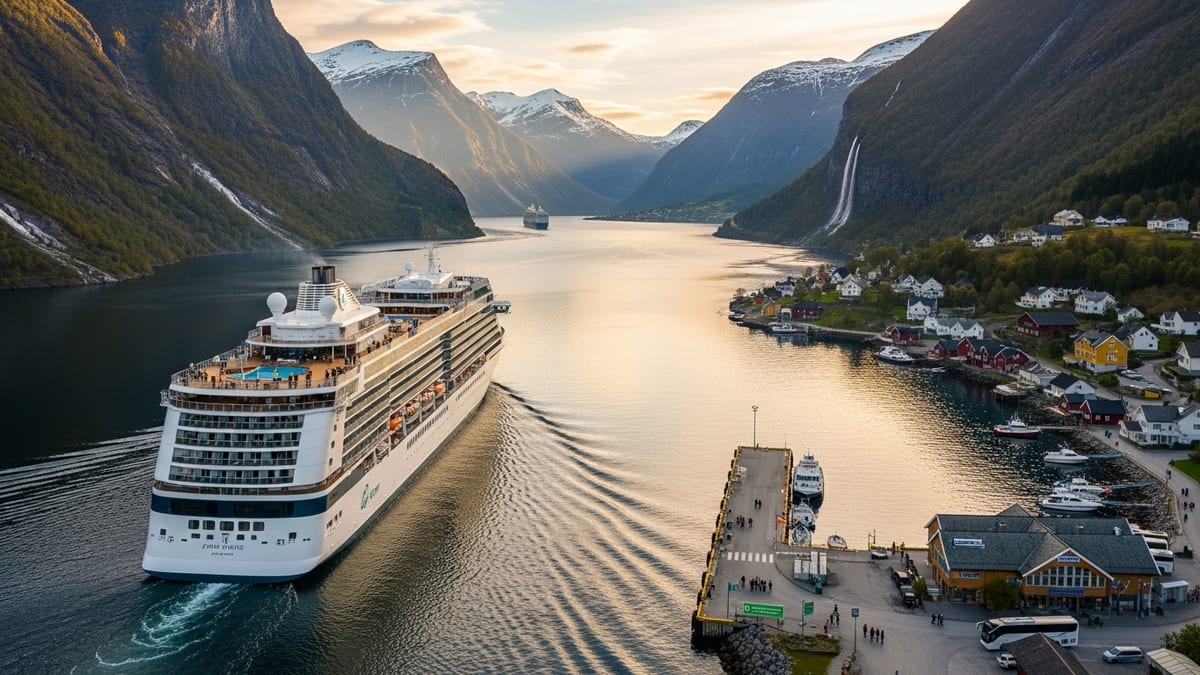
Explora III Anchors New Era of Northern Voyages
Explora Journeys’ newest ship, Explora III, is emerging as a focal point of the luxury segment in Northern Europe. Following delivery at Fincantieri in mid-2026, publicly available information shows that the 922-guest vessel is entering service with a European-focused debut before shifting to a season that puts Scandinavia and the North Atlantic in the spotlight.
According to itinerary data and company materials, Explora III begins with a brief Mediterranean Prelude Journey in July 2026 before launching its maiden season between Barcelona and Lisbon. From there, the ship is scheduled to move north for a series of Northern Europe, Iceland and Greenland journeys, positioning it directly in the fast-growing premium market that connects Western Europe with the Baltic and Nordic coasts.
Recent coverage from industry outlets indicates that Explora III has now arrived in Northern Europe as part of its inaugural deployment, operating a series of sailings that place Copenhagen and other Scandinavian gateways at the center of its schedule. The ship forms part of a six-vessel luxury program being rolled out by Explora Journeys through 2028, signaling a long-term commitment to high-end cruising in Northern waters.
Booking platforms and specialist cruise retailers list multiple Northern Europe and North Sea itineraries for Explora III into 2026, reinforcing the brand’s focus on mid-size luxury ships that spend extended time in port and favor destination-led cruising. These programs increasingly emphasize scenic cruising, overnight stays and smaller regional ports that appeal to affluent travelers.
Denmark and Sweden Rise as Luxury Cruise Gateways
Denmark and Sweden are emerging as key beneficiaries of this latest wave of capacity. The Baltic and Norwegian Cruise Markets report for 2018–2025 highlights that Northern Europe, including Denmark and Sweden, recorded more than 10.6 million passenger movements and over 5,600 vessel calls in the 2025 season, with projections for a further 9 percent rise in 2026. These figures underline the resilience of the region and its appeal as a summer destination for upscale lines.
Schedules for Explora III show Copenhagen, Denmark, appearing frequently as a turn-around or embarkation port on short Northern Europe journeys, including five- and seven-night sailings that call at a mix of Scandinavian and North Sea destinations. One luxury itinerary highlighted by European cruise agencies traces a route from Copenhagen to cities such as Hamburg and smaller ports in Sweden, illustrating how the ship is integrating both marquee and lesser-known calls.
In Sweden, coastal towns like Lysekil and major cities such as Stockholm are seeing rising interest from the top end of the market. Trade information and itinerary databases show these ports appearing across multiple brands’ schedules, from luxury ocean ships to small, expedition-style vessels visiting the Baltic and west coast archipelagos. This broadening mix of hardware, from boutique newbuilds to refurbished classic ships, is expanding the options available to travelers focused on design-led, all-suite products.
Tourism and hospitality analysis also points to favorable fundamentals in both countries. Market outlook data for the wider region notes that Denmark and Sweden are recording steady growth in high-end overnight stays, contributing to an ecosystem that can support pre- and post-cruise stays and ancillary spending tied to luxury itineraries. As ships lengthen their seasons in shoulder months, hotel and tour providers in Copenhagen, Stockholm and regional ports stand to benefit from a more even spread of visitor demand.
Competing Luxury Brands Intensify Northern Europe Focus
Explora III is entering a competitive field where established luxury lines such as Seabourn, Regent Seven Seas and Silversea are also increasing their presence in Northern Europe. Seabourn’s published 2025 Northern Europe program, for example, details an expanded line-up of itineraries on Seabourn Sojourn, with more than 40 destinations across 12 countries and voyages that range from seven to 24 days. These include scenic sailing in Norway, Iceland and the British Isles, creating substantial overlap with the geography served by Explora III.
Regent Seven Seas Cruises similarly continues to emphasize Scandinavia and the Baltic. Itinerary information for mid-2026 highlights a nine-night “Scandinavian Cityscapes” sailing on Seven Seas Navigator, linking Dover with Stockholm and calling at Oslo and Copenhagen. Marketing materials for the brand’s Northern Europe collection specifically showcase Denmark and Sweden, alongside Norway, Iceland and Greenland, as cornerstone destinations for its all-inclusive luxury offering.
Across the sector, these brands present a broadly similar value proposition: spacious suites, high crew-to-guest ratios, and inclusive pricing that bundles specialty dining, drinks and often shore excursions. Reports from industry analysts and passenger feedback collected in public forums indicate that competition now revolves around differentiation in design, gastronomy and itinerary creativity rather than basic comfort standards, which have converged at the upper end of the market.
The result is intensifying pressure on ports and destinations to refine their offering. As lines chase affluent guests with promises of immersive shore experiences, demand is growing for curated excursions in Copenhagen’s cultural districts, access to UNESCO-listed sites, and small-group tours in Swedish coastal communities that can handle limited but high-spend visitor flows.
Market Data Shows Strong Upswing in Northern Luxury Demand
Behind the deployment changes lies a broader structural shift in travel behavior. A Nordic-focused travel outlook published in 2025 by a major consultancy notes a 57 percent rise in cruise passenger numbers in Norway between 2019 and 2024, highlighting how the region has moved from a niche to a mainstream aspiration for international travelers. The same analysis underscores particularly strong demand for premium and luxury products among long-haul visitors to Scandinavia.
Region-wide data compiled for the Baltic and Norwegian cruise markets further illustrates the trend, with 2025 figures pointing to record passenger movements across Denmark, Sweden and neighboring countries, and a clear uptick in average ship size and onboard spend. While river and mass-market ocean cruises remain important segments, the share of ultra-luxury and premium deployments is expanding, especially in summer months when weather and daylight hours are favorable.
At a continental level, the Cruise Lines International Association’s latest European report notes that embarkations from Europe rose by around 5 percent year-on-year in 2024, to almost 10 million visits, while transit calls approached 45 million. Although overall growth in Europe has been slightly slower than the global average, Northern Europe remains a core deployment region and a testing ground for new sustainability technologies and itinerary concepts at the luxury end.
Combined with stronger air connectivity into Scandinavian hubs and the rise of longer-stay itineraries linking Northern Europe to the Arctic and North Atlantic, these numbers suggest that demand for high-end cruising in Denmark, Sweden and neighboring countries is unlikely to be a short-lived post-pandemic spike. Instead, lines appear to be embedding the region as a permanent pillar of their global deployment strategies.
New Ships and Longer Seasons Point to Lasting Shift
The pipeline of ships reinforces that long-term perspective. Explora Journeys plans to grow its luxury fleet to six vessels between 2023 and 2028, with Explora IV, V and VI due to follow Explora III into service. Press materials for the brand’s 2027 program outline a broad deployment that includes the Mediterranean, Northern Europe, Canada, New England and Alaska, with Northern Europe and the North Atlantic forming a key bridge between European and transoceanic seasons.
Other luxury operators are shaping similar strategies. Industry coverage notes that new and refurbished vessels in the ultra-luxury and expedition categories are increasingly scheduled for extended Northern Europe seasons that start earlier in spring and run later into autumn. This allows brands to chain together Baltic capitals, Norwegian fjords, Icelandic ports and emerging Arctic destinations such as Greenland without lengthy relocation periods.
For Denmark and Sweden, the implications reach beyond pure cruise numbers. More luxury calls bring higher per-visitor spending and a stronger incentive for public and private stakeholders to invest in shore power, port reception facilities and premium ground services. With regulatory scrutiny of ship emissions intensifying in Northern Europe, the region is also likely to remain a testing ground for greener technologies on the newest luxury tonnage.
As Explora III settles into its Northern Europe program alongside established rivals, the competitive landscape for high-end cruising in Denmark, Sweden and the wider Baltic and Nordic region appears set for further expansion. For travelers, that translates into a rapidly broadening menu of itineraries and ships, all positioning Scandinavia as one of the world’s most desirable summer cruise destinations.
Cruise Industry News: Explora III arrives in Northern Europe
Explora Journeys: Delivery of Explora III
Baltic Ports Organization: Baltic and Norwegian cruise markets 2018–2025