


More news on this day
Major US airlines are racing to build larger and more luxurious airport lounges, betting that upgraded ground experiences will matter more to many travellers than traditional first class cabins as premium demand shifts toward flexible, loyalty-driven perks.
Get the latest news straight to your inbox!
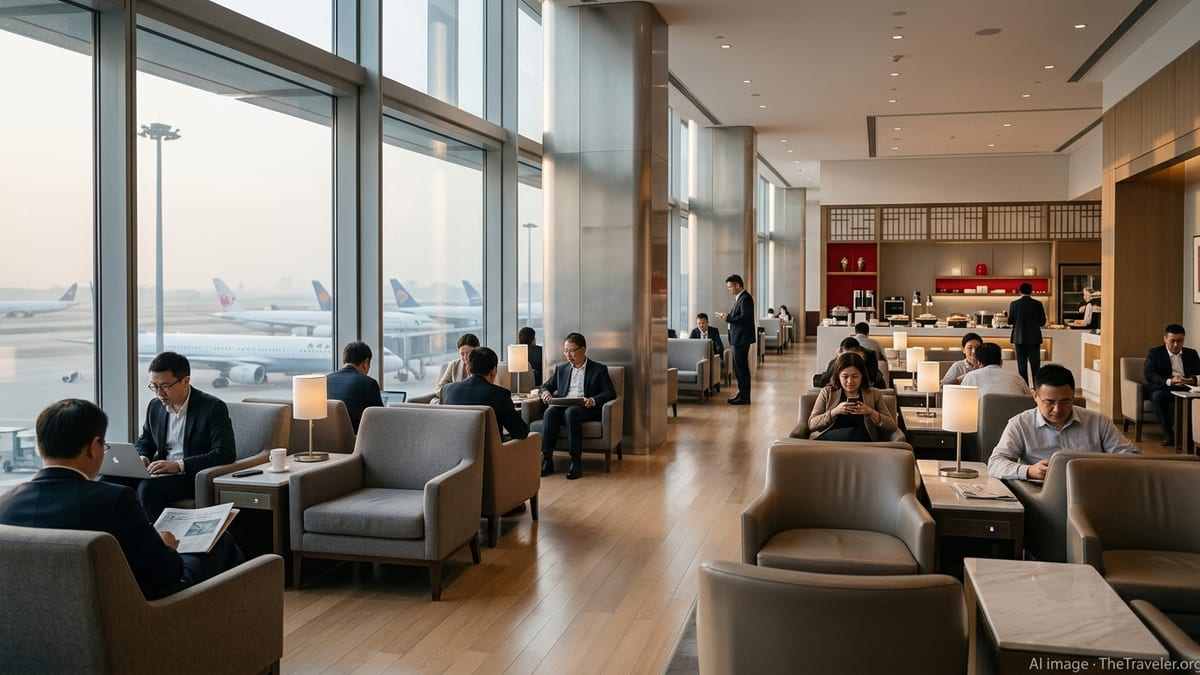
Flagship and Admirals Clubs Anchor American’s New Premium Strategy
American Airlines has put lounges at the center of its premium overhaul, pairing new long haul cabins with an expanded network of Flagship and Admirals Club facilities. At Philadelphia International Airport, American opened a 25,000 square foot complex in Terminal A-West that combines a membership-based Admirals Club with a separate Flagship Lounge aimed at long haul and transcontinental premium customers. Publicly available information shows the space replaces an older club in A-East and is designed as a transatlantic hub for the carrier’s busiest European services.
Investor materials and corporate updates indicate that the Philadelphia project is a template for further growth. American has outlined plans to add new Flagship Lounges in Miami and Charlotte while renovating Admirals Clubs in Washington National, Miami and Charlotte, aligning ground facilities with upcoming deliveries of wide-body aircraft featuring Flagship Suite seats and refreshed interiors. The airline also continues to roll out a new Admirals Club design language, emphasizing brighter spaces, expanded bars and more varied seating targeted at both business and premium leisure guests.
For travellers, the shift means that access to enhanced lounge experiences is increasingly tied to network hubs and elite status rather than the presence of international first class. In many markets, American no longer sells traditional three-cabin first, but the airline is investing to ensure that its top customers, including those in business class and higher elite tiers, can rely on a consistent pre-flight environment with showers, quiet workspaces and upgraded food and beverage offerings.
Industry analysts note that these lounge investments intersect with American’s credit card and loyalty strategy. Co-branded cardholders and AAdvantage frequent flyers are key audiences for Admirals Club access products, and the new lounges are positioned as a way to reinforce card spend and status chasing among high-value customers, especially as competition intensifies across US hubs.
Delta Scales Up Delta One Lounges and Sky Clubs
Delta Air Lines has moved aggressively into ultra-premium lounge concepts, using them as a cornerstone of its broader push toward higher-spend travellers. In 2024, the airline opened its first Delta One Lounge at New York JFK, a more than 39,000 square foot space in Terminal 4 offering full-service dining, spa-style wellness facilities and valet services alongside traditional lounge amenities. According to published coverage, the JFK facility is significantly larger than a standard Sky Club and is reserved for Delta One and select partner premium customers.
Delta has since committed to a network of Delta One Lounges at major coastal hubs, adding locations at Los Angeles and Boston and moving ahead with a second dedicated lounge at Los Angeles International that is opening in phases. Corporate updates outline a plan for LAX to host four distinct lounge spaces by 2028, including two Delta One Lounges and two Sky Clubs across Terminals 2 and 3. Additional expansion has focused on high-growth hubs such as Salt Lake City, where Delta opened one of its largest Sky Clubs with panoramic views, a wraparound bar and work pods tailored to hybrid workers and leisure travellers seeking quiet space.
At the same time, Delta has tightened and refined access rules as demand has surged. Public information on Sky Club policies details visit limits for certain credit card holders and restrictions on basic economy tickets, reflecting an effort to keep crowding under control while preserving exclusivity for those paying higher fares or holding premium cards. The addition of Delta One Lounges effectively creates a tiered ground product, separating the very top end of the customer base from general lounge members.
Observers see this as part of a larger shift in Delta’s positioning as a “premium global” airline. Investment in upscale lounges at hubs such as Los Angeles, New York, Boston and Miami complements upgrades to long haul cabins and aligns closely with the spending behavior of high-frequency coastal travellers. The airline is signaling that the pathway to a quieter, more private airport experience increasingly runs through its loyalty ecosystem rather than simply booking the most expensive seat onboard.
United Refreshes Polaris and Club Network for Premium Leisure Demand
United Airlines is also reshaping its lounge footprint, with a particular focus on its Polaris-branded spaces for long haul business class customers. In April 2025, United reopened its Polaris Lounge at Chicago O’Hare after a major expansion that increased capacity by roughly 50 percent and introduced additional dining and bar areas. Company statements describe a more than 350-seat facility with a larger private dining room and upgraded design elements created in partnership with a major home furnishings retailer.
Chicago is only one part of a wider lounge program. United has outlined plans to expand its Polaris lounges in Newark and to complete a major upgrade of its United Club network in Denver’s B West concourse, with the latter expected to be a centerpiece of the airline’s largest hub redevelopment. Public reports also point to renewed attention on key international outstations, including the reopening of facilities in markets such as Hong Kong to support growing transpacific schedules.
For United, the goal is to better manage the mix of corporate and premium leisure travelers who now fill many Polaris cabins. As corporate travel remains more measured than before the pandemic, higher-spend leisure customers on once business-heavy routes are increasingly sensitive to the entire journey, from curb to boarding door. Spacious lounges with restaurant-style dining, power-equipped seating and shower suites help justify business class fares during peak holiday periods and shoulder seasons when corporate contracts are thinner.
This strategy also supports United’s credit card and membership products. Enhanced United Clubs at major hubs are being marketed alongside co-branded cards, while the exclusive Polaris lounges serve as a differentiator for long haul business customers in competitive markets such as New York, Chicago and San Francisco, where all three big US network carriers vie for premium traffic.
Lounges Become the New First Class for High-Value Travellers
The rapid rollout of new lounges by American, Delta and United underscores a broader structural shift: for many carriers, the airport lounge has effectively replaced traditional international first class as the defining premium perk. Data across the industry shows that three-cabin international first class has largely disappeared from US airline fleets, while investment has poured into front-cabin business products, loyalty tiers and ground hospitality.
Analysts note that this transition aligns with changes in who occupies premium seats. Instead of a small set of corporate travelers on fully flexible tickets, today’s front cabins are often filled with a mix of managed business travelers, small business owners, points redeemers and high-income leisure passengers. These customers may be less concerned with formal first class branding and more interested in guaranteed access to quiet spaces, high-speed connectivity, reliable dining and wellness amenities before long flights.
Airlines have responded by using lounges as a canvas for differentiated experiences. American’s Flagship Lounges emphasize buffet and made-to-order dining and quiet zones, while its modernized Admirals Clubs focus on familiar comfort for members and day-pass holders. Delta’s Delta One Lounges showcase restaurant-style service and spa-inspired spaces that echo boutique hotels, sitting alongside refreshed Sky Clubs that anchor its premium mass market. United’s latest Polaris lounges, meanwhile, spotlight sit-down dining and elevated interior design that link the ground experience to the carrier’s Polaris onboard product.
In many cases, these offerings are also integrated into airline and partner card ecosystems. Access policies are increasingly complex, balancing status tiers, same-day ticket requirements, and card-based entitlements. The result is that travellers may prioritize the promise of a reliable lounge visit when choosing flights or credit cards, even on routes where the onboard hard product is similar across multiple airlines.
Global Competition and New Entrants Raise the Stakes
US carriers are not alone in the lounge race. International competitors, including European and Gulf airlines, have long invested in elaborate hub lounges with private rooms, a la carte dining and wellness facilities, setting a high benchmark for service expectations. As global travel rebounds and connecting traffic through major hubs grows, US airlines are under pressure to ensure that their flagship lounges can stand alongside those of partners and rivals.
At the same time, non-airline players such as credit card issuers and independent lounge operators are reshaping expectations. Branded spaces offered by financial institutions and third-party providers often feature design-forward interiors, cocktail programs and dedicated family or quiet zones, raising the baseline of what many frequent travelers consider acceptable. This competition has pushed airlines to differentiate on location integration, gate proximity and seamless connectivity with their own digital ecosystems.
Looking ahead, published project timelines from American, Delta and United all point to continued lounge openings and refurbishments into the late 2020s. The focus extends beyond a few coastal gateways to include growing secondary hubs and key leisure destinations, reflecting the spread of premium demand across the network. For travellers, that means the airport lounge is likely to become an even more central factor in trip planning, with the promise of an upgraded ground experience weighing as heavily as seat width or onboard champagne.
As carriers refine access rules and expand square footage, the balance between exclusivity and scale will remain a critical challenge. Yet the direction of travel is clear: in the evolving hierarchy of airline perks, expansive, amenity-rich lounges are emerging as the new frontline in the battle for high-yield customers, redefining what it means to travel “first class” in an era where the cabin door is only part of the story.
American Airlines: Flagship and Admirals Club lounges at Philadelphia
American Airlines investor update on premium lounge expansion
Delta: Delta One Lounge at New York JFK overview
Coverage of Delta lounge expansion plans for 2025
United Airlines: Reimagined Polaris Lounge Chicago announcement