


More news on this day
Europe’s air travel network experienced another turbulent day as 2,074 delayed flights and 71 cancellations disrupted passenger movements across major hubs including Amsterdam Schiphol and Barcelona El Prat, with knock-on effects reported at airports across the continent.
Get the latest news straight to your inbox!
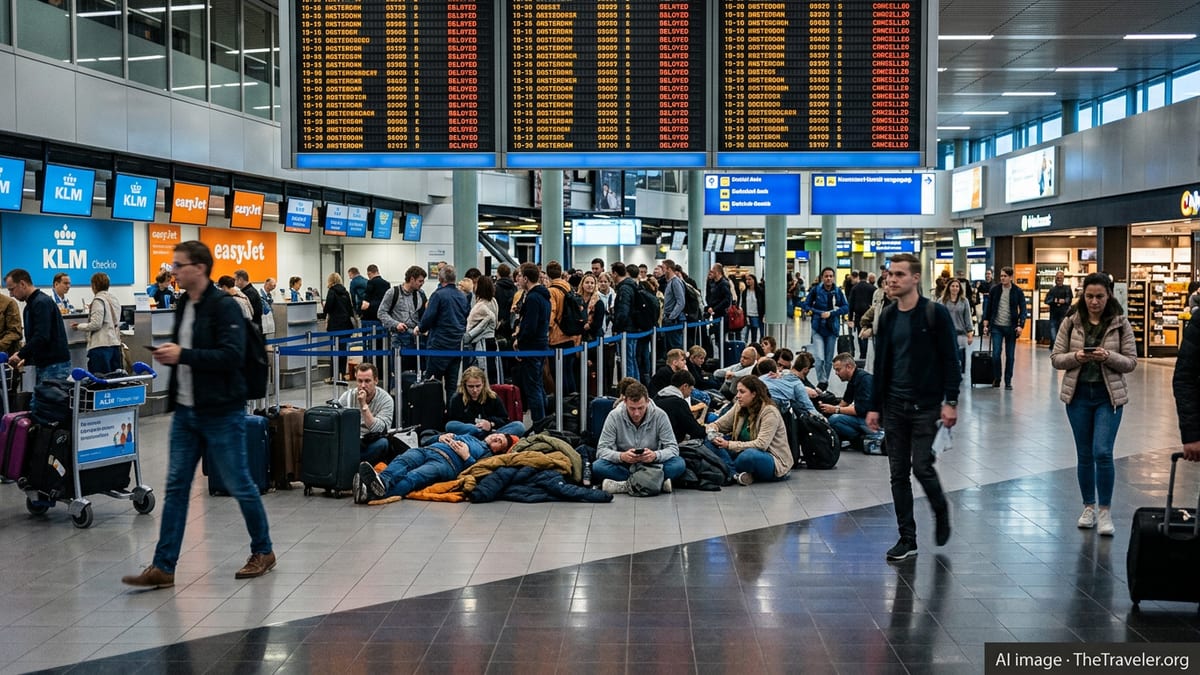
Amsterdam and Barcelona at the Center of Fresh Disruptions
Publicly available aviation data and regional coverage point to Amsterdam Schiphol and Barcelona El Prat among the most affected hubs in a fresh wave of disruption that rippled through Europe’s skies. While regular schedules continued to operate, a sizable share of services faced late departures, missed connections, and outright cancellations.
Operational tracking tools show that Schiphol, one of Europe’s busiest transfer airports with hundreds of daily departures, recorded a cluster of delayed and cancelled services over the past 24 hours, including flights on popular leisure routes such as Spain’s Mediterranean coast. Hourly performance snapshots indicate bands of late departures and a series of cancelled flights, highlighting how even modest schedule shocks can quickly accumulate across a dense timetable.
On the southern edge of the network, Barcelona El Prat has remained under pressure amid ongoing staffing challenges and industrial actions affecting ground handling services. Recent reports from the region describe an elevated risk of delays on both inbound and outbound operations, with disruptions more visible during peak weekend travel windows.
Numbers Point to a Strained European Flight Network
According to aggregated reporting on recent disruption patterns, around 2,074 flights across Europe were delayed and a further 71 were cancelled in a single operating day, underscoring how fragile the continent’s aviation recovery remains. These figures include services touching key hubs such as Amsterdam, Barcelona, London, Paris, Rome, Frankfurt, Madrid, Brussels, Dublin, Oslo, and Berlin, all of which play a vital role in feeding connecting traffic across the region.
Analysis published by travel industry outlets emphasizes that when even one or two major hubs fall behind schedule, knock-on effects can cascade throughout the network within hours. Delays at a hub like Schiphol can prompt missed connections for long haul services or force aircraft and crews out of position for their next rotations, which in turn raises the risk of further cancellations later in the day.
While the absolute share of cancelled flights relative to total operations remains limited, the impact on passengers can be significant. A single cancellation on a busy intra-European route can affect hundreds of travelers, many of whom depend on onward connections. With 71 cancellations recorded in the most recent wave of disruption, rebooking and accommodation demands have added extra strain to already busy customer service channels.
Compounding Factors: Weather, Staffing and Rail Strikes
Reports indicate that no single cause is responsible for the latest surge in delays and cancellations. Instead, a mix of localized weather issues, air-traffic flow constraints, staffing shortages in airport operations, and timetable changes linked to engineering works or strike action have all contributed.
In the Netherlands, rail networks are preparing for a nationwide public transport strike on 9 September, with operators warning of widespread interruptions to train services for a 24 hour period. Travel advisories from international rail and sleeper train providers highlight that no trains are expected to run in the country during the strike window, and that a reduced service or diverted routes are already in place around the affected dates.
Engineering works on cross-border rail lines between Belgium and the Netherlands are also altering access to Amsterdam, with several Eurocity Direct services terminating at Amsterdam Central instead of Amsterdam Zuid on the weekend of 5 and 6 September. These changes complicate airport access for some travelers and may increase pressure on local transport links and taxi services at Schiphol.
Elsewhere in Europe, published updates point to scheduled aviation strikes in Italy later in the month and continuing labor disputes among ground handling providers at Barcelona El Prat. Although not all of these actions fall on the same day as the latest wave of flight disruptions, they contribute to a generally unstable operating environment in which airlines and airports have limited margin to absorb additional shocks.
Passengers Confront Knock-on Delays Across the Continent
The cumulative effect of partial cancellations, rolling delays, and altered rail schedules is being felt in the form of long queues, extended connection times, and last-minute itinerary changes for travelers across Europe. The expiry of temporary flexibility rules around EU external border checks is also drawing attention, with some industry voices warning that more rigid application of the entry-exit system could lengthen processing times at key arrival points.
In practical terms, passengers flying via the most affected hubs are being advised by travel providers to allow extra time for security screening, border control, and transfers between terminals or stations. In cities where rail access to the airport is curtailed by strikes or engineering works, local guidance suggests factoring in additional time and potential congestion when using buses, trams, or road transfers.
Travel forums and customer reports describe a pattern of moderate but persistent delays on popular routes linking Amsterdam and Barcelona with other major European cities. While many services still depart close to schedule, it is increasingly common for departure times to shift by 15 to 60 minutes, with longer waits when aircraft or crews arrive late from a previous leg.
For travelers caught up in last minute cancellations, consumer advocates point to the importance of understanding the rights that apply under European passenger protection rules. These may include entitlement to re-routing, meals and accommodation where necessary, and in some circumstances financial compensation, depending on the cause and length of disruption.
What Travelers Should Do Now
Given the scale of recent disruption, publicly available advice from airlines, airports, and rail operators converges on a few practical steps for anyone traveling through Europe in the coming days. Checking flight status and gate information via official airline apps or airport websites on the day of travel remains essential, particularly for departures from or connections through Amsterdam, Barcelona, and other busy hubs.
Passengers connecting between rail and air services are urged to review current engineering works and strike alerts on the networks they plan to use. In the Benelux region and the Netherlands in particular, service changes around 5 to 9 September may alter departure stations, journey times, or even result in full-day suspensions on certain routes.
Travelers are also encouraged to keep digital or printed copies of booking confirmations and receipts for any additional expenses incurred because of disruption. These documents can support later claims with carriers or travel insurance providers, especially where delays or cancellations fall within the scope of established compensation schemes.
With several more weeks of planned industrial action and infrastructure works scheduled across Europe’s transport networks, analysts suggest that conditions may remain challenging at times. Flexibility in itineraries, extra connection buffers, and careful pre-trip planning are likely to be key to navigating the current phase of disruption across Amsterdam, Barcelona, and beyond.
European Airport Flight Disruptions: What Happened