


More news on this day
A signalling issue on the Hong Kong section of the Guangzhou–Shenzhen–Hong Kong Express Rail Link caused a short disruption to northbound services on Sunday morning, delaying multiple cross-border trains before operations were restored.
Get the latest news straight to your inbox!
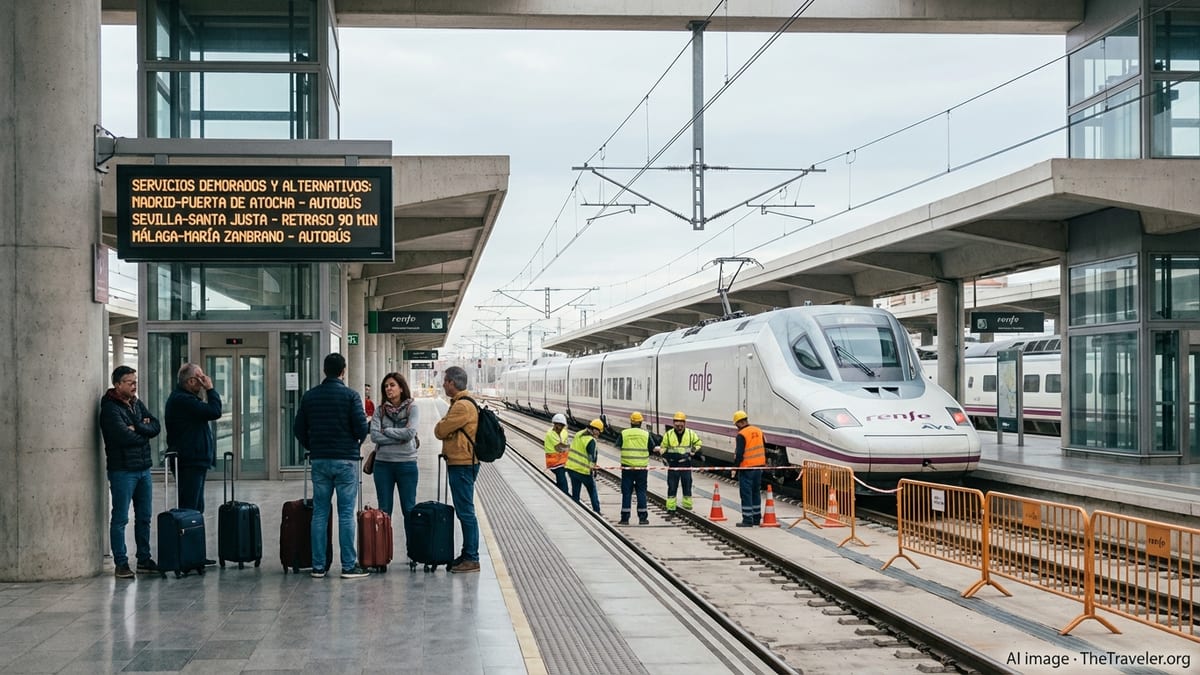
Short Morning Disruption to Northbound Departures
According to reports published on September 6, 2026, a signalling fault was recorded shortly after 8.30 a.m. at Hong Kong West Kowloon Station, affecting northbound high-speed rail departures to mainland Chinese cities. Publicly available information shows that the problem led to a temporary adjustment of service while rail staff responded at the terminus.
Hong Kong’s Transport Department issued a special traffic news update indicating that it had received notification of a signalling fault on high-speed rail services and that train trips would be delayed. The bulletin advised passengers to check real-time schedules via the official 12306 website and app, as well as the high-speed rail website and station information boards for the latest journey details.
Subsequent updates from the Transport Department later in the morning stated that the earlier signalling problem had been rectified and that train services were gradually returning to normal. Local media coverage noted that the disruption window lasted for roughly 45 minutes before regular operations resumed on the Hong Kong section of the high-speed network.
At Least 15 Trains Affected on Key Northbound Routes
Coverage in local outlets indicates that at least 15 northbound high-speed services departing Hong Kong West Kowloon were delayed during the incident. Data drawn from the 12306 rail app and cited in reports identified affected trains bound for major southern hubs such as Futian, Shenzhen and Guangzhou, as well as longer-haul destinations including Fuzhou, Zhangjiajie, Xian, Tianjin and Chengdu.
These routes form part of the busy Guangzhou–Shenzhen–Hong Kong Express Rail Link and its onward national high-speed connections, which are heavily used for both leisure and business travel. Delays on these services can ripple across the wider network, particularly on weekends and peak travel days when trains often operate at or near full capacity.
Media reports described a period of confusion among some travellers as departure times slipped and platform information was adjusted. Passengers were encouraged via public announcements and online platforms to monitor digital channels for updated departure boards and to allow extra time at the station while services were being rescheduled.
Services Gradually Return to Normal Operations
By around 9.15 a.m., public updates indicated that the signalling issue had been resolved and that northbound services were resuming. The Transport Department noted in a subsequent special traffic message that high-speed rail services were gradually returning to normal, with trains being slotted back into their standard timetables as operations stabilised.
Local news coverage later in the day reported that services on the Hong Kong section of the high-speed line continued to run, with some residual delays while the backlog of affected departures was cleared. Passengers still planning to travel were repeatedly directed to official online tools, including real-time station display functions within the 12306 app, to confirm the latest status of their specific trains.
Publicly available information also shows that government departments requested a comprehensive review of the incident from the rail operator, focusing on how the signalling fault occurred and how quickly mitigation measures were implemented to limit disruption to passengers.
Focus on Reliability of a Key Cross-Border Corridor
The Guangzhou–Shenzhen–Hong Kong Express Rail Link is a core cross-border transport corridor, linking Hong Kong with the wider national high-speed rail grid. Since resumption and subsequent expansion of services in recent years, ridership on northbound trains to nearby mainland cities has been strong, particularly during holidays and special travel periods.
Operational reliability is therefore closely watched by both regulators and the travelling public. While Sunday’s disruption was comparatively short, the incident has drawn attention to the importance of robust signalling systems, rapid fault detection and clear passenger communications in maintaining confidence in the high-speed rail brand.
Publicly available corporate and regulatory documents highlight continuing investment in high-speed rail infrastructure and systems in the region, alongside efforts to increase capacity on popular routes between Hong Kong and cities in Guangdong and beyond. These initiatives are designed to handle growing demand while keeping delays and unplanned service adjustments to a minimum.
Guidance for Travellers Using Hong Kong’s High-Speed Rail
For travellers planning cross-border journeys, the incident underlines the value of checking live information channels before heading to the station. The Transport Department advises that the 12306 official website and mobile app provide the most up-to-date high-speed train schedules, while the Hong Kong high-speed rail website, station displays and announcements offer additional local detail on platform changes and boarding arrangements.
When a disruption occurs, adjustments can include delayed departures, altered stopping patterns or the resequencing of trains to balance capacity across the network. Reports indicate that, during Sunday’s signalling issue, services were adjusted and then progressively restored as the fault was cleared and line capacity returned.
Given the importance of the Hong Kong high-speed rail link for regional connectivity, passengers are encouraged to build in extra time during busy travel periods and to remain alert to service updates published by official channels whenever incidents such as signalling faults are reported.
Hong Kong Transport Department special traffic news