


More news on this day
Air traffic at Germany’s Leipzig/Halle Airport was disrupted this week after an airport worker discovered a drone carrying an explosive device near a runway used by cargo aircraft, prompting runway closures, flight diversions and a widespread security response.
Get the latest news straight to your inbox!
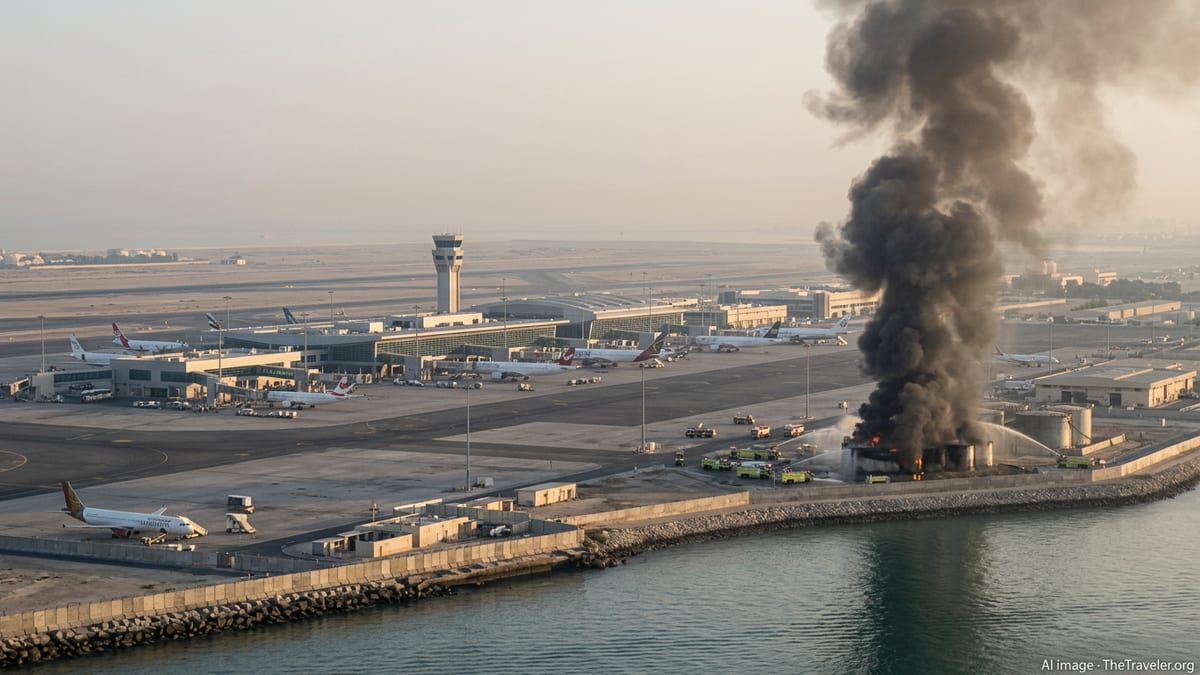
Runway closure and diversions at key German cargo hub
According to published coverage from German and international media, the incident unfolded late on Tuesday at Leipzig/Halle Airport in the eastern state of Saxony. The facility is one of Europe’s major cargo hubs and a strategic base for military and humanitarian transport flights, including Ukrainian-operated Antonov cargo aircraft.
Reports indicate that the drone was found close to the south runway and near a parked Ukrainian cargo plane, leading to the immediate suspension of operations on that runway. Bomb disposal specialists were called in to secure the device and remove a detonator, while sections of the airport were cordoned off.
Flight-tracking data and news reports show that several incoming flights were diverted to other German airports, including Hanover, where at least one aircraft later underwent inspection for possible damage. Departures from Leipzig/Halle were temporarily halted or delayed while security checks were carried out, affecting both cargo schedules and a smaller number of passenger services that use the airport.
By the following morning, operations had gradually resumed, but airlines and logistics operators continued to experience knock-on delays as aircraft and crews were out of position. Travellers connecting through Leipzig/Halle were advised by airlines and airport notices to expect schedule changes and to monitor their flights closely.
Explosive payload heightens concern over airport security
Publicly available information from German authorities and media outlets indicates that the drone was not a simple hobby device. Early technical assessments described a multi-rotor aircraft equipped with an explosive payload and a detonator, which was rendered safe by specialists at the scene.
The presence of explosives on the drone has drawn particular attention in Europe’s aviation and security communities. While drone sightings around airports have become more frequent in recent years, reports suggest that confirmed cases involving an apparent explosive device on airport grounds remain rare.
Commentary in German and international coverage notes that the device was discovered close to active runway signage rather than in a remote part of the airfield. This detail has fueled debate about whether the drone’s placement was intended to target aircraft movements, airport infrastructure, or specific cargo operations, though investigators have not publicly attributed responsibility or identified a clear motive.
Initial technical checks reported in German media suggest that the explosive charge did not detonate and that the device may have malfunctioned or been intentionally left inactive. For investigators, this raises questions about the operator’s capabilities, the reliability of the equipment used, and whether the incident was a test of airport defenses as much as a direct attack.
Part of a wider pattern of disruptive drone activity
The Leipzig/Halle incident comes after a series of drone-related disruptions at European airports over the past two years. German media have documented temporary closures and flight suspensions at major hubs such as Munich and Berlin following unverified drone sightings, as well as shorter interruptions at regional airports including Bremen.
Across Europe, aviation regulators have been grappling with the growing use of small unmanned aircraft near critical infrastructure. Past incidents, such as drone activity that halted operations at Copenhagen Airport and repeated sightings near Brussels and other hubs, have prompted calls for greater investment in detection systems, electronic countermeasures and stricter enforcement of no-fly zones around airports.
Analysts cited in European press coverage view the Leipzig/Halle case as particularly significant because of the confirmed explosive payload and the airport’s role in military and humanitarian logistics linked to the war in Ukraine. The airport is widely known as a key transit point for NATO and partner cargo flights, which has fueled speculation that the target may have been strategic rather than random.
At the same time, commentators caution against drawing firm conclusions before investigators release more findings. The incident is being examined in the broader context of concerns over hybrid threats, sabotage attempts and state or non-state actors seeking to disrupt European infrastructure using low-cost technologies.
Impact on passengers, cargo operations and travel confidence
For travelers, the immediate consequences at Leipzig/Halle were measured in delays, diversions and missed connections. While the airport primarily handles freight, it also serves scheduled passenger flights and holiday charters. Passengers on diverted flights faced extended journey times as aircraft were rerouted to other German airports and ground transportation arrangements were adjusted.
For cargo operators, the timing and location of the disruption were especially sensitive. Leipzig/Halle is a major overnight hub for express freight and e-commerce shipments, with large volumes of time-critical consignments moving through its sorting centers. Any overnight runway closure during peak freight hours can lead to cascading delays across European and intercontinental networks.
Industry observers quoted in local and international coverage note that logistics companies have built contingency plans for weather events, strikes and technical outages, but drone-related security incidents are harder to predict and model. Because airports must treat any suspicious device as potentially dangerous, even a short interruption can produce backlogs in cargo handling and scheduling.
Travel analysts say such incidents risk undermining passenger confidence if they become more frequent or appear to be part of a larger pattern of attacks. However, they also point out that the swift resumption of operations at Leipzig/Halle and the absence of injuries or major damage demonstrate that established emergency protocols and security responses can limit the impact on travelers.
Increasing pressure for stronger drone regulations and technology
The Leipzig/Halle episode is likely to intensify debate in Germany and across the European Union about how to manage drones near airports. Aviation and security experts highlighted in recent coverage argue that existing no-fly rules around airfields are only as effective as the enforcement and detection capabilities behind them.
Many large airports have begun deploying radar, radio-frequency monitoring and optical systems designed to detect and track small drones in their vicinity. However, integrating these tools with air traffic control procedures, law enforcement responses and airline operations remains complex, particularly at busy multi-runway airports where false alarms can be costly.
The incident also adds urgency to discussions about harmonized European standards for counter-drone measures, including the legal use of jamming or interception technologies around critical infrastructure. Policymakers have been balancing the rapid growth of commercial and recreational drone use with the need to prevent misuse, ensuring that legitimate operators are not unnecessarily restricted while still protecting sensitive sites.
For travelers and the broader tourism industry, the key question is whether security upgrades can stay ahead of evolving threats without causing frequent, large-scale disruptions to air traffic. As investigations at Leipzig/Halle continue, airlines and airports around Europe are likely to review their contingency plans once again, aiming to keep flights moving even as the risks at the intersection of drones and aviation become more complex.