


More news on this day
Mexico’s hotel industry is entering a new high-growth phase, with occupancy, revenue and average rates climbing sharply as international corporate travel across North America redirects more meetings and events to the country’s key business and resort hubs.
Get the latest news straight to your inbox!
Corporate Demand Pushes Hotel Metrics to New Highs
Recent government statistics and industry research indicate that Mexico is consolidating its position as one of the most dynamic hotel markets in the Americas, with international arrivals, hotel occupancy and revenue per available room all trending above pre-pandemic levels. Publicly available information from Mexico’s Secretariat of Tourism points to more than 80 million international visitors in 2024, placing the country among the top destinations in the region by volume and signaling robust underlying demand for rooms across major cities and beach destinations.
Hotel performance data compiled by global consultancies and benchmarking firms shows that this demand is increasingly diversified, with group, leisure and corporate segments all contributing. Analysts tracking the Americas describe Mexico’s hotel sector as having moved firmly into a growth cycle, with upper-upscale and luxury properties seeing some of the strongest revenue gains. That trajectory mirrors wider global patterns, but the pace in Mexico is notable when compared with more moderate growth in several large U.S. markets.
Local tourism authorities highlight that higher occupancy is being matched by rising average daily rates in multiple Mexican destinations, a combination that is lifting overall revenue performance. In high-profile resort markets such as Los Cabos, industry reports for 2024 show hotel occupancy in the mid-70 percent range while average room rates have continued to climb year over year, underlining the spending power of both leisure and corporate travelers booking premium inventory.
Market watchers also point to the impact of expanded air connectivity from the United States and Canada, which has brought more frequent nonstop service into Mexico City, Guadalajara, Monterrey and coastal gateways. This additional capacity has made it easier for companies based across North America to consider Mexican destinations for regional meetings or incentive programs without adding complex connections or lengthy travel times for participants.
Meetings and Incentives Stabilize Seasonal Occupancy
Within the broader surge in travel, the meetings, incentives, conferences and exhibitions segment is emerging as a stabilizing force for Mexico’s hotel industry. A 2024 briefing from the federal tourism ministry characterizes meetings tourism as a key regulator of seasonality, noting that conventions, trade shows and incentive trips help keep room demand and spending elevated even in traditional shoulder or low seasons.
Specialized promotional efforts have long targeted this segment, and recent materials distributed by Mexican authorities and industry partners emphasize the country’s convention infrastructure, experienced destination management companies and wide range of venues. Mexico City is frequently highlighted for its network of convention centers and business hotels, while coastal destinations such as Cancún, Riviera Maya, Puerto Vallarta and Los Cabos market a mix of large-scale meeting facilities and high-end all-inclusive resorts tailored to corporate groups.
International trade shows and conferences dedicated to corporate travel illustrate the sector’s momentum. Events such as the GBTA Mexico Conference and regional business travel forums in Mexico City position the country as a hub for corporate travel decision-makers from across Latin America and North America. At the same time, specialized exchanges focused on the Caribbean and Mexico bring together hotel groups, resort operators and incentive planners from the United States and Canada, reinforcing the perception of Mexico as a premier incentive travel destination.
Industry-focused publications covering meetings and incentive travel describe strong pipelines of new and renovated properties in Mexico aimed at group business. Reports detail plans for additional luxury beachfront resorts, upgraded conference facilities and more flexible indoor-outdoor spaces, a combination that is designed to appeal to companies seeking distinctive backdrops for executive retreats, product launches and reward programs.
North American Corporations Turn to Mexico for Regional Events
Travel management companies and corporate travel associations across North America increasingly reference Mexico as a preferred location for regional gatherings, citing both cost competitiveness and logistical advantages. Mexico’s geographic proximity to major U.S. and Canadian business centers allows many companies to consolidate meeting itineraries in a single country while keeping flight times manageable and controlling overall travel budgets.
Consulting reports focused on corporate travel trends in the Americas indicate that room rates in Mexico’s leading business destinations have risen, yet still often compare favorably with those in top-tier U.S. gateway cities. Some analyses of quarterly hotel performance note that, while Mexico City has experienced rate increases, it remains relatively affordable for multinational firms when compared with the most expensive U.S. financial and tech hubs, encouraging a shift toward more cross-border corporate gatherings south of the border.
Travel industry event calendars for 2024 and 2025 show high-profile international trade shows, business travel forums and city-led promotion efforts scheduled in Mexico City and other Mexican destinations. These events are designed to showcase hotel capacity, meeting infrastructure and local suppliers directly to corporate buyers from the United States and Canada, creating a feedback loop in which more planners gain firsthand experience of Mexican venues and then route future regional events back into the country.
Feedback shared in professional forums and trade coverage suggests that corporate planners value the combination of resort-style amenities and serious meeting facilities available in Mexico. Many large hotels and all-inclusive complexes offer extensive conference space alongside leisure-focused features, enabling companies to blend formal sessions with team-building or incentive-style programming in a single setting, a model that has gained popularity since business travel resumed at scale.
Investment, Infrastructure and Safety Shape the Outlook
The strong performance of Mexico’s hotel sector is drawing sustained interest from international investors. Official announcements from tourism authorities and state governments highlight multi-hundred-million-dollar hotel and tourism developments in states such as Quintana Roo, where private capital continues to flow into new resorts and mixed-use projects. These investments are framed as part of a broader strategy to expand room supply, diversify product offerings and consolidate the region’s status as a meetings and vacation powerhouse.
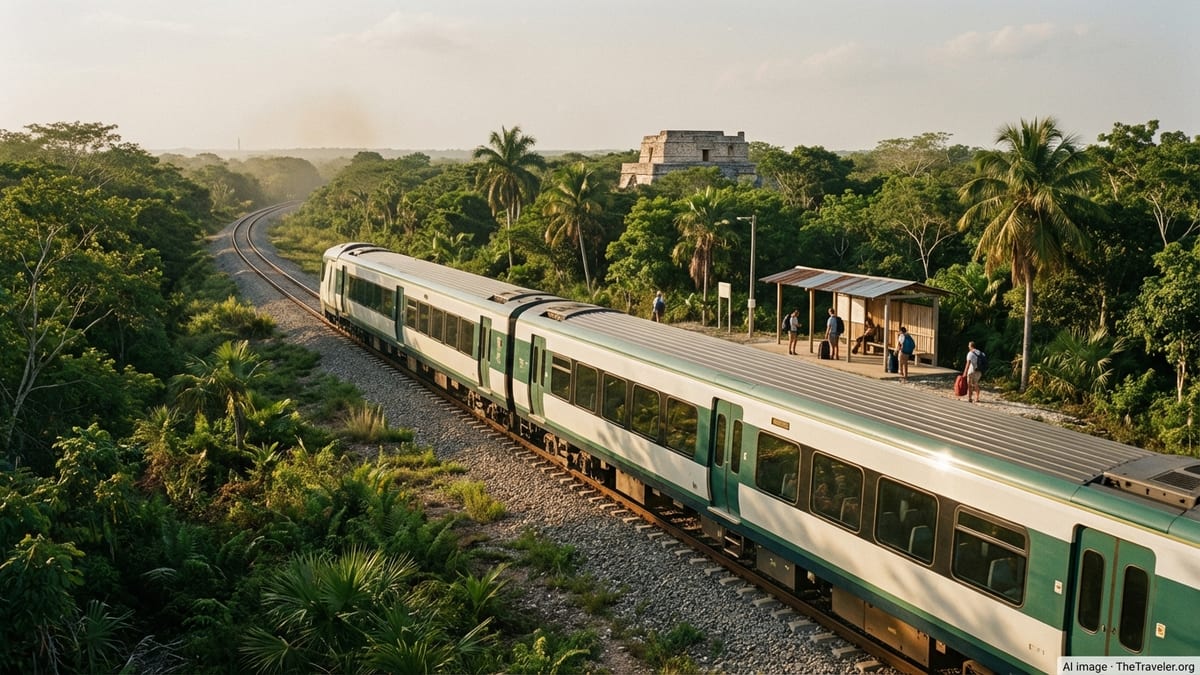
Infrastructure upgrades are another contributing factor. Major national projects in recent years have focused on improving road and rail connections as well as expanding or modernizing airports, which in turn support the growth of air routes from North American markets. Industry commentary notes that better connectivity helps secondary and emerging destinations compete more effectively for corporate gatherings that might previously have defaulted to a small number of traditional resort areas.
At the same time, safety perceptions remain an important variable in corporate decision-making. Travel advisories and isolated security incidents can lead to short-term fluctuations in bookings for specific destinations, as reflected in occasional reports of lower occupancy or cancellations at certain resorts. However, data compiled by national authorities and multilateral tourism bodies indicates that overall international arrivals to Mexico have continued to rise, suggesting that the broader market remains resilient even as corporate planners evaluate destinations case by case and lean on local partners for risk assessments.
Analysts expect that hotels with a strong corporate and group focus will continue to prioritize visible security protocols, robust contingency planning and clear communication with travel managers. These measures, combined with the financial importance of meetings and incentive travelers to local economies, are likely to keep safety and risk management at the center of discussions as Mexico competes for a larger share of North America’s high-value corporate tourism.
Competitive Landscape Across North America
Mexico’s surge in hotel performance is unfolding against a complex backdrop across the wider North American market. In the United States, hotel benchmarking data for 2024 shows record-high room rates and revenue indices in many urban centers, but also notes that profit margins have been constrained by rising labor and operating costs. Industry blogs and commentary describe a normalization of demand patterns after the post-pandemic rebound, with some markets reporting more modest year-over-year growth in occupancy.
Canada, for its part, continues to position its major cities and resort regions as venues for international conferences and corporate meetings. However, seasonal climate factors and higher average cost structures in certain urban centers can make Mexican destinations comparatively attractive options for companies balancing experience expectations with budget pressures. Trade discussions frequently reference Mexico in the same breath as U.S. Sun Belt cities and Caribbean islands when outlining the core circuit for large North American events.
Regional travel data compiled by multilateral organizations shows that the Americas as a whole have returned to strong growth in international arrivals, with Mexico standing out as one of the most visited countries in the hemisphere. Within that competitive landscape, Mexico’s blend of large-scale resort capacity, maturing convention infrastructure and proximity to corporate headquarters across the continent has allowed its hotel industry to convert growing cross-border travel into higher occupancy and revenue metrics.
Looking ahead, hotel performance forecasts and business travel outlooks suggest that Mexico is well positioned to capture further corporate demand, provided economic conditions remain broadly supportive and infrastructure projects continue to enhance connectivity. For hotel owners and operators, the central question is how quickly they can expand or adapt inventory to meet the expectations of a corporate clientele that increasingly views Mexico as a natural home for regional meetings, incentives and executive retreats.