


More news on this day
The head of the U.S. Federal Aviation Administration has met with leaders of the country’s largest airlines to coordinate a new nationwide push to reduce flight delays and cancellations as the agency prepares to roll out an upgraded air-traffic management system.
Get the latest news straight to your inbox!
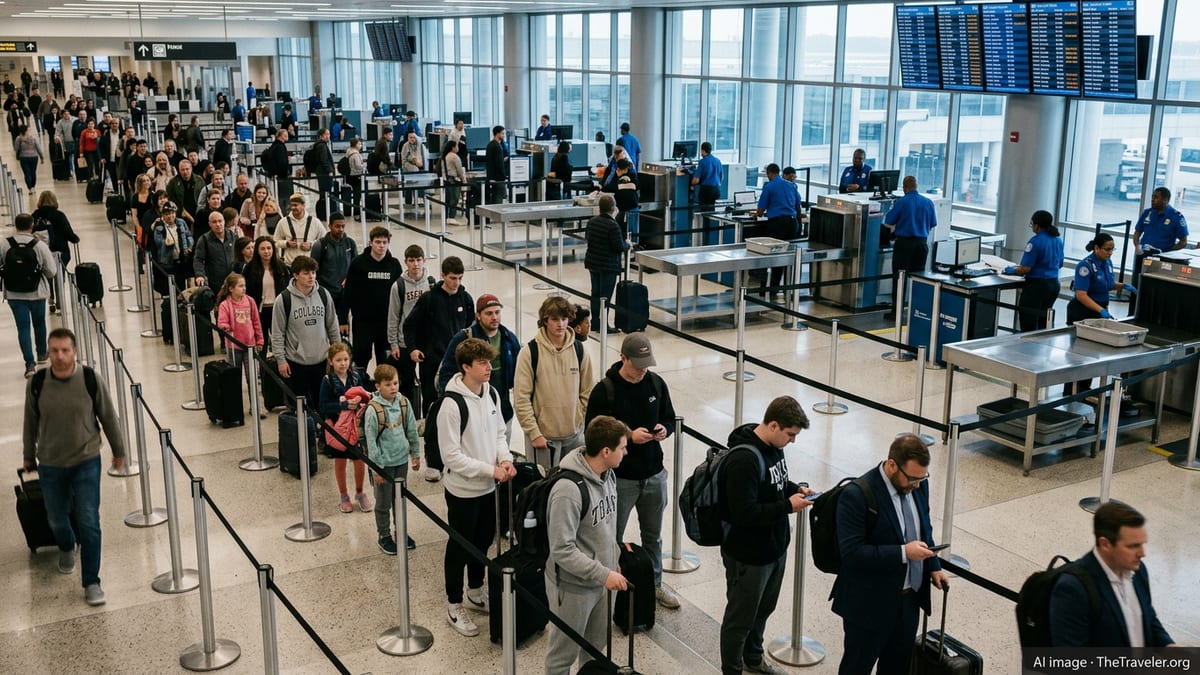
High-Level Meeting Targets Painful Travel Disruptions
According to recent coverage based on a briefing by industry participants, FAA Administrator Bryan Bedford met this week with top executives from American Airlines, United Airlines, Delta Air Lines, Southwest Airlines and other major carriers to discuss a concrete plan for cutting delays across the U.S. network. The gathering, organized with the participation of industry trade group Airlines for America, focused on aligning airline operations with a new air traffic system the FAA calls SMART.
Reports indicate that the agency intends to begin rolling out SMART later this month, with the goal of helping controllers and airlines manage congestion more efficiently at busy hubs. The plan discussed at the meeting centers on pairing the technology upgrades with targeted schedule adjustments at airports that are experiencing chronic delays, rather than relying solely on carriers to voluntarily thin out peak-hour flights.
Publicly available accounts of the meeting describe it as part of a broader effort by the FAA to move from ad hoc responses to disruptions toward a more structured national strategy. The talks come as U.S. travelers continue to face extensive delays during peak travel periods, with thunderstorms, air-traffic staffing constraints and airport congestion combining to strain the system.
Industry reports suggest that airlines broadly support the initiative, viewing a coordinated approach as preferable to unilateral cuts or piecemeal restrictions at individual airports. The meeting was framed as a working session on how to translate the FAA’s congestion concerns into specific operational changes that still allow carriers to maintain commercially viable schedules.
SMART System Rollout Sits at the Center of the Strategy
At the heart of the new plan is SMART, a traffic-management system that FAA officials have presented as a key tool for reducing airborne holding, improving routings and smoothing traffic flows during peak times. According to published coverage of the meeting, the agency plans to begin deploying SMART this month on a limited basis before expanding it to more facilities.
The SMART platform is designed to give air traffic controllers better real-time insight into bottlenecks and to offer more efficient routing options, especially in congested corridors that serve major hubs. Reports indicate that by improving predictability in the airspace, SMART is expected to reduce the number of departure and arrival banks that stack up simultaneously and can ripple into long delays.
However, available information underscores that technology alone will not resolve the current strain on the system. Participants in the meeting examined how SMART could work in tandem with revised flight schedules, improved staffing plans and more flexible use of airspace, especially during periods of convective weather that routinely trigger ground stops and large-scale disruptions.
Analysts note that the timing of the SMART rollout is significant. The system is arriving as demand for air travel remains high and airlines continue to restore capacity that was cut during the pandemic era, which has increased pressure on both airport infrastructure and federal air traffic facilities.
Legal Tools Allow FAA to Press for Schedule Reductions
The renewed engagement with airline CEOs is occurring alongside the FAA’s use of formal mechanisms to curb overscheduling at the nation’s busiest airports. Under federal law, the Secretary of Transportation can request that airlines meet with the FAA Administrator to consider flight reductions at congested airports when delays during peak hours are deemed a serious transportation problem or an important public concern. Recent Federal Register notices highlight how this authority has been put into practice.
In March 2026, the Department of Transportation and the FAA published a notice outlining operating limitations at Chicago O’Hare International Airport and signaled plans to convene a scheduling reduction meeting with carriers serving the airport. The notice stated that the objective was to address overscheduling and cut delays and cancellations during peak hours by setting specific targets for reducing flights in heavily congested time periods.
Regulatory documents explain that such meetings must be chaired by the FAA Administrator and open to all scheduled air carriers, with the agency providing flight reduction targets in advance. Carriers then submit offers directly to the Administrator, rather than negotiating with one another, in a structure designed to address antitrust concerns while still enabling a coordinated reduction in flights.
Earlier actions at Newark Liberty International Airport in 2025 used a similar framework to set hourly limits on scheduled operations, with the FAA concluding that targeted caps were necessary to bring delays down to what it considered acceptable levels. These precedents provide the backdrop for the current discussions with airline CEOs about when and how further cuts or caps might be warranted as SMART comes online.
From O’Hare to Nationwide Policy Shift
The meeting between the FAA chief and airline leaders this week appears to be part of an evolution from airport-specific interventions toward a more systemic strategy. Government documents related to Chicago O’Hare show that the agency has already moved to limit daily operations at that airport during the busy summer 2026 season, effectively trading some schedule growth for improved reliability.
Reports on those actions indicate that ORD, which handles more than 3,000 flights on peak days, faced a projected sharp increase in operations compared with the previous summer. To avoid a surge in cancellations and extended tarmac waits, the FAA set a ceiling on daily operations and indicated that carriers exceeding the limits could face civil penalties. Airlines were encouraged to re-time or re-route flights, or to shift some capacity to alternative airports.
Industry analysis suggests that lessons from O’Hare and earlier measures at Newark are feeding directly into the current nationwide talks. Rather than waiting for congestion to reach crisis levels at individual hubs, the FAA is looking to link technology deployments, staffing improvements and preemptive schedule planning under a single framework, developed in concert with airline leadership.
For travelers, this could mean fewer last-minute cancellations and long delays in the most congested markets, but also tighter constraints on schedule expansion at peak times. Some carriers may ultimately rebalance growth toward off-peak hours or secondary airports if slot caps and scheduling limits become more prevalent as part of the FAA’s delay-reduction strategy.
Consumer-Facing Measures Aim to Clarify Passenger Rights
In parallel with its operational initiatives, the Department of Transportation is increasing its focus on passenger rights and transparency around delays and cancellations. The Aviation Consumer Protection Advisory Committee, a federal advisory body, is scheduled to meet later this month to review new requirements for one-page summaries of passenger rights, customer service dashboards and standardized airport posters.
According to the public meeting notice, airlines must provide clear descriptions of what travelers can expect in cases of delays, diversions, cancellations, mishandled baggage, overbooking and denied boarding. The committee will also review dashboards that compare carriers on how they treat passengers during disruptions, which are intended to help travelers make more informed choices when booking.
Observers point out that these consumer-focused policies complement the FAA’s operational work with airlines and air traffic control. While the technology and scheduling changes discussed with the CEOs are intended to reduce the frequency and severity of disruptions, the consumer protection measures aim to ensure that passengers are better informed and, in some cases, better compensated when problems do occur.
Taken together, the operational and consumer-facing initiatives highlight a multi-track approach in Washington to address the persistent problem of flight delays and cancellations. The recent meeting between the FAA leader and airline chiefs signals that national aviation authorities and the industry’s largest players are preparing for a prolonged effort to reshape how the U.S. air travel system copes with demand, weather and infrastructure constraints.
US FAA head meets with airline CEOs on plan to cut flight delays
Operating limitations at Chicago O’Hare International Airport
Aviation Consumer Protection Advisory Committee September 2026 meeting notice