


More news on this day
Departures are moving again at Hartsfield-Jackson Atlanta International Airport after a weather-related ground stop, but travelers are still facing rolling delays that aviation data show are averaging around 90 minutes and in some cases approaching two hours.
Get the latest news straight to your inbox!
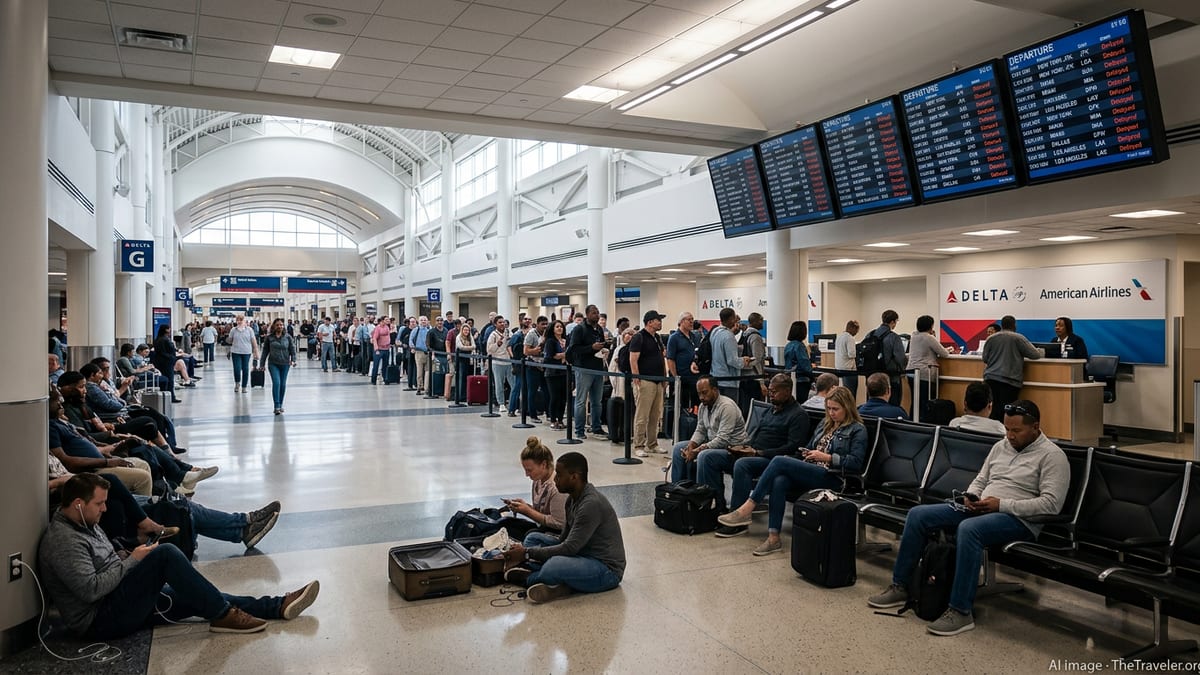
Storms trigger brief halt, lingering disruption
The Federal Aviation Administration issued a ground stop for flights bound for Atlanta on Thursday afternoon, citing strong thunderstorms in the region that limited the number of aircraft that could safely depart and arrive. An advisory from the agency’s Air Traffic Control System Command Center shows a ground stop window from 2:30 p.m. to 4:00 p.m. Eastern time for selected departure facilities, with weather and lack of workable routes from the west identified as the primary constraints.
While the formal halt to departures was relatively short, the pause quickly created a backlog of aircraft on the ground and in the air. Updated FAA figures for the event list new total delays in the hundreds, with maximum individual delays reported at just under an hour and a half and average delays around 50 minutes during the ground stop period. That congestion has continued to ripple outward through the late afternoon and evening schedule.
Publicly available airport status information indicates that conditions at Atlanta improved as storms passed and traffic flows were gradually restored. Even so, the system remained in recovery mode, with periods of holding for arrivals and metered departure slots keeping many flights from operating on time.
Delays approach two hours for many travelers
According to published coverage from CBS News’ Atlanta affiliate, the FAA lifted the ground stop before its planned 5 p.m. expiration, yet average departure delays at Hartsfield-Jackson were still around 90 minutes and increasing by about 4:50 p.m. Eastern time. The same reporting, citing real-time tracking site FlightAware, noted more than 280 delayed departures and over 250 delayed arrivals at the world’s busiest airport as of that update, along with more than a dozen cancellations.
Those figures align with broader delay patterns seen at major hubs during summer thunderstorms, when airlines often need additional time to reposition crews and aircraft even after weather improves. A review of recent flight histories from data providers such as FlightStats shows that recovery from similar events in Atlanta can take several hours, with knock-on delays sometimes pushing into the late-night bank of flights.
For passengers, the practical effect is that many itineraries are arriving or departing roughly 90 minutes to two hours behind schedule, particularly for flights scheduled during and immediately after the ground stop window. Travelers with tight connections in Atlanta are among the most affected, as missed onward flights can transform a relatively modest delay into a much longer travel day.
Why a short ground stop creates hours of delay
Ground stops are one of the FAA’s most visible traffic management tools, used when conditions at an airport or in surrounding airspace become too constrained to safely accommodate the normal volume of flights. In this case, thunderstorms over Georgia and adjacent regions limited the number of usable arrival and departure routes, effectively narrowing the pipelines into and out of Atlanta.
During a ground stop, flights destined for the affected airport are held at their point of departure until conditions improve. Even a 60 to 90 minute halt can leave dozens of aircraft waiting for a chance to depart. Once the restriction lifts, air traffic managers must sequence the backlog into a finite number of arrival and departure slots, while airlines juggle crew duty limits and aircraft that are now out of position.
Previous FAA advisories for Atlanta during storm events illustrate how this process unfolds. Advisories from late August, for example, warned operators to expect arrival delays and airborne holding of up to 30 minutes due to thunderstorms, and separate notices activated diversion recovery procedures to help manage aircraft that had been forced to land at alternate airports. Those same tools are often brought to bear when a ground stop is in place, contributing to the complex recovery period that follows.
Knock-on effects across airline networks
Hartsfield-Jackson serves as a primary connecting hub for Delta Air Lines and a key station in the route networks of several other major carriers, so any significant disruption in Atlanta tends to cascade across the United States. Flights departing from other cities with Atlanta as their destination may be issued departure times that are pushed well beyond the original schedule, even if local weather is clear.
In addition, aircraft and crews slated to operate later flights often arrive late from Atlanta, producing secondary delays on routes that do not touch the airport directly. Aviation discussion forums and recent passenger accounts from previous Atlanta ground stop events describe how a delay of one to two hours on a morning or afternoon leg can compound into much longer disruptions by the end of the day for certain itineraries.
The current episode follows a series of weather-related traffic management initiatives at Atlanta this summer, including advisories about arrival delays and diversion recovery activations in late August. The pattern highlights how vulnerable large hub operations can be to convective weather, especially during peak travel periods.
What passengers can do if flying through Atlanta
Travelers scheduled to fly into or out of Atlanta in the wake of the latest ground stop are being advised by airlines and airport communications channels to monitor their flight status frequently. Because delays are being managed through evolving traffic management programs rather than a simple, fixed hold, estimated departure and arrival times can change more than once as the system recalibrates.
Most major U.S. carriers now offer mobile alerts and real-time updates through their apps, which can provide the earliest notice of gate changes, rolling delays, or rebooking options. In recent Atlanta disruptions, passengers who acted quickly to adjust tight connections often had more alternatives than those who waited until they arrived at the airport to seek assistance.
For same-day travelers who have not yet departed for the airport, checking the FAA’s public airport status dashboard and third-party flight tracking tools can help set expectations for potential delays. While conditions in Atlanta are expected to improve as storms move out of the area, the size of the hub means that it can take several hours for operations to fully normalize once a major traffic management initiative like a ground stop is lifted.
Sources for this report:
CBS News Atlanta coverage of the Atlanta ground stop and delays
FAA Air Traffic Control System Command Center advisory for ATL ground stop