


More news on this day
An abrupt Federal Aviation Administration ground stop at a major American Airlines hub snarled travel across the United States this week, stranding passengers for hours and triggering ripple-effect cancellations that highlighted the fragility of the peak summer air travel system.
Get the latest news straight to your inbox!
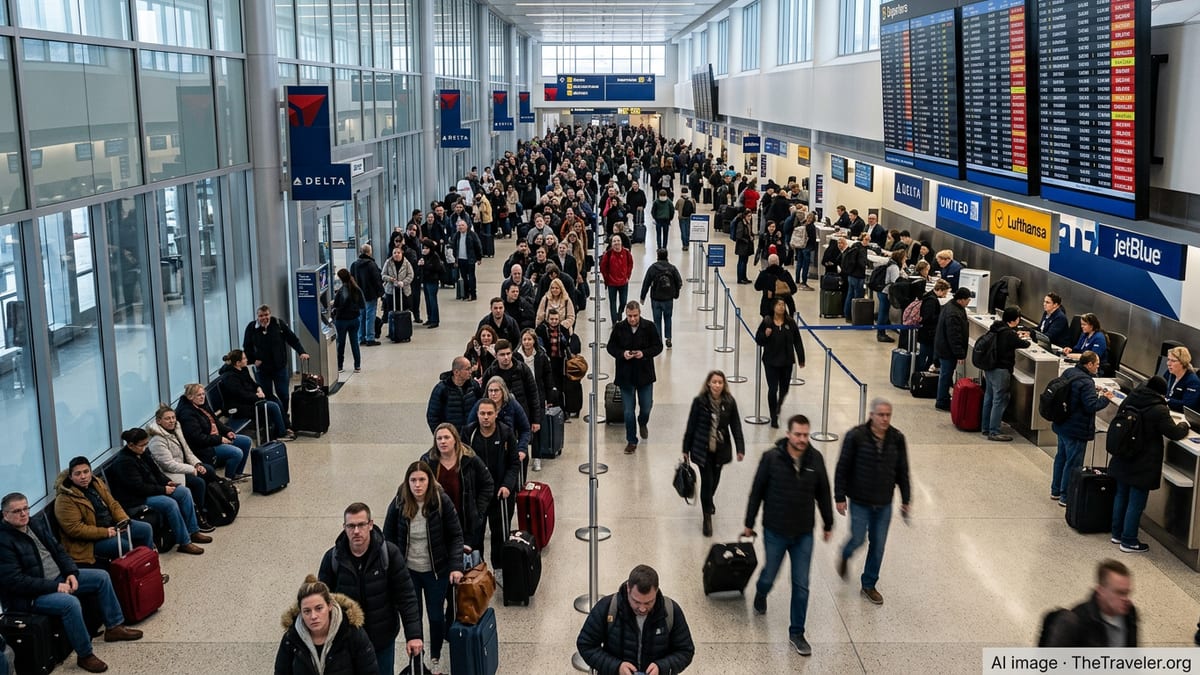
Ground Stop Halts Operations Across Busy U.S. Airspace
Publicly available FAA statements indicate that the agency temporarily halted traffic at several major airports serving a key East Coast corridor, citing a strong chemical odor at a critical air traffic control facility as the trigger for the stoppage. The action affected departures and arrivals at multiple large airports simultaneously, effectively freezing a significant portion of the region’s airspace.
The disruption came at the height of the summer travel season, when airlines already operate near maximum capacity. Industry trackers show that more than 500 flights across the United States were canceled and thousands more delayed on the day of the incident, with Chicago O’Hare, New York area airports and Atlanta among the worst affected as delays cascaded through the national network.
Because American Airlines relies heavily on a hub and spoke system, any sudden slowdown at one operational node can quickly spill into others. Even airports not directly covered by the ground stop saw knock-on delays as aircraft and crews fell out of position, leaving travelers facing missed connections and unplanned overnight stays.
American Airlines Hub Hit Hard as Cancellations Mount
American Airlines’ largest hubs, led by Dallas Fort Worth International Airport and its East Coast and Midwest partners, are central to the carrier’s strategy of concentrating flights through a handful of major gateways. When FAA restrictions reduced the flow of traffic into and out of a principal hub, American’s tightly timed bank of flights was quickly disrupted.
Flight tracking data and passenger accounts shared on public forums describe dozens of American flights at the affected hub placed into extended ground holds or removed from departure queues altogether. Travelers reported rolling gate changes, repeated boarding announcements followed by abrupt stand-downs, and aircraft held at the gate or on taxiways as controllers limited movements in and out of the field.
As the stoppage continued, the airline began proactively canceling later departures, a step that travel industry analysts note is often taken to prevent further operational gridlock. That decision, while aimed at stabilizing the schedule, left many customers with no same-day alternatives in already crowded midsummer markets.
Passengers Report Long Waits, Limited Support
Accounts posted by stranded travelers describe scenes of crowded concourses, long customer service queues and difficulty accessing timely information about rebooking options. Some customers reported being offered modest meal vouchers that covered only a fraction of airport food prices, while others said they were advised to seek hotel rooms on their own when flights were pushed to the next day.
Several passengers recounted being given varying explanations for the disruption, ranging from weather and air traffic control restrictions to crew availability and maintenance checks on already delayed aircraft. Aviation observers note that multiple causes can overlap during a major outage, particularly when storms or staffing constraints coincide with regulatory limits on crew duty hours.
Consumer advocates point out that when cancellations stem from factors such as FAA ground stops, airlines are generally not required to pay statutory compensation. However, publicly available guidance from U.S. regulators indicates that carriers are still expected to provide refunds for canceled flights and to offer reasonable assistance such as rebooking, meals and accommodation where appropriate.
FAA Actions Underscore Safety Priorities and System Strain
The FAA framed the ground stop as a safety-driven response to conditions affecting personnel at an air traffic control facility, emphasizing the need to ensure controllers can safely manage aircraft flows before allowing normal volumes to resume. Safety specialists stress that halting departures and arrivals is a standard tool used when there are concerns that could impair judgment or communication in control centers.
Recent FAA communications also highlight a broader push to adjust flight schedules at congested hubs so that traffic more closely matches airport and airspace capacity. American Airlines itself has acknowledged working with regulators in cities such as Chicago to refine schedules for the summer period, an effort intended to improve on-time performance and reduce congestion-related delays even as demand continues to grow.
The latest stoppage nonetheless illustrates how quickly the system can seize up when an unexpected constraint is layered on top of an already busy operational day. With limited slack in aircraft utilization and crew rosters, both airlines and regulators have little room to absorb additional shocks without visible disruption to travelers.
What Stranded Travelers Can Expect After a Ground Stop
Travel experts note that recovery from a ground stop often takes many hours beyond the formal lifting of restrictions, particularly at hub airports where tightly sequenced arrivals feed onward connections across the country. Aircraft and crews that were scheduled to operate multiple segments in a single day can miss their subsequent rotations, forcing schedule adjustments well into the evening or the next morning.
American Airlines typically updates its travel alerts page during significant disruptions, outlining flexible rebooking policies or fare difference waivers for affected customers. Publicly available information suggests that travelers whose flights are canceled may request refunds for unused tickets, even on nonrefundable fares, while those facing long delays can often move to later dates or alternate routings when seats permit.
Industry observers advise passengers caught in similar events to monitor their booking through the airline’s app or website, where same-day change options may appear before they are announced at the gate. They also recommend documenting expenses incurred while stranded, such as hotel stays and meals, in case the airline later offers goodwill reimbursements even when not strictly required to do so under federal rules.
As the summer peak continues, the episode at American’s major hub serves as a reminder that despite record schedules and strong demand, the U.S. air travel network remains vulnerable to sudden constraints in key pieces of infrastructure. For travelers, that reality means allowing extra time, building in backup plans for tight connections and staying prepared for the possibility that an unforeseen stoppage far from their origin or destination could still leave them temporarily stranded.