


More news on this day
Air travelers are on the brink of stronger protections against delays, lost luggage and opaque airfares as regulators in Europe and the United States push through the most significant overhaul of air passenger rights in more than a decade.
Get the latest news straight to your inbox!
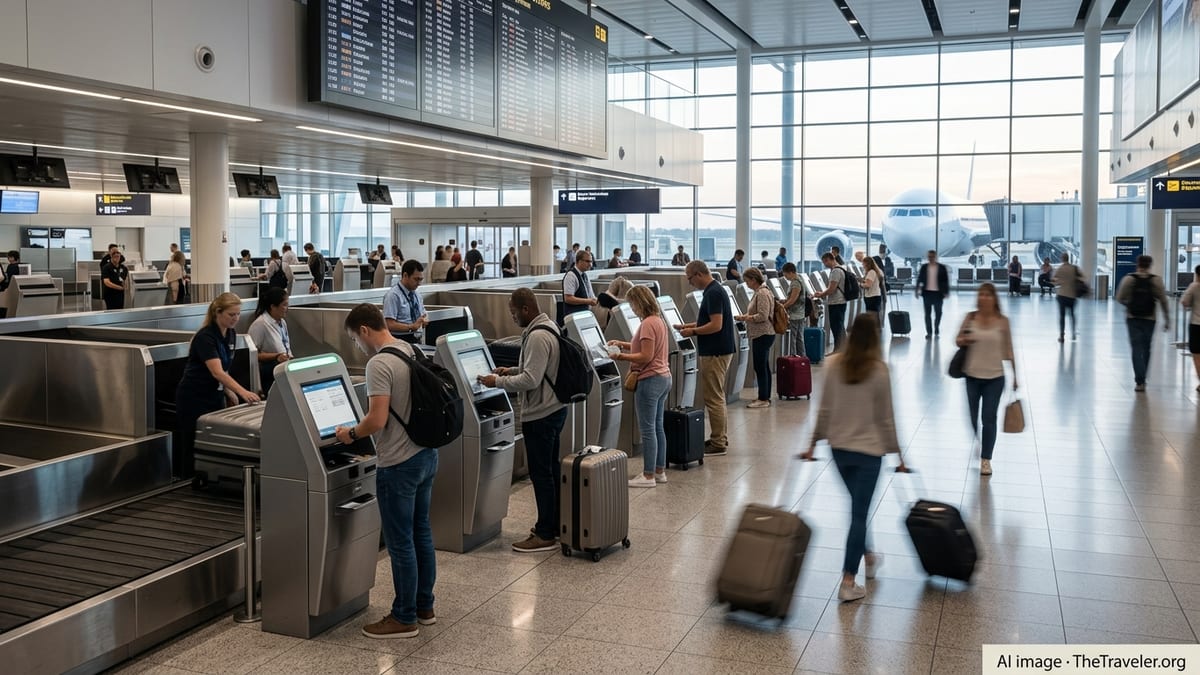
Europe approves sweeping update to passenger rights
After years of negotiation, European Union lawmakers have reached agreement on revised air passenger rights that preserve compensation for long delays, clarify exemptions for airlines and set out tighter rules on how fares and baggage fees are presented. According to recent parliamentary coverage, the reform modernizes Regulation 261/2004, the cornerstone of EU air travel protections that has been in place since 2004.
The new framework, endorsed by the European Parliament in early July 2026, maintains the right to cash compensation when flights are heavily delayed, cancelled at short notice or subject to denied boarding, while refining what counts as “extraordinary circumstances” such as severe weather, war or air traffic control strikes. Reports indicate that compensation will still be available from delays of around three hours on many routes, with revised distance bands and caps for longer journeys intended to balance passenger protections with airline costs.
Despite intense debate, lawmakers opted not to roll back existing financial entitlements, resisting calls from parts of the industry to narrow the range of eligible disruptions. Parliamentary briefings describe the overhaul as a compromise that keeps the core model of fixed-sum compensation but aims to streamline claims and reduce legal disputes that have grown steadily as traffic and congestion have increased.
The updated regulation is expected to apply from mid 2027 following final publication and a transition period, giving airlines, airports and claims companies time to adjust their systems and customer communications.
Free cabin bags, child seating and duty of care under pressure
One of the most visible changes for travelers in Europe concerns hand luggage. Under the forthcoming rules, airlines operating within the EU will be required to display airfares that include at least one piece of standard carry on luggage in the initial price shown during booking. Consumer advocates had argued that separate charges for basic cabin bags created confusion and encouraged artificially low headline fares.
Negotiators also addressed concerns about families being split up on crowded flights. The agreed text introduces a right to fee free seating for young children next to a parent or responsible adult, responding to years of complaints about airlines charging extra merely to keep families together. The entitlement will apply on EU departures and arrivals operated by EU carriers, and is designed to be simple enough that passengers can understand it without relying on legal advice.
Existing obligations for duty of care when passengers are stranded remain largely intact. The new rules confirm that airlines must provide refreshments from the second hour of a disruption, meals after longer waits and hotel accommodation where overnight stays are required, typically for up to three nights when problems lie outside the carrier’s control. Supporters of the reform argue that this codifies practices many airlines already follow, while setting minimum expectations across the single market.
At the same time, lawmakers accepted that airlines should not be indefinitely responsible for open ended costs, particularly when infrastructure failures or extreme events are to blame. The regulation therefore introduces more detailed time limits and definitions to clarify when assistance ends and when national authorities can intervene.
Faster refunds and simpler claims for disrupted journeys
Beyond headline compensation, a core objective of the European reform is to make the process of claiming easier and less adversarial. Parliament summaries state that airlines will be required to provide passengers affected by cancellations or long delays with clear, electronic information on their rights, including a pre filled claim form, within a set period after the disruption.
The new system is intended to reduce reliance on third party claims firms that charge commissions or fees. By obliging airlines to initiate communication directly and by harmonizing complaint handling deadlines, regulators aim to ensure that eligible travelers receive compensation or refunds without protracted disputes. Member states will be asked to reinforce national enforcement bodies so they can impose penalties where carriers underperform.
In parallel, new rules seek to prevent so called “no show” policies that cancel a return or onward segment when a passenger misses only the initial leg. Under the forthcoming framework, travelers who skip one part of an itinerary for reasons such as disruptions, illness or changed plans should retain the right to use their remaining tickets, provided they inform the airline within a prescribed timeframe.
The combination of automatic notifications, standardized forms and clearer time limits on responses is expected to reshape how disruptions are handled at major European hubs, particularly during peak holiday seasons when mass cancellations can overwhelm call centers and airport desks.
United States tightens refund and baggage fee rules
Regulatory change is not limited to Europe. In the United States, the Department of Transportation adopted a final “Refunds and Other Consumer Protections” rule in April 2024 that significantly strengthens passengers’ rights when flights are cancelled or significantly changed. Publicly available agency documents explain that U.S. and foreign carriers serving the country must now provide prompt automatic cash refunds when trips are cancelled or substantially delayed and the traveler does not accept an alternative.
The rule defines “significant delay” at arrival as three hours or more for domestic journeys and six hours or more for international flights, removing previous uncertainty that left refund decisions to individual airline policies. The automatic nature of the refund is a major shift, reflecting widespread dissatisfaction with vouchers and credits issued during the pandemic era.
In addition, the U.S. regulation requires airlines to refund checked baggage fees when bags are significantly delayed beyond an agreed delivery window, and to return ancillary fees when services such as seat selection or onboard Wi Fi are not provided. Consumer groups view this as a step toward aligning payments more closely with what was actually delivered, rather than treating add ons as non refundable regardless of performance.
Industry analysis suggests that these measures will push carriers to improve baggage handling and operational reliability, since failures now carry direct financial consequences. At the same time, the rule preserves airlines’ ability to offer rebooking instead of refunds where passengers prefer to continue their journey, provided that choice is clearly presented.
Airlines warn of cost pressures and possible fare rises
Airline associations have repeatedly raised concerns that tighter passenger rights could drive up operating costs and ultimately airfares. Trade groups such as the International Air Transport Association and European regional carriers have argued in position papers that expanded compensation and assistance obligations do not always reflect operational realities, especially for smaller airlines facing thin margins and external shocks.
Critics of the European reform contend that mandating inclusive fares with cabin baggage and guaranteeing faster payouts will limit carriers’ flexibility to offer ultra low entry prices, particularly in highly competitive short haul markets dominated by budget operators. Some industry voices warn that fewer ultra cheap promotional tickets may be available if airlines need to factor potential compensation and lodging costs into every sale.
Supporters of stronger rules counter that headline prices have historically understated the true cost of travel for many passengers, once luggage, seating, payment and other unavoidable fees are added. They argue that clearer upfront pricing combined with predictable compensation will allow travelers to compare offers more accurately, potentially rewarding airlines that invest in reliability rather than aggressive fee structures.
Analysts generally expect that any fare impact will vary by region and business model. Full service carriers may adjust ancillary pricing and loyalty benefits, while low cost carriers could experiment with new fare families that let passengers opt out of some rights or services in exchange for lower prices, within regulatory limits. For travelers, the immediate effect is likely to be greater transparency and more consistent treatment when things go wrong, even if rock bottom promotional fares become less common.