


Faro Airport is the main gateway to Portugal’s Algarve, but the region’s scenic coastal railway starts a few kilometres away at Faro’s central train station. There is no rail connection at the terminal itself, so every journey by train to Lagos, Portimão, Tavira or Vila Real de Santo António begins with a short hop into town. This guide explains, in practical detail, how to get from Faro Airport to Faro train station by bus or taxi, and how to make smooth onward connections across the Algarve.
Get the latest updates straight to your inbox!
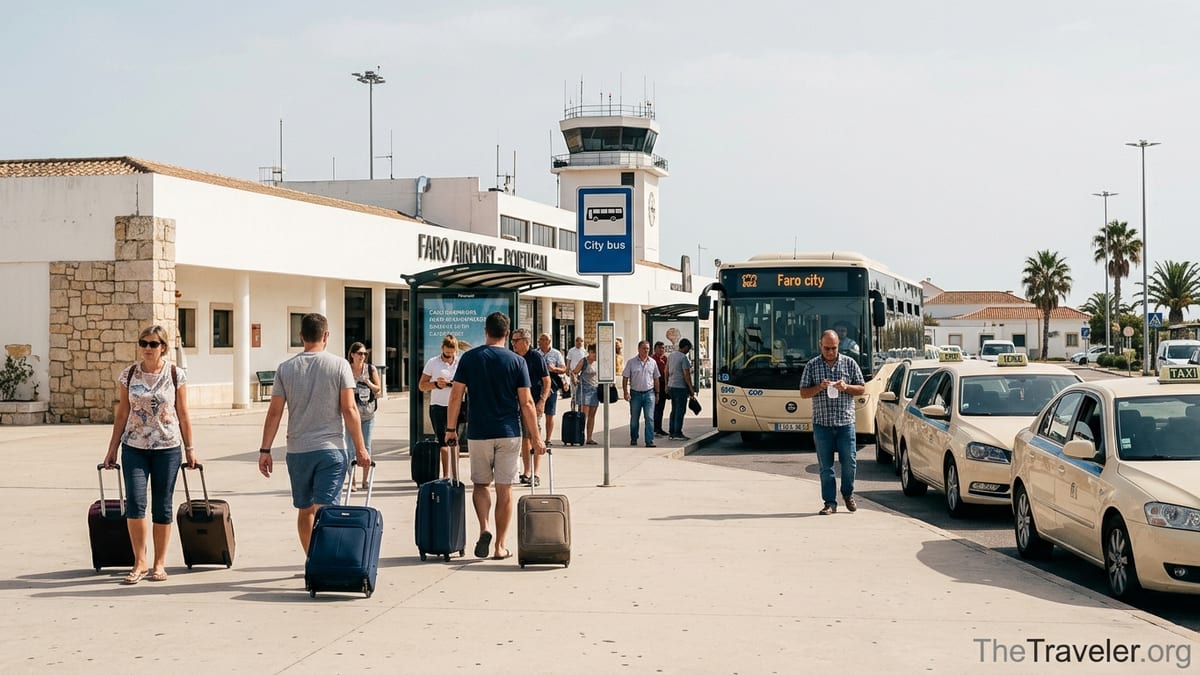
Understanding the Route from Airport to Station
Faro Airport sits roughly 6 kilometres west of Faro city centre, while Faro train station is on the eastern edge of the centre, close to the main bus terminal and marina. In normal traffic the journey from the airport to the station takes around 10 to 15 minutes by taxi and about 20 minutes by city bus. The two key points you need to know are the airport terminal itself and the Proximo city bus terminal in central Faro, which is a short walk from the railway platforms.
There is no train platform at the airport. If you are heading on by rail to popular Algarve towns such as Lagos, Portimão, Albufeira (via nearby Ferreiras station), Tavira or Vila Real de Santo António, you must first reach Faro train station by road. From the terminal arrivals hall, your two most straightforward options are the Proximo city bus, which is the budget choice, and regular taxis or ride-hailing services, which are the fastest and most direct.
Once at Faro station, you join the Algarve regional line operated by Comboios de Portugal. Trains typically run at least every one to two hours in each direction during the day, with more services in summer. For example, it is common to find morning and afternoon departures to Lagos taking about 1 hour 40 minutes, and to Tavira and Vila Real de Santo António taking under 1 hour and about 1 hour 45 minutes respectively. Exact times vary by season, so always check the current timetable on arrival or online before you travel.
Because the airport-to-station link is relatively short and simple, most travellers can make the connection without stress, even after a long flight. The main decisions are whether to prioritise cost or convenience, what time your train leaves, and whether you are happy to manage your luggage on a city bus.
Taking the Proximo Bus: Cheapest Link to the Station
The Proximo city bus network is Faro’s local public transport system and runs the main airport bus service. For most travellers, line 16 is the route to look for. This line normally connects Faro Airport, the central bus terminal on Avenida da República, and Faro Beach, with journey times of around 20 minutes between the airport and the city centre. Buses usually run every 30 to 60 minutes, with more frequent services on weekdays and slightly reduced frequency in the late evening, particularly outside the main summer season.
A single ticket on line 16 typically costs just a few euros per person, making it by far the cheapest way to reach the railway station. Recent travellers have reported paying around 2.50 to 3 euros when buying directly from the driver in cash. Contactless card acceptance can change, so you should not rely on it. For peace of mind, arrive with small euro notes and coins so you can pay quickly when boarding, especially at busy times when a queue forms at the bus stop outside arrivals.
The airport bus stop is just outside the terminal building and clearly signposted. When a Proximo bus arrives, check the number “16” and the destination on the front. If you are unsure, show the driver “Faro estação de comboios” on your phone and ask if the bus goes to the centre for the train station. The bus does not stop directly at the railway station platforms. Instead, it terminates at the Proximo / EVA bus terminal in the city centre. From there, the walk to the railway station is short and straightforward, generally five to seven minutes on level pavements suitable for rolling suitcases.
Because the timetable can shift with seasons and public holidays, a sensible strategy is to check the current schedule on the Proximo website the week you travel, then allow at least 30 minutes buffer between the scheduled bus arrival in town and your train departure. For instance, if your regional train to Lagos is at 14:20, aim for a bus that reaches Faro city by around 13:45. This gives time to walk to the station, buy tickets if needed, and find the correct platform without rushing.
From Central Bus Terminal to Faro Train Station on Foot
When you get off line 16 at the city centre bus terminal, you are only a short walk from Faro train station. The bus terminal sits on Avenida da República near the marina. Faro station is across the main road and a block or two away, signposted “Estação” and easily recognised by its railway tracks and small station building. Even with luggage, most travellers cover the distance in under ten minutes.
To visualise the route, imagine stepping off the bus, then walking out of the terminal area towards the waterfront. From the main entrance, head left along Avenida da República with the marina on your right. Within a few minutes you will see the railway lines and station building ahead and slightly inland. Cross at the pedestrian crossing if necessary and follow the signs to the station entrance. The pavements are generally smooth, although you may encounter some short sections of cobblestones near the marina, so rolling suitcases that handle uneven surfaces are helpful.
Inside Faro station, the ticket office for Comboios de Portugal is usually open throughout the day, with closing times varying by season and day of the week. You can buy same-day regional tickets at the counter or, for popular routes such as Faro to Lisbon on Intercidades or Alfa Pendular services, it is often better to purchase in advance online. For regional Algarve trains, same-day purchase is usually fine outside major holiday weekends. If you prefer a digital option, you can often show a barcode ticket on your phone instead of printing.
Travellers arriving with tight connections often walk directly from the bus terminal to the station without stopping, while others take a short break at cafés near the marina before continuing their journey along the coast. Because the walk is short and flat, it is practical even with children, provided you hold their hands when crossing the main road. If you have mobility challenges or very heavy luggage, you might prefer to take a short taxi ride from the bus terminal to the station, but most people find this unnecessary.
Using Taxis and Ride-Hailing: Fast and Direct
If you value speed and simplicity over saving a few euros, taxis and ride-hailing services provide the most direct connection between Faro Airport and Faro train station. You will find the official taxi rank immediately outside the arrivals hall, clearly marked with signs. Official taxis are usually beige or other standard colours used in the region and display a roof sign. Cars are metered, and fares are regulated, with surcharges applied at night, on weekends, and for larger luggage items.
Typical taxi fares from the airport to Faro city centre, including the vicinity of the train station, are often in the region of 10 to 15 euros under normal traffic conditions. At night or during peak summer weeks, you might pay a little more. With two or three people sharing, the cost per person becomes very reasonable compared with the bus, especially when you factor in the convenience of being dropped directly at the station entrance. Journey times of 10 to 15 minutes are common when roads are clear, though heavy holiday traffic or roadworks can add a few minutes.
Ride-hailing services such as Uber and similar platforms frequently operate in the Algarve. Many travellers report using a ride from Faro Airport to the train station or back again when trains arrive late in the evening. In practice, prices for ride-hailing can be close to or slightly cheaper than a metered taxi, depending on demand at your arrival time. One advantage is the ability to see an estimated price before you confirm the booking, which can help you decide between ordering a car and waiting for the next bus.
For very early departures or late-night arrivals, taxis and ride-hailing are often the only realistic options. Proximo buses do not run all night and service can thin out late in the evening, especially outside the main summer season. If you have an early train to catch, for example a morning departure towards Lisbon or an early regional train towards Lagos, consider pre-booking a taxi or being ready to order a ride around 30 minutes before you want to leave the airport. This buffer allows time for your car to arrive and for any short queue that may form at the taxi rank when several flights land at once.
Choosing Between Bus and Taxi: Real-World Scenarios
The choice between bus and taxi often depends on your schedule, budget, and comfort with managing luggage on public transport. Consider a couple arriving at Faro Airport around 10:00 in July, planning to catch a 12:15 train to Lagos. They have medium luggage and are comfortable with city buses. In this case, taking the Proximo line 16 bus makes sense: even if they wait 20 to 30 minutes for the next bus, the ride to the city takes about 20 minutes, and the short walk to the station leaves more than enough time to buy tickets and perhaps grab a coffee before boarding.
Contrast that with a solo traveller landing at 21:30 in November with a train to Tavira at 22:15. Evening bus frequencies may be lower, and any delay at passport control could make the connection tight. Here, a taxi or ride-hailing car is the prudent choice. A direct 10 to 15 minute ride to the station dramatically reduces the risk of missing the last convenient train east. Spending around 12 to 18 euros on a cab in this situation is often a good investment for peace of mind.
Families with young children or travellers with heavy sports equipment, such as golf bags or surfboards, may also prefer taxis. While you can technically bring larger items on the bus, boarding and alighting with bulky luggage in a crowded aisle can be awkward. A taxi or ride-hailing car allows you to stow everything in the boot and focus on your children or companions. Conversely, backpackers and budget travellers with light bags frequently choose the bus, then walk from the central terminal to the station, as the cost savings over multiple trips add up.
Another factor is flexibility for missed connections. If your flight is delayed and you miss the train you had in mind, regional services along the Algarve usually give you another option within an hour or two. In that case, catching whichever bus or taxi comes first and heading to Faro station is still worthwhile, as you can often adjust your ticket or buy a new one for the next departure. Having checked the latest timetables on your phone while waiting for baggage helps you make quick decisions about whether saving money on the bus is practical or whether it is worth switching to a taxi to rescue a tight connection.
Continuing by Train to Algarve Destinations
Once you arrive at Faro train station, the Algarve and broader Portugal open up by rail. To the west, regional trains run along the coast towards Lagos, stopping at destinations popular with holidaymakers such as Albufeira (via Ferreiras station), Tunes, Portimão and Lagos itself. The full journey from Faro to Lagos typically takes under two hours on a regional train, which is slower than a direct motorway coach or car but offers relaxed views of countryside, orange groves and small villages.
To the east, regional trains head for Tavira, Cacela, Vila Real de Santo António and smaller stops along the way. These trains are convenient for travellers staying in Tavira’s historic centre or in resorts near the Spanish border. Journey times from Faro to Tavira are often around 35 to 45 minutes, while the full stretch to Vila Real de Santo António can take roughly 1 hour 30 to 1 hour 45 minutes. Fares on these regional services are generally modest, making them appealing for budget-conscious travellers or those planning several day trips.
Faro station is also a gateway to long-distance routes. Intercity trains frequently link Faro with Lisbon, with journey times of around 3 hours to major Lisbon stations such as Entrecampos or Oriente, depending on the service. Some travellers choose to land in Faro, spend a day or two in the Algarve, then continue north to Lisbon or Porto by train. In these cases, you will repeat the same short transfer between airport and station at the beginning or end of your itinerary, so understanding your options early helps you plan the whole trip more confidently.
Practical tips at Faro station include arriving at least 10 to 15 minutes before departure, especially if you still need to purchase tickets, and verifying the platform on the departure boards even if staff have already indicated it. Regional trains can be composed of modestly sized train sets, so move along the platform to spread out rather than crowding the closest doors. If you have reserved seats on an intercity service, coach numbers are marked on the outside of carriages; allow a couple of extra minutes to find the correct coach so you are not rushing with luggage when the train arrives.
Seasonal, Time-of-Day and Accessibility Considerations
While the basic connection from Faro Airport to Faros train station changes little from year to year, seasonal patterns can influence how you plan your transfer. In high summer, especially July and August, both the airport and trains along the Algarve can be busy with holiday traffic. Buses from the airport may fill quickly after a cluster of arrivals, and the taxi queue can be longer than usual. In these months, it is sensible to factor in extra time and consider pre-booking a taxi if you are landing at a peak hour such as late morning or early evening.
In low season, particularly late autumn and winter, air traffic eases and so do crowds on public transport, but timetables may be slightly reduced. The Proximo line 16 bus may run less frequently at night, and the last departures can be earlier than summer visitors expect. If you arrive on a late evening flight in December or January, check in advance whether a bus will still be running. If there is any doubt, treat a taxi or ride-hailing service as your primary plan rather than a backup.
For travellers with reduced mobility, Faro Airport indicates that special taxis with adapted equipment can be booked through local providers. Although the walk between the city bus terminal and the train station is short, it involves crossing at least one main road and navigating standard pavements, which may not suit every traveller. In such cases, asking a taxi to take you directly from the airport to the railway station concourse is usually the more comfortable option. If you need assistance boarding trains, station staff at Faro can often provide a ramp or guidance when requested ahead of time or on arrival.
Time of day also affects comfort and safety for solo travellers. Many visitors, including solo travellers, report feeling at ease using the bus during the day and early evening, with the short walk between bus terminal and station passing through busy, well-lit streets near the marina and city centre. Late at night, particularly after the last buses, a taxi or ride-hailing car that drops you at the station door or your accommodation is generally preferable, especially if you are unfamiliar with the area or carrying valuable equipment.
The Takeaway
Connecting from Faro Airport to Faro train station is straightforward once you understand that all rail journeys begin with a short road transfer. The Proximo line 16 bus gives you the lowest-cost link into the city centre, followed by a quick walk to the station, and works well for most daytime arrivals. Taxis and ride-hailing services provide a faster, door-to-door alternative that is especially valuable late at night, in low season, or when travelling with children, bulky luggage or mobility constraints.
Once at Faro station, the Algarve’s coastal railway opens up a range of destinations, from the beaches near Lagos and Portimão to the historic streets of Tavira and the quieter eastern towns close to Spain. By checking current bus and train timetables shortly before you travel, allowing sensible buffers for queues and walking time, and choosing the mode of transport that fits your budget and schedule, you can make the airport-to-station link feel like a smooth beginning to your time in the Algarve rather than an obstacle.
FAQ
Q1. Is there a train station at Faro Airport itself?
There is no train station at Faro Airport. To catch a train, you must first travel by bus or taxi to Faro train station in the city centre.
Q2. How long does it take to get from Faro Airport to Faro train station?
By taxi or ride-hailing, the journey usually takes about 10 to 15 minutes in normal traffic. By Proximo city bus, expect around 20 minutes plus a short walk from the bus terminal.
Q3. Which bus should I take from Faro Airport to reach the train station?
The main route is Proximo line 16, which runs between the airport and the central bus terminal. From there, it is a five to ten minute walk to Faro train station.
Q4. How much does the airport bus cost compared with a taxi?
The Proximo bus ticket typically costs only a few euros per person, while a taxi or ride-hailing service from the airport to the station is often in the 10 to 15 euro range under normal conditions.
Q5. Can I use the bus late at night to reach the train station?
Evening services on line 16 exist but are less frequent, and there is no 24-hour service. For late-night arrivals, it is safer to plan on a taxi or ride-hailing car.
Q6. How far is the walk from the central bus terminal to Faro train station?
The walk is short and mostly flat, generally taking five to seven minutes along Avenida da República and across to the station, suitable for travellers with standard rolling luggage.
Q7. Do taxis at Faro Airport take card payments?
Many official taxis can accept card payments, but this is not guaranteed. Ride-hailing apps usually charge your card automatically. Carrying some cash is still a good idea.
Q8. Is it better to go by train or bus from Faro to Lagos or Tavira?
Both options work. Trains offer a scenic, relaxed ride at reasonable prices, while long-distance buses may be slightly faster or more frequent at certain times. Personal preference and schedule usually decide.
Q9. Do I need to buy my train ticket in advance?
For regional Algarve trains, buying on the day at Faro station normally works. For long-distance services to Lisbon or beyond, booking in advance can secure a seat and sometimes better fares.
Q10. Is the airport-to-station route safe for solo travellers?
Most visitors find the bus, walk and taxi ride between the airport and station safe, especially in daytime and early evening. At night, many solo travellers prefer taxis or ride-hailing for extra reassurance.