


More news on this day
Authorities in several countries have recently exposed a sophisticated fake job operation that posed as a pathway to overseas and event-related employment, preying on travelers, migrants, and young job seekers with promises of quick visas, high salaries, and fully arranged travel.
Get the latest news straight to your inbox!
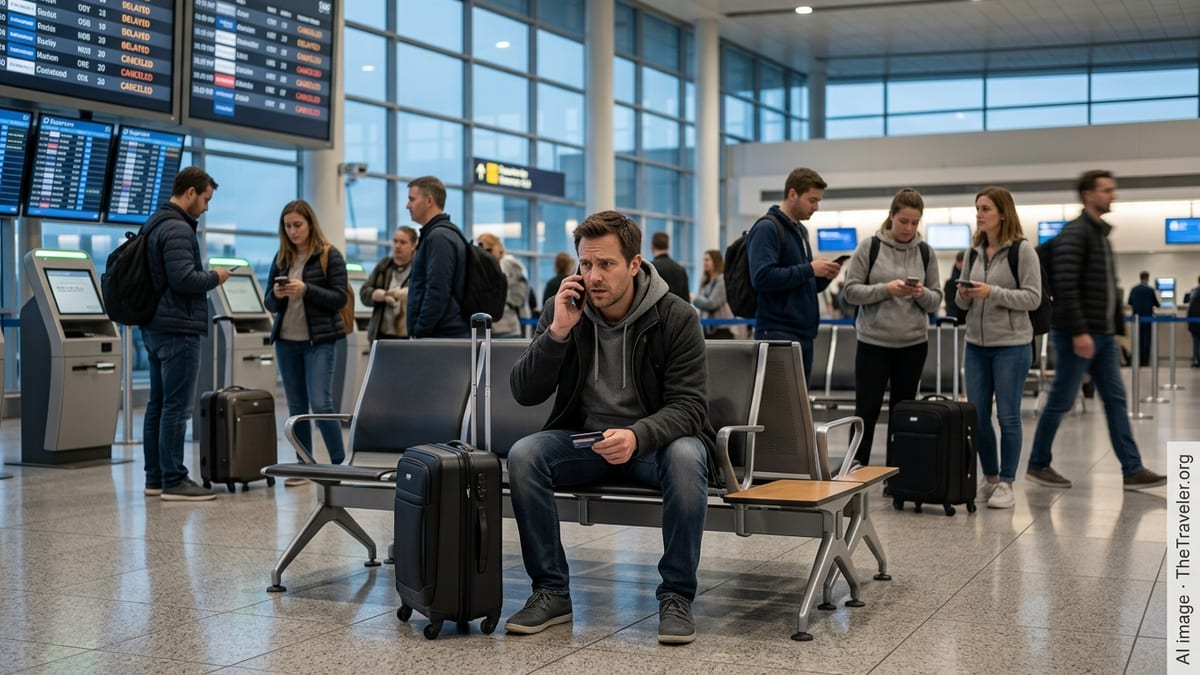
Multi‑country alerts as fake job offers surge ahead of major events
Publicly available information from North America, Europe, Asia, and the Caribbean points to a sharp rise in fake job offers tied to travel and temporary work, including hospitality, security, and logistics roles promoted around major sporting and tourism events. Recent coverage on anti-trafficking risks connected to the 2026 World Cup describes a wave of fraudulent posts circulating on messaging apps and social media, offering all-expenses-paid jobs in stadiums, fan zones, hotels, and transport hubs, often without requiring prior experience.
According to published coverage, these schemes typically promise fast-track hiring, sponsored visas, and free accommodation in host cities such as Seattle, Vancouver, Mexico City, and other tournament destinations. In many cases, job seekers are instructed to pay “processing fees” or to submit sensitive identity documents long before any legitimate employment contract appears. Anti-trafficking specialists quoted in recent reports warn that such offers can be a gateway to labor exploitation in construction, catering, cleaning, and nightlife industries that support large influxes of visitors.
Travel-industry observers note that the timing is no coincidence. Large events create genuine surges in demand for seasonal workers, while also drawing huge numbers of hopeful applicants from abroad and within host countries. Fraudulent recruiters exploit this environment by mimicking real hotel chains, staffing agencies, and event contractors, sometimes even copying logos and job descriptions lifted from legitimate postings.
Warnings now emphasize that anyone considering travel for work related to high-profile tournaments or festivals should verify employers through official channels, cross-check company registration records, and remain wary of unsolicited offers that appear in social feeds or encrypted chats.
Unlicensed recruiters and sham consultancies selling “overseas opportunities”
Reports from labor and migrant-worker agencies in several regions describe enforcement actions against unlicensed recruiters advertising overseas jobs that never materialize. In the Caribbean, for example, one recent public advisory highlighted a scheme that used social media to sell placements on foreign farms, despite the fact that the country’s own labor ministry is the only body legally authorized to recruit and dispatch agricultural workers abroad. The warning urged applicants to treat any third-party “agent” promising fast farm work visas as a serious red flag.
Similar patterns are documented in Southeast Asia, where migrant-worker departments have shut down consultancy firms in major cities after complaints that applicants were charged large “documentation” and “training” fees for promised jobs in Europe that did not exist. In some cases, workers only discovered the problem when they arrived at airports to find no sponsor, accommodation, or legitimate work waiting for them.
Recent international research on migration and cybercrime underscores how such fake placement offers are increasingly run online, blending conventional advance-fee fraud with more complex trafficking-linked operations. Studies tracking recruitment from South Asia and parts of Africa describe thousands of people lured toward supposed logistics, warehouse, or customer service roles abroad, only to encounter coercion, confiscation of passports, or demands for additional payments once they are already in transit.
For would‑be travelers, the distinction between a specialized migration consultancy and an outright scam can be opaque. Official advisories encourage prospective workers to check whether agencies are licensed in both the origin and destination countries, avoid paying large up‑front fees, and insist on receiving written contracts in a language they understand before committing to any travel.
Digital facades: cloned companies, AI photos, and hijacked job boards
The latest uncovered scam networks lean heavily on digital tools that make fraudulent postings appear credible. Cybercrime analyses and law-enforcement affidavits describe the use of cloned corporate websites, fake professional profiles, and AI-generated staff photos to populate bogus recruitment portals. In recent U.S. cases, investigators disabled a cluster of domains that closely imitated well-known consulting and recruitment firms, specifically targeting people with government or defense backgrounds.
Academic work on job-based smishing has traced tens of thousands of scam messages that invite recipients to apply for remote, high-paying roles via popular messaging apps. These messages often point to recruitment pages that copy layout, typography, and branding conventions from real multinationals, while hiding tell-tale anomalies in contact details, corporate registration, and payment instructions.
Consumer protection agencies and job platforms are also documenting a rise in fraudulent postings that exploit the names of legitimate employment sites. In one recent security advisory, a major job board reported that scammers had sent fake job offer letters purportedly “on behalf” of the platform, congratulating candidates on overseas roles and instructing them to transfer “processing fees” for immigration, medical checks, or accommodation deposits.
For the average traveler seeking a short-term contract abroad, these digital facades can be difficult to distinguish from genuine opportunities. Experts recommend simple checks such as manually searching for the employer’s official website, verifying physical addresses and company registrations, and confirming with official HR contacts listed on corporate pages rather than responding through links embedded in unsolicited messages.
From fake job ad to forced labor: when scams cross into trafficking
Beyond financial loss, recent studies and press investigations highlight a darker trajectory in which fake jobs lead directly to forced labor. Research from international organizations and academic institutions documents how some victims are persuaded to travel across borders for ostensibly legitimate office jobs, only to find themselves confined in heavily guarded compounds and forced to carry out online fraud targeting victims in other countries.
These “scam center” operations, first widely reported in parts of Southeast Asia, rely on recruitment campaigns that look almost identical to standard digital marketing or customer service vacancies. Once workers arrive, movement is often restricted, wages are withheld, and threats of violence or arrest are used to prevent escape. The original fake job ad thus becomes the first step in a pipeline that shifts people from hopeful migrants to exploited laborers within a matter of days.
Travel-related work is particularly susceptible because it frequently involves cross-border movement, temporary accommodation, and a lack of local support networks. Anti-trafficking practitioners caution that anyone considering relocation for a job should be wary of offers that sound excessively generous, require secrecy, or insist on handing over passports and phones. Reports also stress that friends and family at home should keep copies of contracts, itineraries, and employer details in case something goes wrong after departure.
Some travel and hospitality brands are responding by training staff to recognize warning signs among new hires and agency-supplied workers, including unusual debt arrangements, restricted freedom of movement, or scripted answers about employment terms. Public campaigns are also encouraging tourists to report suspicious situations involving workers who appear controlled or unable to speak freely.
How travelers and job seekers can protect themselves
Consumer advisories on job scams consistently point to a small set of recurring warning signs. Scam messages often arrive via unsolicited texts, encrypted chats, or social media, promise high pay for minimal work, and push for rapid acceptance. Many use generic job titles, avoid in‑person or video interviews, and try to move conversations off recognized job platforms onto private messaging apps.
Regulators and watchdogs recommend that anyone seeking work connected to travel or overseas relocation start by using official government job portals, licensed recruitment agencies, or the careers pages of known brands rather than responding to random links. Job seekers are urged to research company names together with terms like “scam” or “complaints,” check whether the organization has a traceable presence, and be cautious of employers that cannot provide verifiable business addresses or registration numbers.
Prospective workers are also advised never to pay large recruitment or placement fees directly to individuals, and to treat requests for bank details, crypto payments, or gifts cards as a strong indication of fraud. When a role involves travel, documenting every step of the offer process and sharing itineraries and employer information with trusted contacts can provide an additional layer of safety.
As peak travel seasons and mega-events approach, analysts expect fake job operations to keep evolving. The recent uncovering of transnational scam networks illustrates how closely employment fraud now intersects with digital crime and cross-border mobility, turning the simple search for a better job into a potential risk for travelers worldwide.