


More news on this day
A newly released federal accident report on April’s downtown Austin freight derailment concludes that weakened track structure and related gauge problems in a sharp curve were the critical factors that sent several Union Pacific railcars off the rails, intensifying scrutiny of heavy freight traffic through the city’s core.
Get the latest news straight to your inbox!
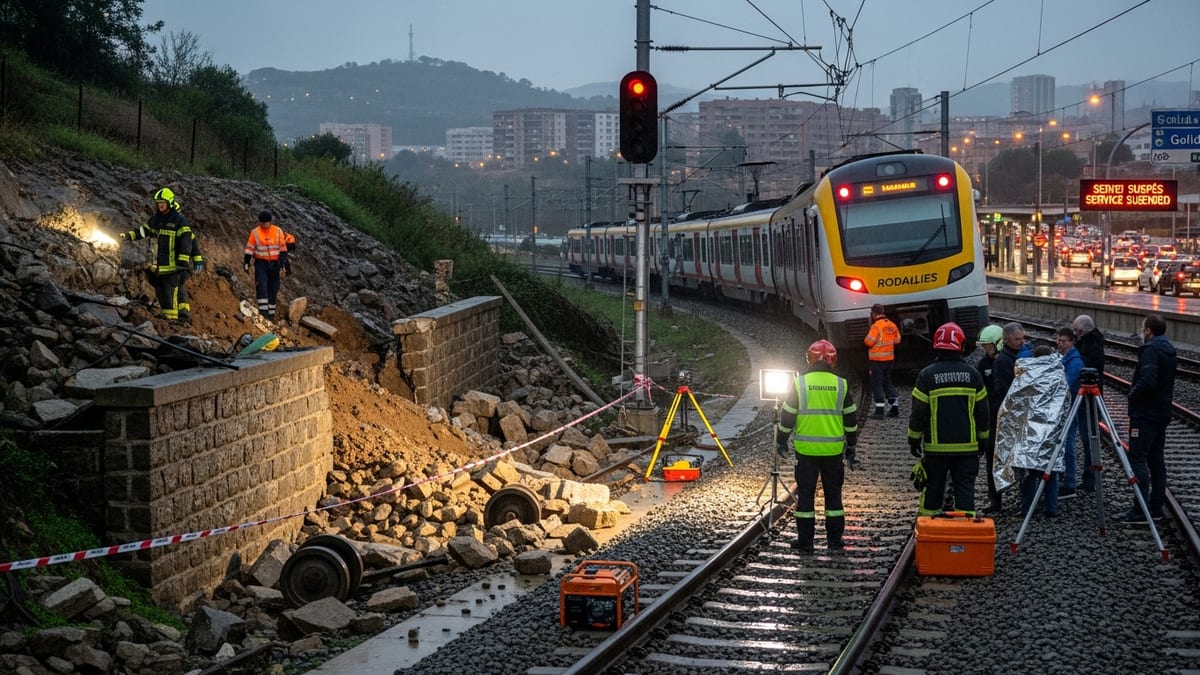
Federal investigators trace derailment to track gauge failure
The Federal Railroad Administration’s accident narrative for the incident describes a sequence in which the track structure in a tight downtown curve was no longer able to maintain proper gauge under the weight of the eastbound freight train. As the train entered the curve at low speed, the rails spread just enough for wheel flanges to drop inside the railhead, causing multiple cars to leave the track.
According to the federal report, the key issue was a compromised track modulus in the curve. The combination of deteriorated crossties, worn fasteners and ballast conditions reduced the lateral restraint that normally holds the rails to the standard distance apart. Under loaded freight cars, that weakness allowed the gauge to widen beyond safe limits, culminating in the derailment.
Publicly available FRA data for the Austin Western and Union Pacific corridors show that gauge widening and related track geometry problems are a recurring cause category in freight derailments nationwide. While the downtown Austin incident did not involve hazardous materials or injuries, the findings align with a broader pattern in which infrastructure degradation at curved or heavily used locations plays an outsized role in urban rail mishaps.
The report also notes that there was no evidence of excessive speed or emergency braking at the point of derailment. Train handling in the minutes before the incident was described as consistent with operating rules for that segment, placing the focus squarely on the condition of the physical track and supporting structures.
How the downtown derailment unfolded
The early morning derailment occurred as a short consist of mixed freight moved through a well known S curve on the edge of downtown Austin, near busy surface streets and residential buildings. Several intermodal cars left the rails, toppling at angles that blocked adjacent lanes and damaged nearby infrastructure but stopped short of striking occupied structures.
Initial images from the scene showed railcars leaning against a utility pole and fencing, with a cluster of heavy equipment brought in to rerail and remove damaged cars. Local coverage at the time emphasized the sheer visual impact of the incident in the heart of the city, as well as the traffic disruptions that stretched into the day while crews worked to clear the site.
Subsequent federal documentation fills in technical details largely absent from those first accounts. The accident report reconstructs the train’s movement through the curve, identifying the initial point of derailment within a short segment where track components had degraded more severely than in adjoining stretches. Investigators tie that concentration of wear to the combination of curvature, repeated heavy freight loading and drainage patterns that undercut the ballast.
By linking the first wheel climb and gauge spread to a specific portion of the curve, the report effectively narrows the focus of remedial work. It also illustrates how a localized weakness in a complex urban track layout can generate outsized consequences when trains pass within feet of sidewalks, intersections and apartment complexes.
Implications for rail safety in growing city centers
The Austin findings arrive at a time when rail safety in dense urban corridors is under heightened scrutiny, with recent derailments across the country drawing attention to the intersection of aging infrastructure and rising freight volumes. The new report underscores how even non hazardous freight movements can generate significant disruption when something goes wrong in constrained downtown environments.
Rail safety specialists who study FRA data note that defects involving track geometry, including gauge widening, alignment irregularities and crosslevel issues, consistently rank among the leading causes of derailments. In curves, those defects can interact with train forces in complex ways, amplifying the risk if inspection or maintenance intervals lag behind the rate of wear.
For fast growing cities such as Austin, the incident highlights a tension between long established freight routes and modern land use. Many central Texas rail corridors predate current development patterns and now run close to apartments, office buildings and major commuter arterials. A derailment that might once have occurred on the fringes of town now unfolds in the middle of a thriving urban district.
Public documents indicate that, following the April derailment, track repairs and renewed inspections were carried out on the curve and adjoining segments. The federal analysis suggests that more systematic attention to tie condition, drainage and ballast consolidation in similar urban curves could reduce the likelihood of repeat incidents as freight and passenger traffic continue to share constrained corridors.
What the findings mean for travelers and commuters
Although the Austin derailment did not cause injuries, it temporarily shut down a key freight route and contributed to significant traffic congestion on nearby streets. For travelers, the event served as a reminder that rail infrastructure often runs just out of view of office windows, hotels and tourist districts, and that disruptions on the tracks can quickly ripple through local transportation networks.
In practical terms, the new federal report is likely to inform how railroads schedule maintenance and inspections in city centers, especially along curves and junctions that see both heavy freight and proximity to population centers. Closer attention to track geometry and structural health in these locations could mean fewer slow orders, unplanned closures and emergency reroutings that affect both freight schedules and connecting bus or roadway traffic.
Travel planners and visitors who rely on regional rail connections may also see incremental changes over time, such as expanded work windows for track maintenance or temporary service adjustments when problem segments are rebuilt. While such projects can create short term inconvenience, safety specialists argue that the Austin case illustrates the cost of deferring more intensive rehabilitation in favor of patchwork repairs.
For now, freight trains continue to move through downtown Austin as crews monitor the repaired curve and other sensitive points along the corridor. The federal report provides a technical roadmap for mitigating similar risks, emphasizing that maintaining track integrity in urban zones is central to keeping both trains and nearby road users moving safely.