


More news on this day
The United Kingdom has expanded its Middle East travel warning to cover 16 states, adding a prominent regional security notice to official guidance for destinations ranging from frontline conflict zones to popular Gulf stopover hubs.
Get the latest news straight to your inbox!
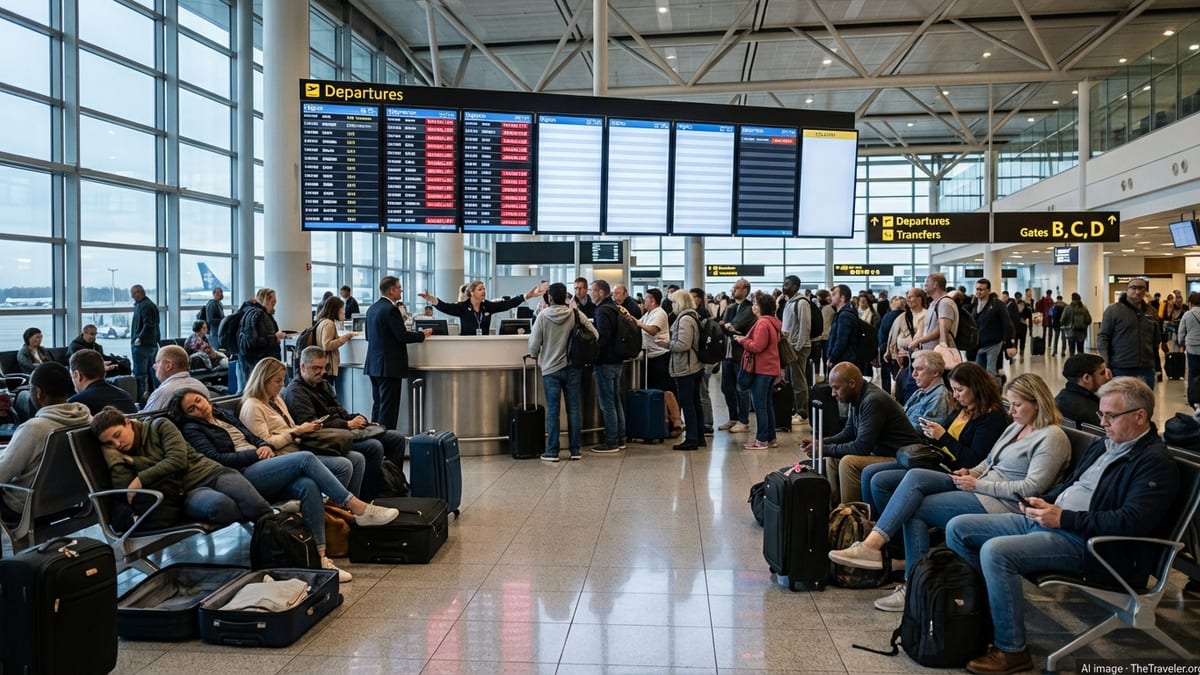
Expanded warning spans 16 countries and territories
According to publicly available Foreign, Commonwealth and Development Office (FCDO) travel advice updated on 28 October 2026, the latest regional notice now appears on the country pages for 16 states in and around the Middle East. The list covers Israel, the Palestinian territories, Iran, Iraq, Syria and Yemen, alongside major aviation and holiday gateways Turkey, Egypt, the United Arab Emirates, Oman, Qatar, Bahrain, Jordan, Saudi Arabia, Kuwait and Pakistan.
The language introduced across these pages is framed as a regional security warning layered on top of existing country specific advisories. In some cases, such as parts of Israel, the occupied Palestinian territories, Iran, Iraq, Syria and Yemen, the FCDO already advises against all travel or against all but essential travel to extensive areas. In others, including the United Arab Emirates, Qatar and Oman, the underlying country advice continues to permit visits while highlighting a more volatile backdrop and the potential for sudden change.
Coverage in specialist travel media indicates that the wording was added across multiple country pages within a short window in the final week of October, suggesting a coordinated effort to present a consistent regional message. The move aligns the UK with other governments that have updated Middle East guidance in recent months in response to escalating tensions and military activity.
The FCDO regional notice emphasises that the overall context remains unpredictable and that developments in one state can have immediate knock on effects in neighbouring countries, sea lanes and crowded flight corridors that link Europe, the Gulf and South Asia. Travellers are urged, via the public guidance, to treat the advisory as a live snapshot rather than a static assessment.
Security context and recent escalations
Publicly accessible material explaining the updated guidance links the expansion of the warning to an extended period of instability since early 2026. The documentation points to repeated exchanges of strikes and retaliatory attacks involving Iran and various armed groups targeting civilian and United States military infrastructure across parts of the region.
Travel industry analysis notes that recent incidents have included missile and drone activity affecting or threatening airports, energy installations and other critical facilities, adding a layer of operational risk for airlines and airports even where runways remain open. In Saudi Arabia, for example, media coverage has highlighted attacks on aviation infrastructure and a subsequent tightening of individual country advice, while separate reporting documents sporadic disruptions in neighbouring states’ airspace during peaks in regional tension.
The updated UK notice reflects these wider patterns rather than a single event. Analysts following the advisories point out that the language is broad by design, capturing the possibility of rapid escalation across multiple theatres at once. References to the risk of debris from intercepted projectiles, and to the need for travellers to identify safe shelter areas inside solid buildings, feature in some of the more detailed country level pages.
Alongside the UK guidance, other governments, including those of the United States, Australia and New Zealand, maintain their own advisories highlighting a complex and fast moving security environment in the Middle East. For travellers, the convergence of this messaging underlines that regional risk assessments may change at short notice and should be checked repeatedly in the run up to departure.
Impact on flights, transit hubs and winter travel plans
The extended warning arrives just as many UK travellers are finalising winter itineraries built around Gulf and Eastern Mediterranean sunshine, as well as stopovers en route to South and Southeast Asia. The inclusion of Turkey, Egypt, the United Arab Emirates, Qatar and Oman in the 16 state list is therefore particularly significant for leisure and business travel.
Publicly available information from the UK and other governments stresses that travellers should be prepared for potential airspace closures, diversions and cancellations affecting routes across the wider region. Industry bulletins circulated to corporate clients in 2026 have documented short notice airspace suspensions over parts of Iran, Iraq, Syria and the Gulf, with knock on impacts for flights that normally cross those flight information regions even if they do not land there.
Major hubs such as Dubai, Abu Dhabi, Doha, Istanbul, Jeddah and Riyadh remain central to long haul connectivity between Europe, Africa and Asia, and there has been no blanket instruction in UK guidance to avoid transiting these airports. However, the regional notice underlines that disruptions can arise with limited warning, potentially leaving passengers temporarily stranded or requiring re routing around closed corridors. Travellers with tight connections or complex itineraries are advised, in open source travel advice, to monitor airline communications closely and to ensure that contact details are up to date in bookings.
Travel trade associations in the UK have responded by urging holidaymakers to review their itineraries, understand fare conditions and stay in close contact with their travel providers. Consumer facing advice produced by these organisations reiterates that travellers should not assume that an apparently routine stopover or short break is insulated from wider regional dynamics.
Insurance, booking decisions and traveller precautions
The extension of the Middle East warning to 16 states also has implications for insurance cover and booking decisions from the UK market. Many standard policies include clauses that can limit or exclude cover where a destination is subject to formal government advice against all travel or all but essential travel. In destinations where the regional notice sits on top of less restrictive underlying advice, cover may remain in place, but travellers are encouraged in publicly available guidance to check wording carefully and obtain written confirmation from insurers if in doubt.
Specialist travel media reports indicate that some tour operators are reviewing programmes to destinations where country specific risk levels have risen, particularly in parts of Saudi Arabia, Israel and the occupied Palestinian territories. In contrast, operations to Gulf city break and stopover destinations where the main advice still permits travel are largely continuing, albeit with enhanced monitoring of airspace and security developments and a greater emphasis on flexible booking options.
For travellers who decide to proceed with journeys to or through the region, government and industry advice highlights several practical precautions. These include registering for official email alerts, monitoring local and international news, and having contingency plans for delayed departures or enforced longer stays. Public country pages also recommend that visitors carry valid travel documents at all times and keep copies stored separately in case of disruption.
In some of the higher risk states on the list, open source guidance goes further, suggesting that visitors identify nearby shelters or robust buildings, follow any local safety instructions if sirens or alerts sound, and avoid approaching debris or fragments from drones or missiles that may fall to the ground after intercepts. Travellers are also reminded that communications networks can come under strain during incidents, so it is sensible to agree basic check in routines with family or colleagues in advance.
How travellers can track fast changing advice
One of the clearest messages emerging from the expanded warning is that travellers need to treat official country pages as dynamic resources rather than one off checks. The FCDO regularly updates its travel advice to reflect changing conditions, and, in late October 2026, changes were applied across the 16 affected states within a relatively short timeframe.
Publicly available guidance encourages anyone planning travel to or through the region to review the relevant country page when first considering a trip, again before booking, and repeatedly in the days immediately prior to departure. Signing up to official email alerts is promoted as a straightforward way to receive updates if the security assessment or entry rules shift.
Travel organisations also advise comparing the UK position with advisories issued by other governments, particularly for travellers who hold more than one passport or who are flying on itineraries that originate outside the United Kingdom. Differences in wording and risk thresholds can affect both practical decisions and the interpretation of insurance policies, making it important to understand how multiple advisories interact.
The expansion of the UK Middle East travel warning to 16 states illustrates how quickly regional events can reshape the risk profile of even well established destinations. For travellers, the most effective response is to stay informed, read official advice in full and maintain the flexibility to adjust plans as the situation evolves.