

Just one nautical mile separates Paros from Antiparos, but the short crossing feels like entering a different world. Whether you are planning a day trip or basing yourself on Antiparos for a longer stay, understanding how the ferries work from Pounta and Parikia will save you time, money, and stress.
Understanding Your Two Options: Pounta vs Parikia
There are two distinct ferry routes from Paros to Antiparos: the short, highly frequent car ferry from Pounta on the west coast of Paros, and the seasonal passenger-only boat from the main port of Parikia. Both deliver you to the same small harbor in Antiparos Town, but they serve slightly different types of travelers and trip scenarios.
The Pounta route is the workhorse connection. It operates all year, carries vehicles as well as foot passengers, and takes around seven minutes to cross. It is used by locals commuting for work and school, by delivery trucks, and by visitors headed to Antiparos with rental cars, scooters, or luggage. If you care most about speed, frequency, flexibility, and reliability in all but the worst weather, this is usually the best choice.
The Parikia route functions more like a seasonal shuttle for visitors. It is a small passenger boat that runs from roughly late spring to autumn, cutting out the need to transfer by road to Pounta. The journey takes about half an hour, and you step directly from the main Paros port to the waterfront of Antiparos Town. This can be wonderfully convenient if you have just arrived in Paros by ferry from Athens or another island and you are not traveling with a vehicle.
In broad terms, think of Pounta as the default for most travelers, especially outside high season, and Parikia as a helpful shortcut when it aligns with your arrival time and you are traveling light on foot. Knowing how each option works lets you mix and match them through your stay depending on your plans for the day.
Ferries from Pounta to Antiparos: The Main Year-Round Link
The Pounta to Antiparos ferry is the backbone of local transport between the two islands. Pounta is a small port on the west side of Paros, facing Antiparos across a narrow channel. Ferries run daily throughout the year, including weekends, with services from early morning until after midnight in high season. Even in winter, the link remains regular, with crossings typically at least every 30 to 60 minutes.
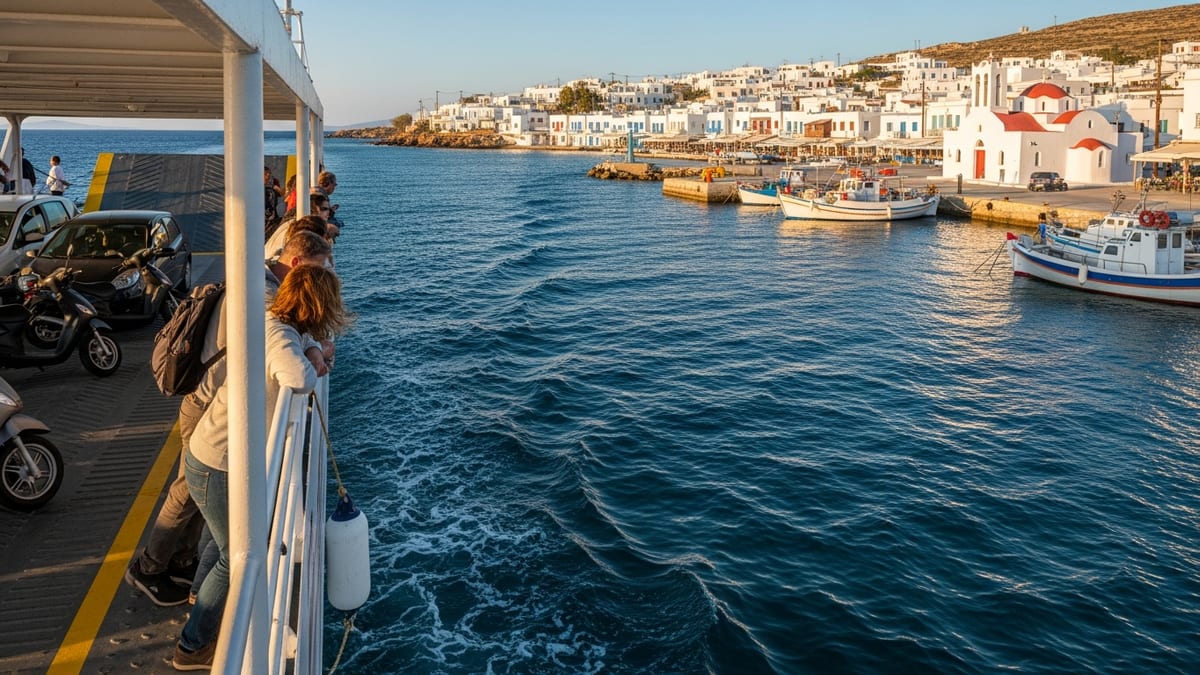
The crossing itself is remarkably short, averaging around seven minutes of sailing time. Because the boat is a small roll-on/roll-off car ferry, boarding is fast and straightforward. You simply walk or drive onto the ramp, pay for your ticket on board, and within minutes you are gliding into the harbor of Antiparos Town, directly in front of the whitewashed church of Agia Marina. The route operates in a wide range of weather conditions, and locals rely on it daily, which gives travelers an extra layer of confidence.
On board, the experience is informal and relaxed. There is usually a covered passenger area, space to stand outside and enjoy the sea air, and room to park cars, motorbikes, and sometimes small vans and trucks. Many people choose to ride on the open deck to enjoy the view of Paros receding behind and the low hills of Antiparos approaching ahead, with the little islet of Revmatonisi off to one side of the channel.
Because the trip is so short and tickets are sold on the ferry itself, there is no advance booking system. You simply turn up at Pounta, wait for the next departure, and board. In most cases you will be on your way within 20 to 30 minutes, even at busier times in summer.
Timetables, Frequency, and Operating Seasons
Ferry timetables between Paros and Antiparos change by season and occasionally by week, especially during summer. Instead of memorizing specific departure times that may shift, it is more useful to understand typical patterns along with the current approximate spans of service. For the Pounta car ferry, the first departures usually leave shortly after dawn, around 6:00 to 6:45 in the morning, and run at least every 30 minutes during the day. In peak July and August, there are often crossings every 20 to 30 minutes, and late-night departures can extend well past midnight.
From Antiparos back to Pounta, early morning ferries usually start slightly before those going in the opposite direction, allowing residents to reach Paros early for work or connections. The last ferry from either side in mid-summer can be extraordinarily late, sometimes around 1:30 in the morning or beyond, which makes it possible to enjoy dinner and drinks on one island and return to the other without needing to watch the clock too closely. Outside the high summer period, hours shorten gradually, but a reasonably dense schedule is maintained year-round.
The Parikia to Antiparos passenger boat operates seasonally, typically from around Easter or late May through October. In recent seasons, departures from Parikia have often clustered between late morning and early evening, with several daily round trips. The first sailing might be around 10:00 in the morning, with the last returning boat commonly late afternoon or early evening. Because this boat is more exposed to weather and often aligned to tourist demand, its schedule can be adjusted more frequently than the heavy-duty Pounta car ferries.
Given this fluidity, the most reliable strategy is to treat any published timetable as approximate and always confirm times once you are on Paros. Timetables are typically posted at the Pounta and Antiparos harbors and at the kiosk in Parikia, and local tourism offices, port authorities, and your accommodation host can all provide up-to-date daily information. In high season it is wise to double-check same-day schedules if you have onward ferry or flight connections.
Tickets, Prices, and How Payment Works
One of the most convenient features of the Paros to Antiparos ferries is that tickets are almost always purchased on board rather than in advance. There is no need to pre-book and no electronic reservation system. Instead, you simply board, find a place to sit or park your vehicle, and then pay a crew member during the short crossing. Keep some small cash handy, as it speeds up the process, although card payments are increasingly accepted on many ferries.
For the Pounta to Antiparos route, foot passenger tickets are among the cheapest in the Cyclades. One-way prices are typically in the region of one to a few euros per person. Children up to a certain age, often 4 years old, generally travel free, and those in the primary school range usually pay a reduced half fare. Vehicle prices vary depending on the size and type of vehicle, with motorcycles and scooters at the lower end and cars at a moderate flat rate. Larger vans or mini-trucks pay more; if in doubt, ask the staff before boarding.
On the Parikia passenger boat, fares are slightly higher, reflecting the longer crossing and more limited service. A one-way adult ticket is usually around five euros. This route is for passengers only, so there are no vehicle prices. Again, there is no need for advance booking. You line up on the quay in Parikia, board when instructed, and purchase your ticket from the crew as the boat gets underway.
One important detail that catches some visitors by surprise is that tickets are always sold as one-way journeys. This means that there is no discount for round trips and no return tickets to keep track of. When you are ready to come back, you simply repeat the process in reverse and pay on board. For most travelers the simplicity and low price more than make up for the lack of online booking or integrated tickets with long-distance ferries.
Getting to Pounta from Parikia, Naoussa, and the Airport
Because the Pounta ferries are the most frequent and reliable link to Antiparos, it is worth understanding how to reach Pounta from around Paros. From Parikia, the main town and port, the drive to Pounta is relatively short, typically around 10 to 15 minutes by car under normal traffic conditions. The route is clearly signposted towards Aliki and Pounta, and the road is paved and straightforward to follow.
If you are not driving, the island’s KTEL bus network provides regular service between Parikia and Pounta, especially in summer. Buses depart from the main bus station in Parikia, a short walk from the ferry harbor, and stop directly at or near the Pounta ferry landing. The ride is usually in the 20-minute range, and tickets are purchased either at the bus station kiosk or from the driver. This is an inexpensive and practical way to reach the Antiparos ferry if you are staying in Parikia without a vehicle.
From Naoussa, in the north of Paros, the journey to Pounta is longer but still manageable. You can either drive via the main ring road that passes near Parikia or take a bus to Parikia and connect onward to Pounta. Many visitors staying in Naoussa who want to spend a full day on Antiparos find it easiest to rent a car or scooter for the day so they can control their timing and combine the trip with stops at beaches on Paros’s west and south coasts.
The Paros airport, located near Aliki in the south, is conveniently placed for reaching Pounta. By taxi, the transfer takes around 10 to 15 minutes. Rental cars are also available at the airport, and the drive to Pounta is straightforward. If your plan is to land in Paros and continue directly to Antiparos without entering Parikia, routing through Pounta typically gives you the fastest overall journey.
Parikia to Antiparos Passenger Boats: When They Make Sense
The direct passenger boat between Parikia and Antiparos is a seasonal but highly appealing option. It allows you to walk off a long-distance ferry from Athens or another island and within a short stroll board a smaller boat bound straight for Antiparos, no buses or taxis required. The crossing is scenic, taking roughly 25 to 30 minutes as it runs along Paros’s western shoreline and then crosses the channel to Antiparos.
This boat is especially convenient if you are arriving with luggage but without a vehicle, and if the departure time coincides neatly with your arrival in Parikia. It is also pleasant for day-trippers based in Parikia who want a more leisurely sail rather than a hurried connection through Pounta. Many travelers enjoy this route at least once, for the simple pleasure of being out on the water a bit longer and watching the Cycladic landscape slip by.
The trade-off is that the Parikia boat runs less frequently and on a more constrained daily schedule than the Pounta ferries. If you miss one departure, the wait until the next may be several hours. There is also the seasonal factor: service typically runs from around Easter or late May until early or mid-autumn, and is suspended completely in the depths of winter. In shoulder months, departures may be reduced, especially on windy days or when demand is low.
Because of these limitations, the Parikia route works best when you can be flexible or when you have checked same-day times in advance. If you are facing a tight connection or need maximum control over your schedule, especially outside July and August, it is safer to plan around the Pounta ferries and treat the Parikia boat as a bonus option when it fits your plans.
Travel Tips for a Smooth Crossing
A few simple habits will make your ferry trips between Paros and Antiparos smoother and more enjoyable. First, allow yourself a little buffer time, especially if you are connecting with an onward ferry to another island or a flight from Paros airport. Although the Pounta link is very reliable and frequent, strong winds or operational issues can occasionally delay or cancel an individual crossing. Being one ferry earlier than strictly necessary reduces stress and gives you room to adapt if the schedule shifts.
Second, think about where you stand or sit on the boat. On hot summer days, the shade of the covered areas offers relief from the sun, especially during midday crossings. Early morning and evening sailings can be breezy and cooler than expected, so a light layer is useful. The open railing areas are perfect for taking in views and photos, but they can be more exposed to spray on windier days.
Third, travel with some cash in small denominations, even if card payments are widely accepted. Having coins and small notes ready speeds up ticket checks and payments, which in turn helps the crew keep tight turnaround times. This is particularly relevant if you are boarding with luggage or a stroller and want to avoid juggling big banknotes or cards during the short crossing.
Finally, build the ferry schedule into your broader exploration of Antiparos. Many boat tours to the nearby island of Despotiko or the sea caves are timed around ferry arrivals and departures, as are bus connections from Antiparos port up to the main cave on the island. Understanding the rhythm of the ferries will help you plan beach days, dinners, and excursions so that you are never rushing back to catch the last crossing.
Accessibility, Vehicles, and Traveling With Kids
The Pounta to Antiparos ferries are designed to accommodate a mix of local and visitor needs, including travelers with vehicles, families with young children, and those with mobility considerations. The car ferries use a ramp system that allows cars, scooters, and small trucks to roll on and off easily. As a foot passenger, you either walk up the same ramp or use a side gangway, depending on the boat and the crew’s directions.
For travelers with limited mobility, the low, ramp-based boarding and short crossing are helpful, though not every boat will have formal accessibility adaptations. The crew are generally accustomed to assisting locals of all ages, including those who may need extra help with boarding. It is wise to mention any specific needs as you prepare to board, so the crew can guide you to the most suitable area of the deck.
Families typically find the crossing to be simple and child-friendly. The short duration minimizes the risk of seasickness, and children often enjoy watching cars drive on and off or standing by the railings with an adult to feel the sea breeze. Keep younger children close during loading and unloading, when vehicles are moving, and be mindful of gaps around ramps and railings. Strollers are easily rolled on and can be left folded near your seating area or parked next to you on deck.
If you are crossing with a rental car or scooter, check your rental agreement for any specific conditions related to taking the vehicle on ferries, although this is generally allowed for short inter-island hops like Paros to Antiparos. During peak summer and on weekends, very busy sailings can fill the vehicle deck, so consider traveling slightly outside rush hours if you want to be sure of space.
The Takeaway
Traveling by ferry between Paros and Antiparos is one of the most effortless and rewarding short sea crossings in the Cyclades. The year-round Pounta to Antiparos car ferries provide a fast, inexpensive shuttle that locals rely on daily and that visitors can use without advance planning or complex ticketing. The seasonal Parikia passenger boat adds a convenient and scenic option for those arriving on Paros by long-distance ferry or staying without a car in the main town.
By understanding the difference between the two routes, how their timetables fluctuate through the seasons, and how to reach Pounta from other parts of Paros, you can integrate ferry travel seamlessly into your itinerary. Simple touches like carrying small cash, checking the latest schedules on arrival, and allowing modest buffers around connections will help keep the experience relaxed and flexible.
Whether you are hopping over to Antiparos for a single beach day or making it the quiet base of your Cycladic escape, the short trip across the channel is part of the charm. Standing at the rail as the white cube houses of Antiparos Town draw closer, with the Aegean glittering in the sunlight, you will understand why so many travelers make this crossing again and again.
FAQ
Q1. How long does the ferry from Pounta to Antiparos take?
The crossing between Pounta and Antiparos typically takes around seven minutes of sailing time, making it one of the shortest and easiest ferry rides in the Cyclades.
Q2. Do I need to book ferry tickets in advance?
No. Tickets for both the Pounta car ferry and the Parikia passenger boat are normally purchased on board during the crossing. There is no advance booking system for these local ferries.
Q3. How much does the ferry from Paros to Antiparos cost?
Foot passenger fares on the Pounta to Antiparos route are usually in the low single digits per person one way, while the longer Parikia to Antiparos passenger boat generally costs around five euros per adult each way. Vehicle prices on the Pounta route vary by type and size.
Q4. Can I take a car or scooter on the ferry?
Yes, the Pounta to Antiparos ferry is a roll-on/roll-off car ferry that accepts cars, scooters, motorbikes, and small vans, with prices based on vehicle size. The Parikia to Antiparos passenger boat does not carry vehicles.
Q5. How often do ferries run between Paros and Antiparos?
From Pounta, ferries typically run every 20 to 30 minutes in high season and at least every 30 to 60 minutes in low season, from early morning until late evening or after midnight. The Parikia passenger boat makes several trips per day during its seasonal operation.
Q6. Is the Parikia to Antiparos ferry available all year?
No. The Parikia to Antiparos passenger boat is generally seasonal, operating from around Easter or late spring through to autumn. In winter, travelers use the year-round Pounta to Antiparos ferries instead.
Q7. How do I get from Parikia to Pounta without a car?
You can take a KTEL bus from Parikia’s main bus station directly to the Pounta ferry port, with journey times of about 20 minutes. Buses run more frequently in summer and tickets are inexpensive.
Q8. What happens if the weather is bad?
Strong winds and rough seas can lead to delays or occasional cancellations, particularly for the smaller Parikia passenger boat. The heavier Pounta car ferries are more robust and operate in a wider range of conditions, but schedules can still be affected on very windy days.
Q9. Is the ferry crossing suitable for young children and older travelers?
Yes. The crossing is short, the boats are stable, and locals of all ages use the service daily. Families should keep children close during boarding and disembarking, but otherwise the trip is generally straightforward and comfortable.
Q10. Which route should I choose if I am arriving on Paros from Athens?
If you arrive in Parikia without a car and the seasonal passenger boat schedule aligns with your arrival time, taking the direct Parikia to Antiparos boat is very convenient. If you have a vehicle, arrive in the off-season, or prefer more frequent departures, it is usually better to travel by road or bus to Pounta and use the year-round car ferry from there.