


More news on this day
Reports of a fire near King Khalid International Airport in Riyadh on Saturday showed a large plume of black smoke rising close to the airfield area, with flight operations showing signs of disruption as passengers tracked changing departure and arrival information.
Get the latest news straight to your inbox!
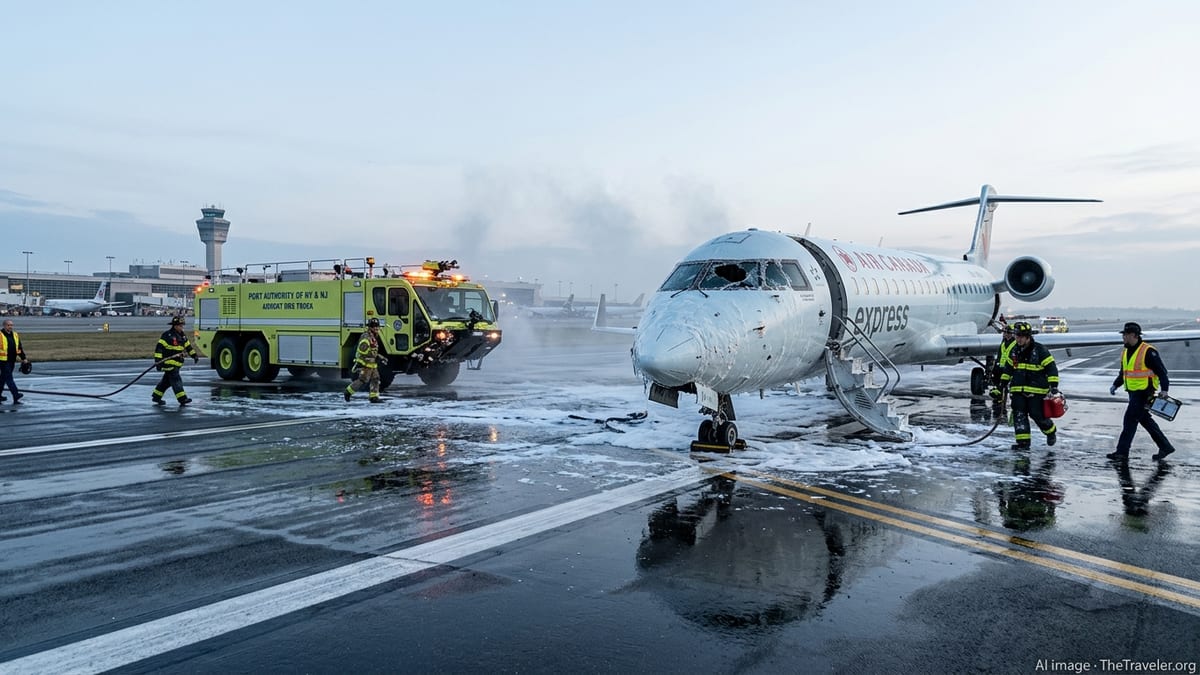
What travelers saw and where it appeared to be burning
Published coverage on September 19, 2026 described flames and a dense column of black smoke visible near Riyadh’s primary airport, with imagery circulating widely as the plume rose over the northern edge of the capital.
One widely distributed photo carried by Reuters was captioned as showing black smoke rising from a fuel storage depot at King Khalid International Airport (RUH). Other reports framed the location more generally as “near the airport,” reflecting the early stage of information available publicly as the incident unfolded.
The episode comes during a period of heightened regional tension, which has sharpened traveler sensitivity to any unusual activity near major transport hubs. At the same time, early public reporting did not consistently specify a cause, and readers should expect details to evolve as more verified information is published.
Flight disruptions: what’s known and what’s harder to verify quickly
As smoke was reported near the airport, travelers began checking live flight trackers and airline alerts for changes. Public flight-status feeds can show knock-on impacts rapidly, but they can also lag or differ depending on how each provider classifies a cancellation versus a long delay or a reschedule.
Third-party cancellation tracking for RUH showed recent cancellations in the days leading up to September 19, including both arrivals and departures. However, those feeds also caution that coverage can be incomplete and should not be treated as an official record, particularly during fast-moving events.
For the most accurate picture, Saudi Arabia’s government services portal points travelers to the General Authority of Civil Aviation flight schedule service for King Khalid International Airport, which provides real-time arrivals and departures information via the airport’s official flight-status pages.
Operational factors that can slow traffic even without a full closure
Even when an airport remains open, a nearby fire and smoke can affect operations in multiple ways, including changes to runway use, spacing between aircraft, or temporary holds while visibility and air quality are assessed. These measures can ripple across a hub like Riyadh, where banks of domestic and international departures cluster during peak periods.
Separately from the incident, publicly available aeronautical notices for King Khalid International Airport show routine restrictions and works that can affect ground movement and capacity, such as taxiway closures and stand closures over specified dates. Such background constraints do not explain a smoke event, but they can amplify delays when traffic has to be resequenced.
For passengers, the practical result can look the same: departure times move repeatedly, arrival gates change, and connections tighten even if flights ultimately operate.
What to do if you’re flying through RUH in the next 24 to 48 hours
Travelers scheduled to depart or connect through Riyadh are best served by checking their airline’s app or booking page frequently and comparing it with the airport’s live arrivals and departures display. When disruptions are driven by local conditions near the airport, airlines may adjust boarding times, aircraft assignments, or reroute certain services to protect onward connectivity.
It can also help to watch for aircraft rotation issues. A single delayed inbound long-haul flight can cascade into later departures when the same aircraft is scheduled to operate multiple legs, and that can happen even if conditions improve quickly.
Passengers with tight connections should consider arriving earlier than usual for check-in and security and keeping essential items in carry-on baggage in case a delay becomes an overnight rebooking. If an itinerary involves multiple carriers, keeping an eye on the operating carrier, not just the ticketing airline, can reduce confusion during schedule changes.
Context: Riyadh’s airport operator and ongoing information updates
King Khalid International Airport is managed by Riyadh Airports Company, established in 2016 as part of Saudi Arabia’s aviation sector privatization program and responsible for operating and upgrading the capital’s main airport infrastructure.
In parallel, the airport provides public-facing digital resources that can be useful during disruptions, including open-data reporting on flight activity and passenger statistics, though those datasets are not designed to serve as incident alerts.
For now, the most traveler-relevant updates remain dynamic flight-status changes and airline notifications. As additional published coverage emerges with clearer details about the location, cause, and operational impact of the fire, passengers should expect further schedule adjustments to follow.