


More news on this day
More than 30 flights across Australia and New Zealand were reportedly cancelled on Tuesday, disrupting schedules at Sydney and Melbourne Tullamarine airports and affecting passengers booked with Qantas, Virgin Australia, Jetstar and several smaller carriers.
Get the latest news straight to your inbox!
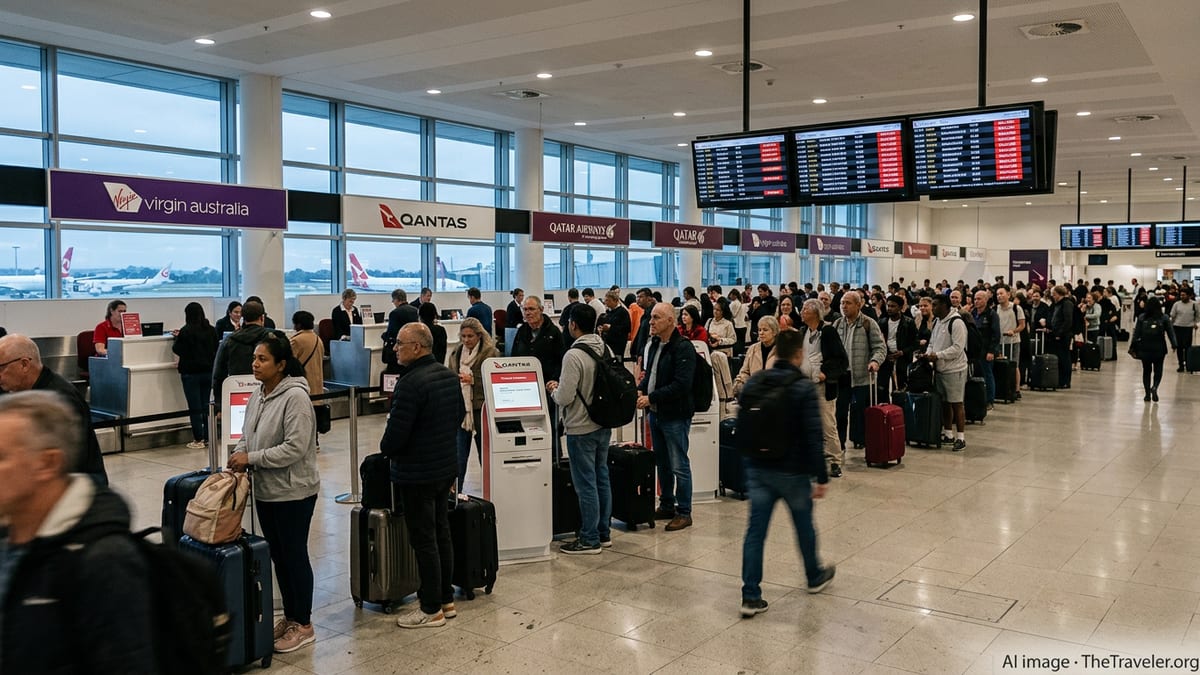
Disruptions Concentrated in Sydney and Melbourne
Published coverage and live flight-tracking data show a cluster of cancellations on key domestic corridors linking Sydney and Melbourne, as well as services connecting the two hubs with regional Australian cities and New Zealand destinations. While the overall number of flights operating remains high, the cancellations are sufficient to create knock-on delays, missed connections and crowding at help desks.
At Sydney Airport, the impact appears most visible on busy trunk routes such as Sydney to Melbourne and Sydney to Brisbane, where even a handful of disrupted services can quickly affect hundreds of passengers. Similar patterns are evident at Melbourne Tullamarine, where cancelled flights ripple across onward connections to other Australian capitals and international gateways.
Airlines and airport operators have not publicly attributed the cancellations to a single cause. Weather, air traffic control constraints, crew and aircraft availability, and broader operational pressures are all recurring factors in recent months, according to publicly available information on airline performance and earlier schedule adjustments.
Qantas, Virgin Australia and Jetstar Among Most Affected
Major carriers Qantas, Virgin Australia and Jetstar dominate domestic and trans-Tasman traffic, so any schedule disruption involving these airlines can quickly scale. Industry data on punctuality and reliability indicates that Qantas has recorded comparatively higher cancellation rates than some rivals over recent reporting periods, while Jetstar and Virgin Australia have also faced operational pressures on busy routes, including Melbourne to Sydney.
Today’s cancellations span both mainline and low-cost brands, which means passengers may be affected on a range of fare types, from flexible business tickets to the most restrictive sale seats. Because each airline operates under slightly different policies, the options available to travellers can vary significantly, particularly when rebooking onto later flights or seeking refunds.
Regional services and leisure-oriented routes are also vulnerable. Recent schedule changes and temporary suspensions on routes linking Melbourne and Sydney with smaller destinations illustrate how airlines continue to fine-tune capacity, sometimes at short notice, when demand patterns or operating costs shift.
Likely Causes: Weather, Capacity Constraints and Operational Strain
Recent analysis of cancellation patterns on Australia’s domestic network points to a mix of factors behind disruptions of the kind seen today. Adverse weather can force airports in Sydney and Melbourne to operate under capacity, triggering flow-on cancellations and consolidations. When strong winds, low visibility or storms reduce runway throughput, airlines are often required to cut flights, prioritise certain services or combine passenger loads onto larger aircraft.
Separate reporting highlights the role of broader operational challenges, including aircraft maintenance requirements, crew rostering limits and labour availability. When issues arise simultaneously across several parts of an airline’s network, the resulting strain can lead to multiple cancellations within a short window, even when conditions at the airport appear normal to passengers.
Capacity constraints are not limited to airlines. Air navigation and ground-handling systems must also function smoothly to keep high-frequency routes running. If a particular service is delayed or cancelled close to departure, turnaround times for subsequent flights can be affected, amplifying disruptions across the day’s schedule.
What Affected Passengers Should Do Today
Travellers whose flights are cancelled or significantly delayed are generally advised, by publicly available airline guidance, to check their booking status online or via carrier apps before heading to the airport. Most major airlines now allow same-day rebooking, credit vouchers or refunds through digital channels, reducing the need to queue at service desks during peak disruption.
Passengers holding tickets with Qantas, Virgin Australia, Jetstar and other carriers should review the specific conditions attached to their fare. Flexible and fully refundable tickets often permit free changes to alternative services on the same route, while lower-cost fares may provide travel credits or rebooking options with added restrictions. Where cancellations are linked to weather or broader airspace limitations, compensation rules may differ from situations where the cause is within the airline’s control.
For those with onward connections, including international legs, it is important to monitor both segments of the journey. If the first domestic flight is cancelled, some airlines may automatically rebook the entire itinerary, while others may require passengers to contact customer support to protect their connection. Travel insurance policies can also play a role, as many include benefits for delays, missed connections and additional accommodation costs, subject to policy terms.
Implications for Upcoming School Holidays and Business Travel
The latest wave of cancellations comes as airlines prepare for higher demand linked to school holidays and major events across Australia and New Zealand. Periods of peak travel place additional pressure on already busy routes between Sydney, Melbourne and key New Zealand cities, leaving airlines with less spare capacity to absorb disruptions when they occur.
Business travellers, who rely heavily on shuttle-style services between Sydney and Melbourne, may face reduced flexibility if multiple flights at preferred times are withdrawn from the schedule or fill quickly with rebooked passengers. Some corporate travel managers are already encouraging staff to allow extra buffer time for important meetings, particularly when same-day returns are planned.
Leisure travellers may also feel the impact through limited seat availability on alternative departures and the possibility of higher last-minute fares. With airline networks in Australia still adapting to new patterns of demand and cost, industry observers expect occasional clusters of cancellations to remain a feature of the market, especially on routes where operations are already tightly scheduled.