

More news on this day
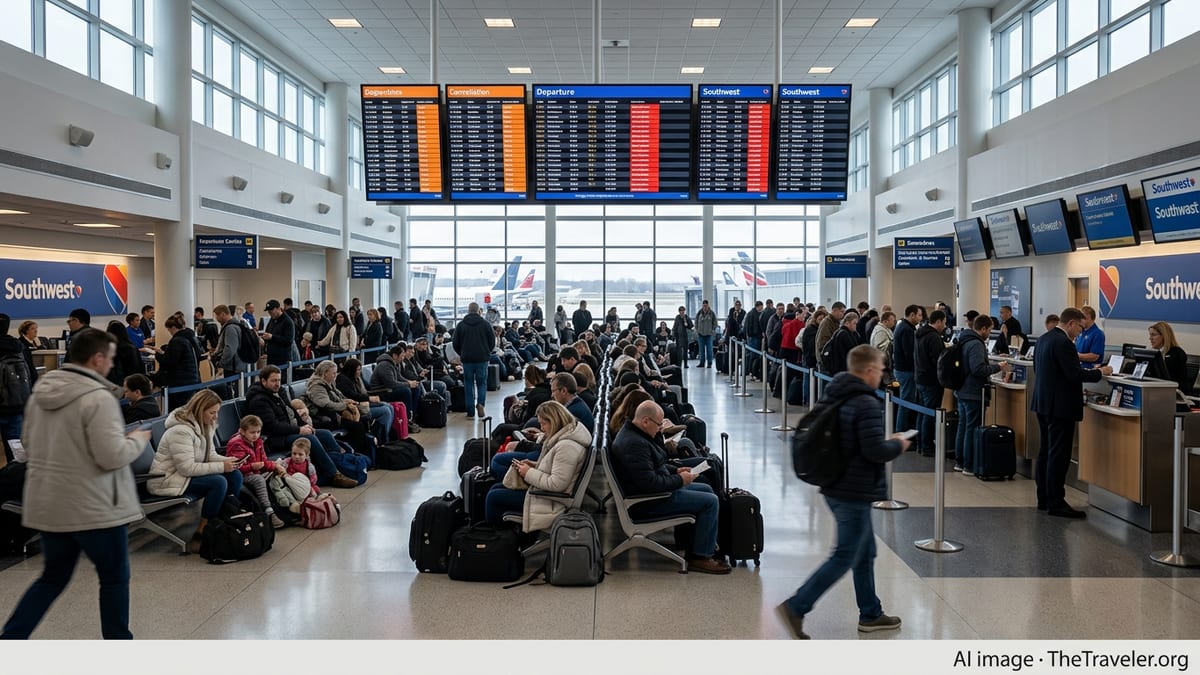
Travelers at Chicago Midway International Airport faced a day of mounting frustration on March 6 as at least 118 flights were canceled and 111 delayed, with Southwest, Volaris, SkyWest, Endeavor and other carriers struggling to keep schedules on track for routes across the United States, Mexico and beyond.
Widespread Disruptions Hit a Major Southwest Stronghold
The latest disruption at Chicago Midway underscored the vulnerability of a key U.S. domestic hub when multiple airlines encounter operational strain at the same time. Midway is dominated by Southwest Airlines, which handles the majority of departures, but regional and international operators including Volaris, SkyWest and Endeavor Air also contribute significantly to daily traffic.
On March 6, flight-status boards at Midway showed long stretches of orange and red as cancellations and delays mounted through the morning and early afternoon. The 118 cancellations and 111 delays affected both arrivals and departures, throwing off tightly timed connections and leaving aircraft and crews out of position for later flights in the network.
Several Southwest services connecting Midway with major domestic markets had already been scrubbed or disrupted in the preceding 24 hours, including routes to and from Denver, Fort Myers, Minneapolis and other cities. As those cancellations stacked up, pressure intensified on the remaining schedule, and passengers arriving for afternoon departures found themselves rebooked on flights leaving much later in the day or even the following morning.
Airport officials urged travelers to arrive early, monitor airline apps and be prepared for last-minute gate changes as carriers attempted to consolidate lightly booked services and recover their operations.
Ripple Effects Across the U.S., Mexico and Key Leisure Routes
The chaos at Midway quickly reverberated far beyond Chicago, affecting flights to popular leisure and business destinations in multiple time zones. Southwest’s dense point-to-point network meant that a canceled or delayed Midway flight could cascade into missed rotations at airports from the West Coast to the Southeast.
Routes to sun destinations in the Southwest and Florida were among those impacted, with some departures from Chicago to Denver and Fort Myers scrubbed on March 5 and March 6, limiting options for travelers heading on to ski resorts or beach vacations. Passengers connecting through Midway to reach secondary markets in the Midwest and Great Lakes region also reported extended layovers and unplanned overnight stays when onward flights were canceled.
Internationally, services linking Chicago with Mexico experienced knock-on delays as well. Volaris, which operates cross-border flights between Mexican cities and U.S. gateways, saw schedules tighten as airspace congestion and late-arriving aircraft disrupted carefully planned turnarounds. Travelers heading to and from coastal resorts and business centers in Mexico reported late departures, missed daytime connections and arrivals well behind schedule.
Regional carriers such as SkyWest and Endeavor, which operate feeder flights under major airline brands, also contended with longer-than-normal taxi times, ground holds and crew-availability constraints. That left some small and midsize cities connected to Chicago with a fraction of their usual service windows, complicating same-day trips for business travelers and those trying to make time-sensitive connections.
Weather, Congestion and Crew Constraints Combine
While the specific triggers at Midway varied by carrier and route, a familiar mix of contributing factors emerged: pockets of adverse weather, high traffic congestion in the Chicago airspace and tight crew scheduling at several airlines. Even relatively minor weather disturbances in the upper Midwest can force air traffic control to slow the rate of arrivals and departures, and on busy days that reduction can quickly create backlogs.
When early flights run late or are diverted, crews can “time out” after reaching federally mandated duty limits, leaving airlines scrambling to find replacements. With airlines still operating close to capacity on many days, having spare aircraft and crews on hand is increasingly rare, and recovering from a wave of cancellations can take several schedule banks.
Operational challenges have drawn additional scrutiny to Southwest in particular, given its history of high-profile disruptions and government investigations into its handling of mass cancellations. Regulators have previously faulted the carrier for not providing adequate customer service and timely assistance during past meltdowns, and consumer advocates say events at Midway this week will likely renew questions about airline resilience and passenger protections.
For regional partners like SkyWest and Endeavor, which often fly under the banners of larger network airlines, delays can be compounded when mainline schedules shift. A late-arriving mainline jet can strand regional passengers awaiting onward connections, even when the regional flight itself is ready to depart.
Passengers Face Long Lines, Rebookings and Limited Alternatives
Inside Midway’s terminals, the human toll of the disrupted day was visible in snaking lines at check-in counters and service desks. Passengers queued to rebook flights, change connections or seek hotel and meal vouchers, while others clustered around charging stations and gate areas, refreshing mobile apps in search of updated departure times.
Families headed to long-planned vacations reported scrambling to salvage itineraries after last-minute cancellations erased nonstop options. Some accepted alternative routings through other hubs or even rival carriers, while others opted to delay departures by a day or more to secure reliable seats. Business travelers with tightly scheduled meetings weighed whether to proceed with trips that now involved late-night arrivals and uncertain returns.
Limited runway capacity at Midway and heavy demand on surrounding routes meant that simply shifting to another flight the same day was often not possible. With many services already running near full, rebooked passengers faced slim choices, particularly on routes with few daily frequencies. For those able to adjust plans, airlines encouraged the use of mobile apps and websites to make changes, an effort to reduce pressure on in-person customer service channels.
Ride-hailing queues, rental car counters and nearby hotels all reported increased demand as stranded travelers weighed whether to wait out delays in the terminal or seek more comfortable alternatives. Some passengers chose to rent cars and drive to nearby cities to pick up flights from other airports, while others decided to abandon trips entirely.
What Travelers Should Do If Their Midway Flight Is Affected
For travelers booked through Chicago Midway over the coming days, airlines and travel advisers recommend several practical steps to minimize disruption. Checking flight status frequently before leaving for the airport is essential, as schedules can change rapidly when carriers are trying to recover from an operational crunch.
Many airlines issue temporary travel waivers during periods of widespread disruption, allowing passengers to change dates or destinations without standard change fees or fare differences. Travelers are urged to review their carrier’s alerts and, if possible, make adjustments online or through an app to avoid long lines at airport counters.
Experts also suggest building extra time into itineraries that rely on Midway for tight connections, particularly when traveling to international destinations in Mexico and beyond that may require additional security or immigration checks. Booking earlier departures can provide a buffer if flights slip behind schedule, while considering travel insurance or flexible fares can add protection in case of severe disruption.
As airlines work to reset their operations following the latest wave of cancellations and delays, passengers passing through Chicago’s secondary airport can expect lingering effects, with some schedules remaining fragile until aircraft and crews return to normal rotations.