


More news on this day
Hundreds of airline passengers were left searching for alternate routes at Ronald Reagan Washington National Airport as a wave of disruptions involving multiple major carriers triggered 86 flight cancellations and 206 delays across Los Angeles, New York, Chicago, Atlanta, Miami and other major U.S. cities, according to real-time tracking data and local media reports.
Get the latest news straight to your inbox!
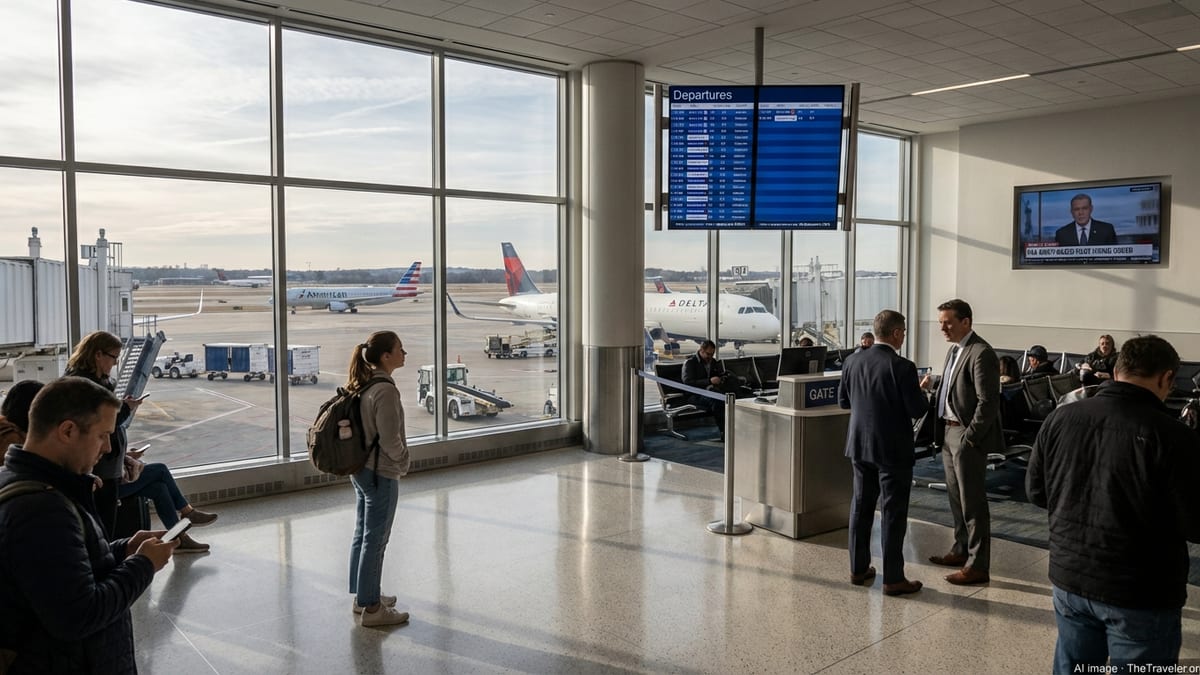
Nationwide Disruptions Center on Washington Area Hub
Publicly available airport and flight-tracking information shows that operations at Ronald Reagan Washington National Airport, one of the country’s busiest domestic hubs, became a focal point of a broader network disruption affecting major U.S. cities. Airlines including American, Frontier, United, Southwest and JetBlue experienced a cluster of cancellations and extended delays, leaving travelers waiting in crowded concourses or lining up at customer-service counters to rebook.
Recent months have highlighted the vulnerability of the Washington region’s airspace. Earlier this year, for example, a ground stop affecting Reagan National and nearby airports after a reported chemical odor led to widespread delays as aircraft remained on the ground and arrival traffic was temporarily halted. While the latest disruption was not tied to that incident, the concentration of affected flights in and out of the capital region again underscored how quickly operations can cascade across the national network.
Reagan National’s role as a key connecting point for routes to New York, Chicago, Atlanta and Miami meant that even a limited number of local cancellations had a magnified effect. Passengers booked on later legs through LaGuardia, O’Hare, Hartsfield Jackson and Miami International reported missed connections and re-routings as aircraft and crews struggled to get back on schedule.
Data from research and government assessments of the U.S. aviation system indicate that complex scheduling at slot-controlled airports like Reagan National and New York’s LaGuardia can make it difficult to recover quickly when disruptions occur, especially when multiple carriers are impacted at once.
Ripple Effects Across Major Hubs
The knock-on impact of the Reagan National disruptions was felt most sharply at some of the country’s largest hubs. In Chicago, where O’Hare International Airport regularly handles hundreds of daily departures for United and American alongside other carriers, recent wintry conditions have already produced heavy cancellation and delay totals. Additional operational hiccups linked to East Coast connections added strain for passengers attempting to move through the Midwest gateway.
In New York, LaGuardia and John F. Kennedy airports handled overscheduled banks of flights that were sensitive to any upstream delay. When aircraft originating in Washington or other East Coast cities arrived late, departure times slid further into the evening, leaving rows of passengers waiting at gates while crews and equipment were repositioned. Similar patterns emerged in Atlanta, a key connecting hub for domestic routes in the Southeast, and in Miami, a crucial link for Caribbean and Latin American travel.
On the West Coast, Los Angeles International Airport also absorbed schedule changes as cross-country flights from Washington and New York departed behind schedule. Industry data and academic research on airline operations have long noted that when large coastal hubs experience even modest disruption, the resulting imbalances in aircraft and crew availability can ripple throughout a carrier’s network for many hours.
Travelers reported longer-than-normal queues at ticket counters and self-service kiosks as they weighed options ranging from later same-day departures to overnight stays. Some airlines attempted to consolidate lightly booked flights or upgauge aircraft to move more passengers at once, while others leaned on partner carriers where interline agreements allowed.
Multiple Carriers, Shared Challenges
The carriers most visible in the latest wave of disruptions represent a cross-section of U.S. aviation. American and United operate large hub-and-spoke networks built around airports like Washington National, O’Hare, Miami and major New York facilities. Southwest and JetBlue, which have historically emphasized point-to-point schedules and high aircraft utilization, also maintain significant presences in Washington, New York, Los Angeles, Chicago, Atlanta and Miami.
Frontier, a low-cost carrier with a growing footprint in leisure markets, has increased operations through several of the affected airports, adding further complexity when irregular operations occur. Academic analyses of U.S. aviation patterns highlight that mixing legacy network airlines and low-cost competitors at the same congested hubs can heighten sensitivity to even minor disruptions.
Public statements and historical records show that carriers and regulators have been grappling with a mix of challenges in recent years, including weather volatility, air traffic control staffing pressures and infrastructure constraints. Episodes such as large-scale winter storms and temporary ground stops in the Washington region have repeatedly demonstrated how quickly operations can become strained when several of these factors align.
Past network-wide incidents have prompted airlines to reexamine scheduling practices, staffing levels and technology systems for crew and aircraft management. The most recent cluster of cancellations and delays, while smaller in scale than some previous crises, added to ongoing scrutiny of how resilient U.S. carriers are to day-of-travel shocks.
Passenger Impact and Limited Recourse
For travelers at Reagan National and the other affected airports, the practical consequences were immediate. Families heading to vacations in Florida, business travelers bound for meetings in New York or Chicago and international passengers connecting through major hubs all faced last-minute adjustments. Many scrambled to find available seats on later flights or alternate routings through less congested airports.
Consumer-advocacy information and federal guidance emphasize that passenger rights in the United States vary depending on the cause of a disruption and the policies of each airline. In cases where cancellations or long delays are linked to factors within a carrier’s control, such as crew scheduling problems or certain technical issues, airlines may provide meal vouchers, hotel accommodations or refunds. When disruptions stem primarily from weather or traffic-management decisions, financial compensation is typically limited and passengers often must rely on travel insurance or personal funds to bridge the gap.
Travelers in Washington, Chicago, New York and other hubs reported crowding at customer-assistance desks as they attempted to clarify what options were available. Those able to manage their itineraries via mobile apps or websites sometimes rebooked more quickly, while others faced waits to speak with airline staff. Airport information boards listing waves of delayed departures added to the uncertainty, particularly for those with tight onward connections.
Past government reports on airline passenger protections have documented the stress and extra expense travelers often incur during irregular-operations events, from additional nights in hotels to missed workdays. The latest disruptions at Reagan National and across the national network fit into that broader pattern, with hundreds of passengers effectively stranded as they waited for the system to stabilize.
Ongoing Scrutiny of U.S. Air Travel Reliability
The latest episode comes amid sustained attention on the reliability of U.S. air travel. Research on nationwide on-time performance shows that airports such as New York LaGuardia and Chicago O’Hare historically report lower punctuality rates than some smaller facilities, in part due to heavy scheduling and dense airspace. Washington National, constrained by geography and federal rules on long-distance flights, also operates within tight capacity limits.
Industry analysts note that continued growth in passenger numbers across major hubs, combined with infrastructure limitations and weather-related disruptions, creates an operating environment where relatively small problems can have outsized impacts. The cumulative effect is felt by travelers who increasingly build buffers into their schedules or avoid tight connections through the busiest hubs.
Policy discussions in recent years have included proposals to expand staffing in air traffic control, upgrade airport facilities and reconfigure scheduling practices at congested airports. While some improvements are underway, the experience of passengers stranded or delayed after the latest cancellations at Reagan National and connected hubs suggests that reliability concerns remain a central issue in U.S. aviation.
As the system gradually returns to normal after the 86 cancellations and more than 200 delays tied to the latest disruption, attention is likely to focus on how airlines and regulators incorporate lessons learned into future planning, in hopes of reducing the likelihood that hundreds of passengers will again find themselves unexpectedly stuck in terminals from Washington to Los Angeles.