


More news on this day
Severe thunderstorms around Houston’s George Bush Intercontinental Airport over the weekend and into Monday triggered a new wave of flight disruptions, with publicly available data showing at least seven cancellations and dozens of delays for United Airlines, American Airlines affiliates including PSA Airlines, and SkyWest, affecting travel across the United States, Canada, Europe and beyond.
Get the latest news straight to your inbox!
Weather Woes Trigger Fresh Disruptions at IAH
Local broadcast coverage from Houston indicates that a line of strong storms moving through the region around June 21 led to ground stops and ground delays at Bush Intercontinental, forcing arriving aircraft into holding patterns and pausing many departures. Those constraints quickly translated into cancellations and rolling delays as airlines worked within limited takeoff and landing windows.
Flight-tracking boards for George Bush Intercontinental on Sunday and Monday showed scattered cancellations involving United and its United Express partners, as well as regional services tied to American Airlines. Among those were at least seven flights that did not operate, alongside a larger number that departed significantly late, creating knock-on impacts for later segments in their schedules.
The problems followed a series of weather-related travel waivers for Houston in recent months, including flexibility advisories for thunderstorms in March and May that encouraged United customers to rebook away from peak storm windows. Those earlier episodes highlighted the vulnerability of the busy Texas hub to fast-developing Gulf Coast weather patterns that can halt ramp activity and freeze air traffic flows.
Although the latest storms were relatively short-lived, the combination of ground stops, heavy congestion and aircraft out of position left many passengers contending with missed connections, extended waits and last-minute changes to already busy early-summer itineraries.
Hub-and-Spoke Impact Reaches Dallas and Major North American Cities
Houston’s role as a key hub for United means even a modest number of cancellations can have an outsized effect on the wider network. Publicly available schedules show dense connectivity between Bush Intercontinental and domestic destinations such as Dallas, Chicago, Denver and the New York area, which serve as onward gateways to Canada, Europe and Latin America.
Real-time status feeds for United and United Express flights into and out of Houston around the disruption period show multiple services operating with delays of more than an hour, including regional routes that feed larger connecting banks. Each late arrival or departure increases the likelihood of misaligned crew schedules and missed onward flights, especially for travelers using Houston as a connecting point rather than an origin or final destination.
Dallas in particular felt the strain, with frequent Houston–Dallas services experiencing delays that reverberated through evening departures to other parts of the country. Travelers booked on multi-leg itineraries through both Texas hubs reported longer travel days and compressed connection times as aircraft arrived late and boarding times shifted repeatedly.
Because many North American transborder flights to Canada rely on timely feed from interior U.S. hubs, even limited schedule changes in Houston can disrupt evening and overnight departures, forcing rebookings and overnight stays for some passengers when minimum connection times can no longer be met.
Transatlantic and International Connections to Germany, the UK and Turkey Affected
Houston’s long-haul links to Europe and beyond also felt the secondary effects of the storm-related disruption. Bush Intercontinental serves as a launch point or feeder for flights into major European markets including Germany and the United Kingdom, as well as connections to Turkey via alliance partners and other large hubs.
Schedule data for June indicates that services between Houston and German cities, including key hubs used by alliance partners, depend heavily on timely inbound flights from across the United States. When regional and domestic segments into Houston depart late or are canceled, passengers can miss once-daily departures across the Atlantic, leaving them to seek scarce rebooking options at the height of the summer travel period.
Travelers heading for the UK and Turkey via other U.S. or European hubs also face increased risk of missed onward flights when arrival times at Bush Intercontinental slide. With many transatlantic operations concentrated into narrow evening windows and aircraft running near full, a missed connection out of Houston can result in a full-day delay before another seat is available.
International travelers and those linking to Canada must additionally navigate immigration, customs and security re-screening when rebooked through alternate gateways, introducing further uncertainty and stress when operating days are already stretched by weather and air traffic control constraints.
Regional Carriers PSA Airlines and SkyWest Feel the Strain
The turbulence at Bush Intercontinental has highlighted once again how dependent large carriers are on their regional partners. PSA Airlines, which operates flights under the American Eagle brand, and SkyWest, which flies on behalf of several major airlines including United, are central to feeding passengers from smaller markets into big hubs such as Houston and Dallas.
Public discussions among frequent flyers and recent flight-status logs suggest that regional operations are often among the first to be cut when weather or congestion reduces capacity. Short-haul flights into busy hubs can be canceled or consolidated to free up slots for longer-range routes that are harder to re-accommodate if disrupted.
Recent commentary from travelers has drawn particular attention to PSA Airlines, noting a pattern of cancellations on days when weather threatens operations at key East Coast and Midwest airports. While such decisions can help stabilize overall schedules, they leave passengers in smaller cities with fewer alternatives and longer drives or overnight stays when their flights are dropped from the timetable.
SkyWest operations tied to United and other major carriers have also seen delays as aircraft and crews cycle through weather-affected hubs. Because these regional jets frequently operate multiple short segments in a single day, an early delay or cancellation can cascade through several subsequent flights, compounding the disruption felt by travelers far from the original storm zone around Houston.
Travelers Face Long Lines and Limited Options as Summer Demand Builds
The timing of the latest disruption at Bush Intercontinental comes just as summer demand is building across North America and on transatlantic routes. Recent coverage of Houston’s airports has already pointed to longer security wait times and crowded terminals during peak hours, leaving little margin when irregular operations force large numbers of passengers to rebook at once.
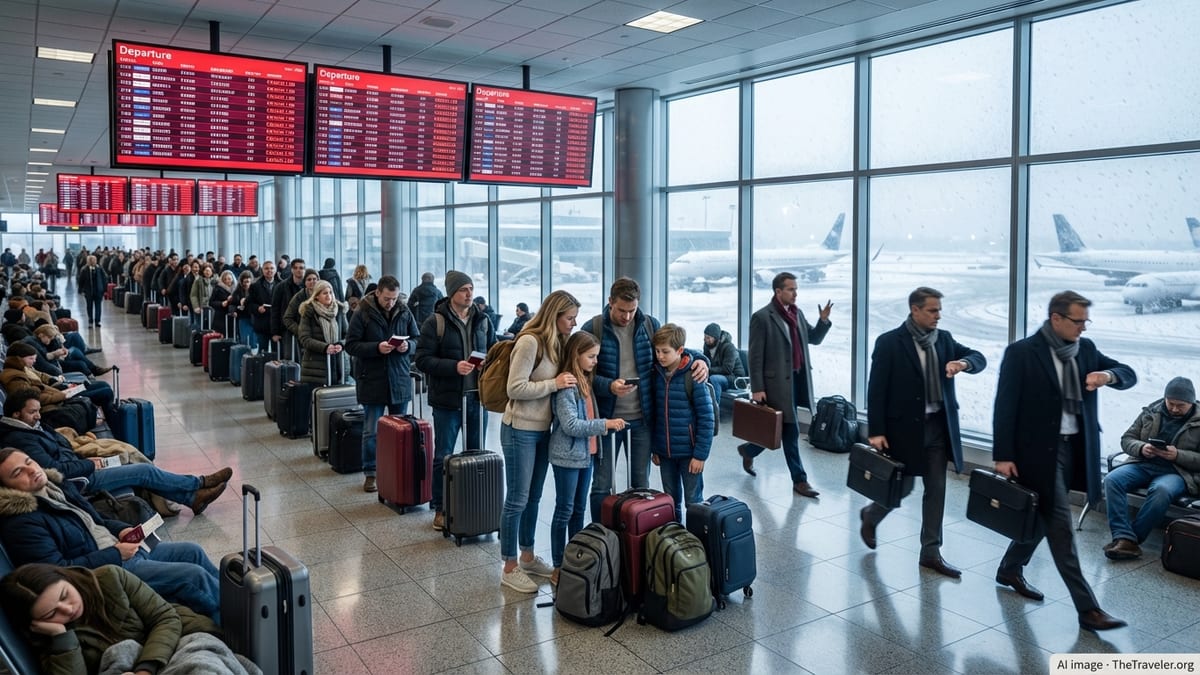
Travelers caught in the storm fallout over the weekend reported packed gate areas, long queues at customer service counters and difficulty finding same-day alternatives, particularly on popular routes to vacation destinations and major European hubs. With flights operating near capacity, airlines have fewer open seats available to absorb displaced passengers when a bank of flights is delayed or grounded.
Publicly available guidance from airlines continues to emphasize the importance of monitoring flight status frequently, using mobile apps and text alerts, and considering earlier departures when connecting to international or long-haul services. For those flying through Houston, Dallas and other weather-sensitive hubs, many experienced travelers also build in longer connection times during thunderstorm season to reduce the risk of misconnection.
As peak summer travel continues, the latest round of disruption at Bush Intercontinental underscores how quickly local thunderstorms can ripple outward across domestic and international networks, affecting travelers not only in Texas but in Canada, Germany, the UK, Turkey and numerous other destinations linked through the complex web of modern airline scheduling.