


More news on this day
Air travel across the United States is facing another day of severe disruption, with reports indicating 168 flights grounded and more than 575 facing significant delays, hitting major hubs in Texas, New York, California, Georgia and Washington and placing prominent carriers American Airlines, Delta Air Lines, JetBlue, United Airlines and Frontier under intense operational strain.
Get the latest news straight to your inbox!
Major Hubs Buckle Under Mounting Disruptions
Publicly available flight tracking data shows that the current wave of cancellations and delays is concentrated at some of the country’s busiest airports, including large hubs in Texas, New York, California, Georgia and the Washington region. These airports operate at high capacity even in normal conditions, which means that relatively small schedule disruptions can quickly cascade into systemwide turmoil.
Recent operational snapshots from delay trackers highlight how knock-on effects compound the problem. When a departure is delayed, the aircraft, crew and even the gate position arrive late to their next assignment, creating a chain reaction that spreads to subsequent flights throughout the day. In high-traffic hubs, those ripple effects can extend to dozens of additional departures and arrivals, intensifying the experience of gridlock for travelers.
Reports from national aviation dashboards indicate that delays of 30 minutes or more have become common on some routes, with pockets of much longer waits at especially congested airports. Passengers moving through large Texas and California gateways, as well as key New York and Washington area airports, have faced rolling gate changes, extended tarmac times and last-minute schedule adjustments as airlines attempt to reposition aircraft and crews.
In this environment, even airports that are not the original source of the disruption can see their on-time performance deteriorate. Once an aircraft or crew rotation is pushed significantly behind schedule in one state, the impact can surface hours later in a different region, which helps explain why travelers across the country encounter delays even when local weather conditions appear calm.
Leading U.S. Carriers Under Operational Pressure
The current disruption is placing particular strain on American Airlines, Delta Air Lines, JetBlue, United Airlines and Frontier, all of which maintain dense networks that funnel through the hardest-hit hubs. Public flight boards and tracking tools show elevated levels of late departures and arrivals for these carriers, with some routes suffering average delays that stretch well beyond an hour.
Industry reporting over recent months has underscored how quickly operational problems at large airlines can escalate. Earlier technology outages affecting major U.S. carriers demonstrated that a brief systems failure or software issue can prompt precautionary ground stops, which in turn lead to widespread delays that can take a full day or longer to unwind. The present pattern of disruptions, though driven by a mix of factors, is following a similar trajectory of extended recovery time.
The legacy network airlines, including American, Delta and United, face a particular challenge because they rely heavily on hub-and-spoke models where a large volume of passengers connect through centralized hubs. When those hubs encounter severe pressure, a missed connection in one city can quickly strand travelers far from their final destinations, forcing airlines to scramble for rebooking options and overnight accommodations.
Low-cost and hybrid carriers such as JetBlue and Frontier are not immune. With leaner fleets and tighter aircraft utilization, these airlines can have less flexibility to absorb disruptions. When a single aircraft is out of position or a crew hits duty-time limits after long delays, entire sequences of flights can be pushed back or canceled, further amplifying the impact on passengers.
Behind the Numbers: Weather, Traffic and Aging Systems
Analysts point to a mix of contributing factors behind the surge in grounded and delayed flights. Seasonal storms across parts of the country, including convective weather over Texas and the Southeast, periodically trigger ground stops or routing restrictions that reduce airport capacity. When thunderstorms, low visibility or strong winds move over major hubs, takeoffs and landings must be spaced further apart, significantly cutting the number of flights that can operate each hour.
Air traffic control capacity is another constraint. Publicly available planning updates from federal aviation authorities describe periodic flow-control programs that slow traffic into busy metro areas when controller workload or airspace congestion becomes too intense. While these measures are designed to preserve safety and manage complexity, they inevitably mean aircraft spend more time waiting on the ground or circling before landing.
Technology and airline scheduling practices add another layer of vulnerability. Airlines have spent years maximizing aircraft use by scheduling tight turnarounds and high daily utilization. This improves efficiency when everything runs smoothly, but leaves little room to recover when an unexpected disruption hits. A single system glitch or prolonged ground hold can knock multiple rotations off schedule, resulting in the elevated cancellation and delay totals now being reported.
Aviation experts also note that the U.S. air travel system is still adapting to post-pandemic demand patterns. Strong leisure demand and shifting travel habits have led airlines to adjust schedules and staffing in ways that remain under stress tests during peak travel periods, particularly around holidays and major events. When travel volumes spike, any underlying weakness or shortage in staffing, gates or aircraft availability tends to surface quickly.
Stranded Passengers Face Long Lines and Limited Options
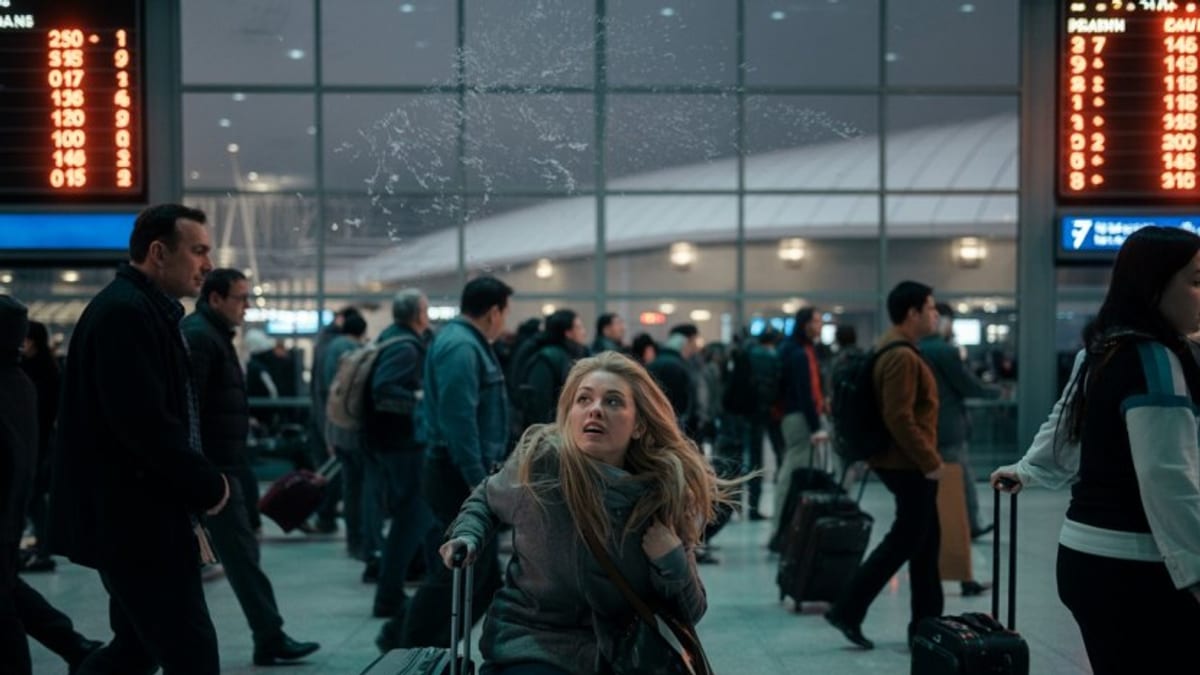
For travelers caught in the latest disruption, the statistics translate into lengthy queues, missed connections and extended time in terminals. Social media posts and local news coverage from affected airports describe crowded concourses as passengers wait for updates on their flights, often with little clarity about how long delays will last or whether cancellations will follow.
When irregular operations stretch across multiple days, seat availability on later flights becomes increasingly scarce. With hundreds of flights canceled and more than 575 significantly delayed, many passengers are being rebooked onto services departing much later than originally planned, sometimes the next day or beyond. In heavily traveled markets like those connecting Texas, New York, California, Georgia and Washington, those rebooking challenges can be especially acute.
Travelers with checked baggage face an additional layer of complexity. Bags that have already been loaded may need to be offloaded and sorted if an aircraft returns to the gate or is taken out of service, raising the risk of temporary misrouting. Airline and airport staff must simultaneously handle disrupted flight operations and increased customer-service demands at counters and call centers, which can slow down responses as call volumes surge.
Families, business travelers and international passengers connecting through U.S. hubs are among those feeling the strain. Long waits can lead to missed events, lost work time and added expenses for food, accommodation and alternative transportation. For many, the uncertainty around whether a delayed flight will eventually depart can be just as stressful as the delay itself.
What Travelers Can Do as Disruptions Continue
Consumer advocates and travel planners recommend that passengers facing widespread disruptions take a proactive approach. Checking flight status frequently through airline apps and airport information boards can help travelers spot changes early, including aircraft swaps or gate moves that signal a developing delay. In periods of heavy disruption, information may change quickly, so repeated checks are important.
When a cancellation occurs, passengers are typically entitled to be rebooked on the next available flight on the same carrier at no additional fare. In some cases, especially during significant schedule disruptions, airlines may offer the option to change to another date or nearby airport without change fees. Monitoring publicly posted travel advisories from carriers can reveal temporary policies that offer more flexibility than usual.
Travel experts also note that certain payment methods and travel insurance policies can provide added protection. Some credit cards offer trip delay or interruption benefits that reimburse reasonable expenses such as meals and lodging after a qualifying delay, while standalone travel insurance may cover additional costs depending on the policy terms. Understanding these benefits before travel begins can help passengers make faster decisions when disruptions strike.
With the current wave of cancellations and delays still working its way through the national network, observers suggest that travelers build extra time into itineraries where possible, particularly when making tight connections or traveling for time-sensitive events. As airlines and airports continue efforts to restore normal operations, the experience of thousands of delayed and stranded passengers underscores how tightly coupled and fragile the U.S. air travel system remains under stress.