


More news on this day
Air travelers heading into the second week of June are facing significant disruption, as operational data show 66 flights cancelled and at least 564 delayed across KLM, easyJet, British Airways, Air France and Austrian Airlines, with pressure mounting on key European and Mexican hubs.
Get the latest news straight to your inbox!
Data Point to Mounting Strain at Europe’s Busiest Airports
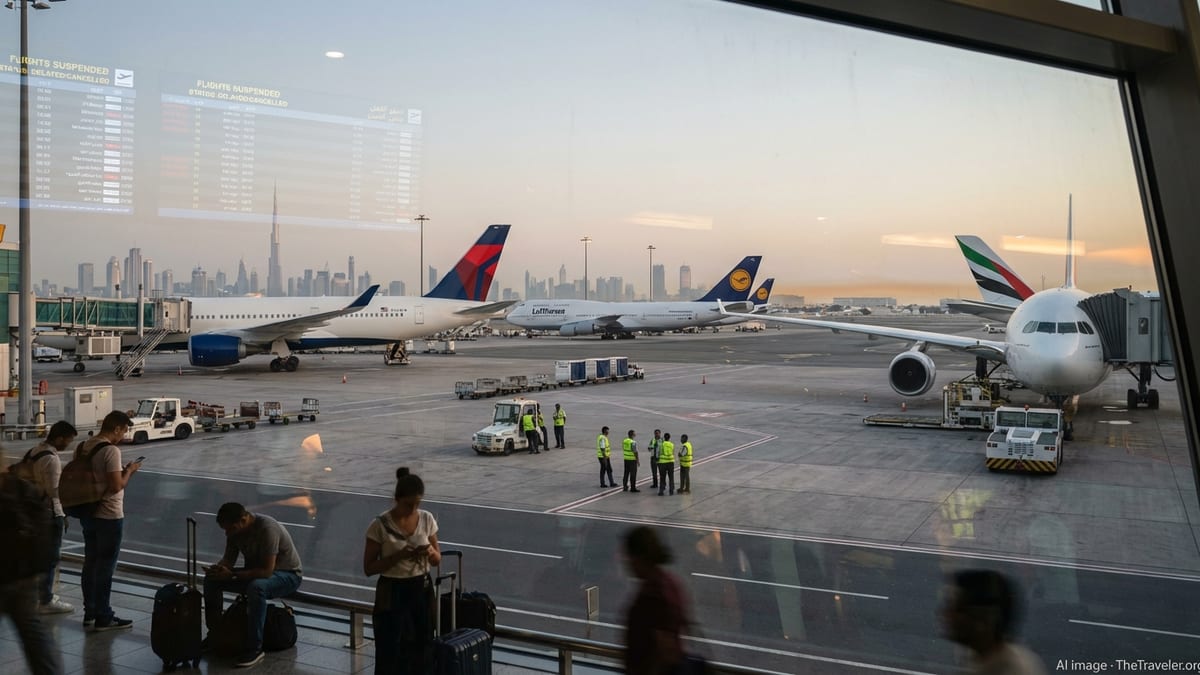
Live tracking data and operational summaries for early June indicate that Europe’s aviation network is under pronounced strain, with the latest snapshot showing 66 cancellations and 564 delays in a single operating window for major carriers, including KLM, Air France, easyJet, British Airways and Austrian Airlines. The disruption is concentrated at heavy-traffic hubs such as Amsterdam Schiphol, Paris Charles de Gaulle, London Heathrow, Vienna and Rome Fiumicino, where dense schedules leave little room to recover once delays begin to cascade.
Recent monitoring of Amsterdam Schiphol, one of KLM’s primary hubs, shows more than 250 delayed flights and around 20 cancellations in a single day, underscoring the vulnerability of tightly banked European schedules to weather, crew availability and airspace constraints. Publicly available disruption trackers note that once Schiphol begins the day behind schedule, knock-on effects are quickly felt on KLM and codeshare services across the continent and on long haul routes.
In France, similar patterns have been reported at Paris Charles de Gaulle and Orly, where Air France and easyJet operate extensive European and medium haul networks. Concurrent congestion at London Heathrow and Gatwick, as well as Vienna for Austrian Airlines and Rome Fiumicino for a mix of full service and low cost carriers, is contributing to a broad slowdown across western and central European airspace.
The current wave of disruption follows a spring period already marked by repeated spikes in cancellations and delays across Europe, as highlighted in recent analyses from passenger rights platforms and network managers. Those reports had flagged KLM, Air France, easyJet and British Airways among the airlines most exposed to rolling operational challenges, particularly on high-frequency European routes.
Mexico City Links Add a Long Haul Complication
The latest disruption is not confined to Europe. Flight performance data show growing pressure on key transatlantic links between Mexico City and Europe, particularly services connecting into the KLM and Air France networks. The Mexico City to Amsterdam route, served by KLM and its partners, has recently recorded average delays in excess of half an hour, with individual rotations running significantly later when congestion builds on either side of the Atlantic.
These Mexico City flights feed directly into European hubs already wrestling with capacity issues, which means a late arrival from Latin America can force missed onward connections for passengers heading to secondary cities across the Netherlands, France, the United Kingdom and Austria. Once a long haul aircraft arrives late, crews may “go out of hours,” leading to further rescheduling, equipment swaps or cancellations later in the day.
According to published coverage on recent operational days, congestion has been evident not only at Amsterdam and Paris but also on onward links into Vienna and other central European airports, where Austrian Airlines and partner carriers handle connecting traffic from North America and Latin America. This adds a long haul dimension to what might otherwise be contained as a regional European disruption.
The result is that travelers originating in Mexico can find themselves caught in disruption patterns that began with early morning weather or staffing issues in Europe. Once Europe’s primary hubs start to slip, the impact can be felt hours later at Mexico City’s Benito Juárez International Airport and on overnight returns back to Europe.
KLM, Air France, easyJet, British Airways and Austrian Under Pressure
For KLM and Air France, the latest figures continue a year in which strong demand and heavy schedules have collided with structural bottlenecks. Eurocontrol’s recent network reports show traffic on the KLM and Air France groups trending higher through the spring, even as minutes of delay attributed to capacity and reactionary causes remain elevated. These conditions leave both airlines vulnerable to any short term disruption at Schiphol, Charles de Gaulle or regional bases.
Low cost carrier easyJet, which maintains dense operations from airports such as London Gatwick and multiple European capitals, has also been prominent in disruption statistics this season. With aircraft operating short turnarounds across complex multi-leg rotations, a single delay in the morning often triggers a sequence of late departures throughout the day, contributing significantly to the 564-delay figure now being reported.
British Airways, which concentrates its operations at London Heathrow, has faced a similar dynamic, with Eurocontrol data indicating occasional dips in on-time performance when weather, air traffic flow restrictions or staffing shortages intersect. Heathrow’s slot constrained environment limits the possibilities for rapid schedule adjustments, so delayed arrivals quickly translate into delayed departures on subsequent services.
Austrian Airlines, operating from Vienna, has been facing intensified pressure as central Europe’s role as a connecting region grows. Vienna’s function as a hub for travel to eastern and southeastern Europe means that even modest disruption at western European gateways can cascade into its schedule. The airline’s inclusion in the latest tally of cancellations and delays highlights how no major network carrier is insulated from the broader conditions facing the continent’s airspace.
Structural Causes: Capacity, Weather and Airspace Constraints
Recent European network operations reports and passenger rights analyses point to a familiar set of root causes behind the current figures of 66 cancellations and 564 delays. Capacity constraints at key hubs, staffing shortages in both ground handling and air traffic control, and localized weather events continue to interact in ways that overwhelm fragile recovery buffers built into airline schedules.
Air traffic flow management statistics for the spring period show a significant share of minutes of delay attributed to airspace capacity, particularly in high density corridors over western and central Europe. When this is combined with thunderstorms, low visibility or strong winds, the result is a spike in arrival and departure restrictions that rapidly reverberates across airline networks.
The ongoing recovery in demand has also led airlines to deploy near-2019 levels of capacity on popular city pairs, with KLM, Air France, easyJet, British Airways and Austrian all increasing movements on key routes. While this helps meet strong passenger demand, it also means that unused buffers have largely disappeared, making it harder to absorb routine operational issues without visible disruption.
Industry observers have additionally highlighted upcoming regulatory and border control changes, such as the European Union’s Entry/Exit System, as a future risk factor that could further slow passenger flows at already busy airports. While these changes are not yet fully in effect, airlines are watching early implementation timelines closely, given their potential to add pressure during peak summer periods.
What Travelers Can Do as Summer Peak Approaches
With Europe’s peak summer travel season starting and disruption indicators already elevated, passenger advocates are advising travelers to treat the latest figures from KLM, easyJet, British Airways, Air France and Austrian as a warning sign. Public guidance from rights organizations stresses the importance of allowing longer connection times, opting for earlier departures where possible, and monitoring flight status frequently in the 24 hours before travel.
Under European and UK passenger rights frameworks, travelers affected by cancellations or long delays may be entitled to rebooking, refunds and, in some circumstances, financial compensation, depending on the cause of the disruption. Information portals emphasize that travelers should document their disruption, retain receipts for meals and accommodation, and submit claims directly through airline channels or recognized claims platforms.
Operational updates from airlines indicate that carriers are attempting to manage the situation by proactively trimming some of the most delay prone rotations, adding buffer time on turnarounds and encouraging customers to use digital tools to rebook when misconnections occur. However, analysts note that as long as structural capacity constraints and weather volatility persist, episodes of concentrated disruption like the current one are likely to recur.
For now, the combined picture of 66 cancellations and 564 delays across major European and transatlantic routes serves as a reminder that passengers traveling through Amsterdam, Paris, London, Vienna, Rome and Mexico City should plan for potential disruption, even on days without obvious headline-grabbing events.