


More news on this day
South Korea’s high speed rail network is carrying more passengers than ever, but a persistent capacity shortfall on core corridors is pushing planners toward a mix of operational tweaks, network expansion and next generation trains to keep the system moving.
Get the latest news straight to your inbox!
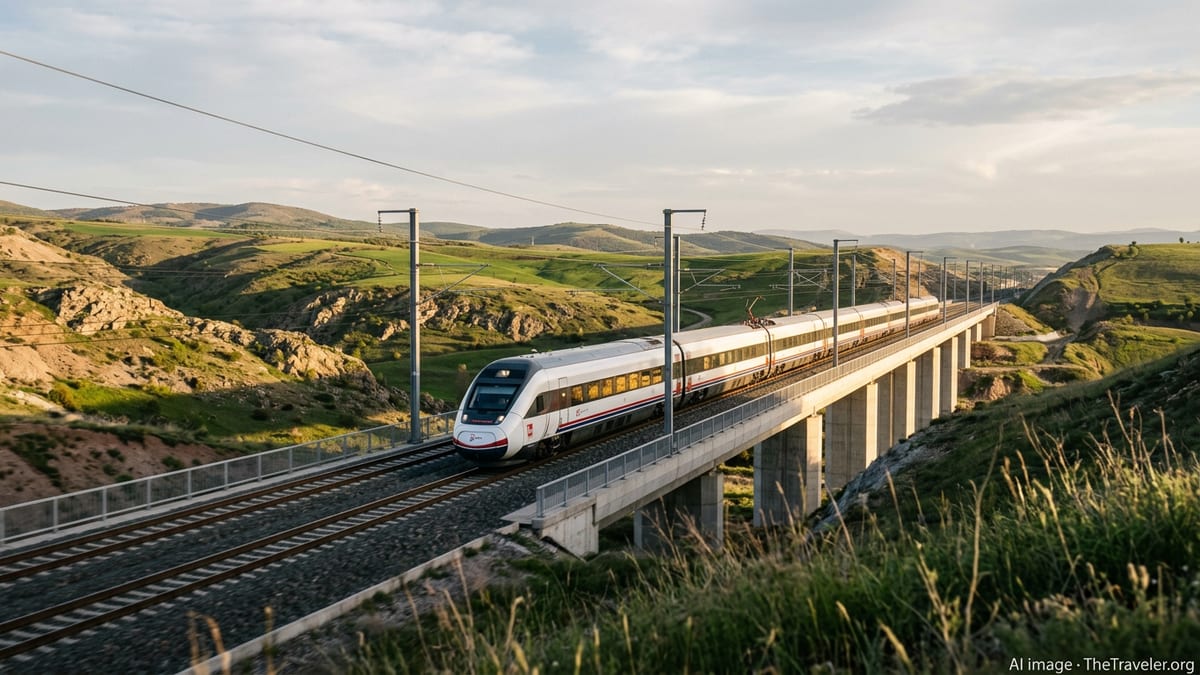
Record ridership exposes limits on key corridors
Publicly available data show that high speed rail in South Korea has entered a new period of demand growth, with annual passenger volumes on KTX and SRT services reaching record levels in 2025. Government figures indicate that total high speed ridership climbed to just under 119 million journeys that year, an increase of around 5 percent compared with 2024 and the highest level since services began.
The Gyeongbu axis between Seoul and Busan remains the backbone of the system and the most visible pressure point. Earlier statistics highlighted that tens of millions of trips each year are concentrated on this corridor, with a particularly heavy load between the capital region and major hubs such as Daejeon and Daegu. For travelers, that has translated into frequent reports of sold out trains at peak times, especially on weekends and holidays, even when booking weeks in advance.
The fragility of capacity was underscored in late May 2026, when a collapse near an overpass in Seoul disrupted power supply on tracks serving Seoul Station. Coverage in local media described KTX operations being cut to roughly three quarters of the normal schedule while repair work progressed, illustrating how closely timetables are calibrated to available infrastructure. With little spare capacity in the system, any reduction in train paths quickly cascaded into crowding and rescheduling for passengers.
As tourism rebounds and domestic travelers increasingly favor rail over short haul flights, planners are under pressure to translate headline ridership growth into a more resilient and comfortable service, rather than one that is frequently booked out on the most desirable departures.
Integrating KTX and SRT to squeeze more from existing tracks
One of the most significant responses to the capacity crunch is the move to integrate operations of KTX and SRT, which have run as parallel high speed brands since SRT’s launch. A roadmap released by the transport ministry and summarized by domestic policy briefings calls for the full institutional integration of national operator Korail and SRT’s parent company by the end of 2026, with the aim of turning a fragmented system into a single coordinated network.
Steps toward this end have already begun on the ground. In February 2026, a pilot phase of cross running started, allowing KTX trains that typically depart from Seoul Station to run from Suseo Station in southern Seoul, while SRT services gained access to Seoul Station. Government communications and press coverage emphasized that the initial focus is on improving convenience and seat supply from both city terminals without immediately adding more trainsets to the network.
More recently, authorities have gone further by introducing coupled or “multi unit” operation on some services, effectively running KTX and SRT sets together on the same path to increase seat numbers per departure. Local reports describe these trains linking Seoul and Busan via both hubs, and note that the longer consists substantially increase the number of available seats compared with a single SRT unit.
However, integration alone is not expected to resolve the underlying shortfall on the busiest sections. Official explanations of the roadmap acknowledge that much of the benefit will come from better fleet utilization, timetable coordination and removing duplicated services, rather than a large immediate jump in total high speed train paths. For travelers, that means operational changes are likely to make it easier to find seats from more stations, but absolute constraints on the main high speed lines will remain until new infrastructure and rolling stock come online.
New and upgraded lines aim to spread demand
In parallel with operational reforms, South Korea is pressing ahead with a series of new lines and upgrades intended to distribute passenger flows more evenly across the national network. One flagship project is the high speed upgrade of the Chungbuk Line, which will connect the central Chungcheong region and Cheongju Airport more directly to the broader high speed system. Project documentation from the Korea Rail Network Authority outlines a multi year program through the early 2030s, including design, environmental assessment and civil works.
Elsewhere, continued investment along the east coast is linking cities such as Busan, Pohang and Gangneung into a faster intercity corridor. Policy briefings in late 2025 highlighted the deployment of KTX-Eum trains on the Donghae Line, describing additional services that trim travel times between coastal cities and the capital region. As more of these routes are electrified and upgraded for higher speeds, they provide alternatives to the saturated Gyeongbu spine for both residents and visitors.
Further north, the planned Chuncheon–Sokcho high speed line is designed to extend fast rail to previously underserved parts of Gangwon Province, a region that has drawn growing tourist interest since the Pyeongchang Winter Olympics. Reference plans describe a route capable of high speed operations that would plug directly into existing lines toward Seoul, potentially diverting some leisure traffic that currently relies on express buses and private cars.
Together, these projects form part of a long term effort to densify the high speed network so that fewer journeys are forced through a relatively small number of core corridors. For foreign visitors, that could mean more options for loop style itineraries that do not require a return through Seoul on every leg, easing pressure on the capital’s terminations.
Next generation trains promise more speed and seats
Capacity is not only a function of track space, but also of the trains themselves. South Korea has invested heavily in new rolling stock over the past decade, developing domestically produced high speed units and expanding the KTX-Eum fleet for medium high speed services. The latest step is the rollout of a new generation of trains tested at speeds above 400 kilometers per hour, which government research institutes describe as a platform for regular operation at around 370 kilometers per hour in commercial service.
According to technical briefings released in late 2025, these trains have undergone high speed testing on dedicated facilities to verify their stability and performance. The plan is to introduce them around 2030, first on the busiest long distance routes. Higher cruising speeds would shorten journey times, but they can also increase effective capacity, since each trainset can cover more round trips per day on the same infrastructure.
At the same time, attention is turning to interior layouts and boarding arrangements to push up the number of seats per train while keeping station dwell times manageable. Existing KTX formations already offer close to 1,000 seats on some routes, significantly more than SRT sets, and service planners are examining how to maximize the use of these larger capacity trains on high demand paths unlocked by the KTX–SRT integration.
The combined effect of faster trains and more efficient fleet deployment could give the network some breathing room in the early 2030s, even before entirely new high speed lines are completed. For the near term, however, rail users are likely to continue experiencing tight availability at peak times as the system operates close to its practical limits.
Balancing domestic mobility and tourism growth
The capacity challenge comes at a time when South Korea is positioning high speed rail as both a backbone of domestic mobility and a key asset for tourism. Policy papers on national rail strategy emphasize the role of rail in shifting trips from highways and short haul flights, citing environmental benefits and reduced congestion. On the tourism side, regional governments have increasingly marketed KTX and KTX-Eum access as a selling point for destinations ranging from coastal Gangneung to cultural hubs such as Gyeongju.
Published coverage of recent holiday weekends shows how these ambitions can collide with the reality of finite seats. Long queues at ticket counters, fully booked departures between Seoul and Busan, and travelers turning to slower conventional services underscore how quickly demand can outstrip supply. With international visitor numbers recovering toward pre pandemic levels, especially from nearby markets in East and Southeast Asia, the strain on popular routes is likely to intensify.
In response, authorities are encouraging some behavioral shifts, such as greater use of Suseo Station in southern Seoul for trips toward the southeast, and earlier booking for long distance journeys. The integration of online reservation systems for KTX and SRT is intended to make it easier for both residents and visitors to see the full range of options in one place, rather than focusing on a single brand that might appear sold out.
How quickly these measures translate into a more comfortable experience will depend on the pace of infrastructure delivery and rolling stock deployment over the next decade. For now, South Korea’s high speed rail story is one of impressive growth running headlong into the physical and operational constraints of a network that is still catching up with its own success.