


More news on this day
Air travelers across Southeast Asia are facing a new wave of disruption as aviation data and local media reports indicate that forty-one flights have been grounded and more than seven hundred services delayed in Thailand, Indonesia and the Philippines, straining airport operations at the height of the region’s busy mid-year travel period.
Get the latest news straight to your inbox!
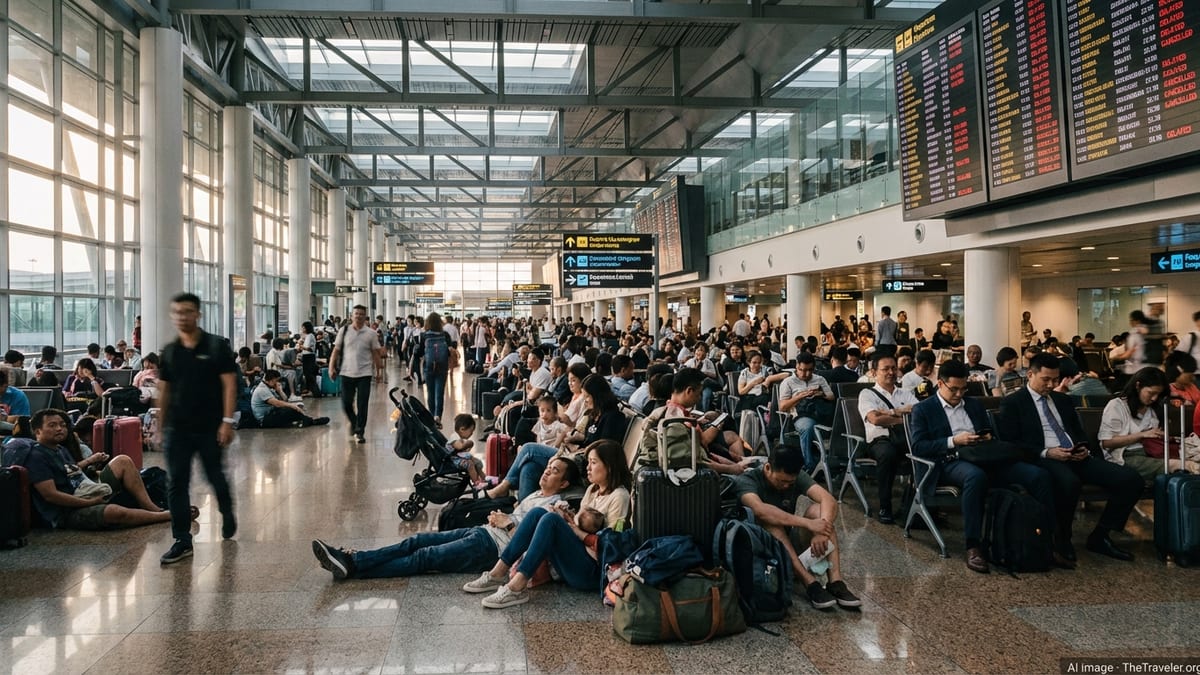
Ripple Effects Across Key Southeast Asian Hubs
Publicly available tracking data and regional coverage point to sharp operational strain at major hubs including Bangkok, Jakarta, Bali and Manila, where delays have cascaded across domestic and international networks. In total, the latest disturbance has grounded forty-one scheduled flights while more than seven hundred departures and arrivals have been pushed back, in some cases by several hours.
The bulk of the disruption is concentrated at high-traffic gateways such as Bangkok’s Suvarnabhumi and Don Mueang airports, Jakarta’s Soekarno Hatta, Bali’s Ngurah Rai and Manila’s Ninoy Aquino International Airport. Aviation statistics show that even modest numbers of cancellations can quickly trigger wider knock-on delays when aircraft and crews are out of position in tightly timed regional schedules.
In Thailand, where the aviation sector has already been operating below pre-pandemic capacity due to higher fuel costs and route adjustments, the latest wave of cancellations is compressing available seats even further. Reports from Thailand-focused outlets describe earlier schedule cuts linked to jet fuel prices, leaving airlines with less slack to absorb new operational shocks.
The situation is similar in Indonesia and the Philippines, where dense domestic networks feed tourism destinations and secondary cities. When a single aircraft rotation is scrubbed in these markets, the impact can run across multiple islands and provinces, affecting both leisure travelers and residents who depend on air links for business and essential trips.
Fuel Costs, Regional Tensions and Weather Add Pressure
Industry reporting over recent months has highlighted the way higher jet fuel prices and geopolitical tensions have squeezed airline finances and flight planning in Southeast Asia. Coverage from regional business outlets notes that Thai carriers in particular have trimmed thousands of flights this year in response to rising fuel bills linked to instability in the Middle East, reducing overall capacity into and out of the kingdom.
Analysts cited in aviation trade publications have also warned that sudden shifts in airspace availability around conflict zones can force long-haul operators to reroute, adding flight time and cost. While the current batch of grounded services in Thailand, Indonesia and the Philippines is centered on regional operations, long-haul adjustments can still ripple into local networks by tying up aircraft and crews on extended rotations.
Seasonal weather is adding to the complexity. Across Southeast Asia’s monsoon belt, thunderstorms, low visibility and heavy rain frequently trigger temporary ground stops or require wider separation between aircraft, slowing departures and arrivals. When that coincides with already tight aircraft utilization and fuel-related schedule cuts, even localized storms can help tip the system into broader disruption.
Regulatory advisories in recent months from aviation authorities in the Philippines and Thailand have also urged carriers to maintain flexible options for passengers in light of natural events such as earthquakes and severe weather. Those directives, while aimed at consumer protection, can increase the number of rebookings and schedule changes that airlines need to process when irregular operations occur.
Airlines React With Schedule Cuts and Tactical Cancellations
Carriers across the region have been gradually adjusting their schedules in 2026 as operating conditions have become more volatile. Data compilations from schedule analysis firms show that low cost and full service airlines in Thailand, Indonesia and the Philippines have already filed capacity reductions for the second and third quarters of the year, particularly on thinner domestic and secondary international routes.
Recent airline notices point to a mix of short term tactical cancellations and longer running suspensions on selected routes. Some Thai carriers have reduced frequencies on links to South Asia and East Asia, while Indonesian and Philippine operators have trimmed services on domestic sectors where demand and yields no longer justify previous flight counts under higher fuel prices.
For travelers, the combination of preplanned capacity cuts and unexpected day of flight disruptions has created a more fragile environment. A cancellation on one leg can be harder to recover from if there are fewer alternative departures available the same day, especially outside major trunk routes. This dynamic is contributing to the accumulation of delays as airlines search for spare seats and aircraft to re accommodate disrupted passengers.
Public information from airport operators indicates that ground handling teams are facing heavier than usual workloads as they balance arriving late running flights with tight turnaround windows. That in turn can create further bottlenecks at gates and on taxiways, slowing the recovery even after the immediate cause of a delay has been resolved.
Passengers Confront Long Queues and Changing Itineraries
The operational strain is being felt most directly by passengers who are encountering long queues at check in, security and boarding gates across affected airports. Social media posts and local coverage from Bangkok, Jakarta, Bali and Manila describe crowded terminals, last minute gate changes and rolling departure time revisions as airlines work to reset their schedules.
Travel forums focused on Southeast Asia have recently carried a rise in reports from holidaymakers and expatriates facing rerouted itineraries, overnight layovers or missed connections linked to regional flight disruptions and capacity cuts. Many of these accounts highlight how quickly a single cancellation can upend onward travel plans when multiple short regional hops are involved.
Consumer advocates quoted in regional media have encouraged travelers to build more buffer time into itineraries that rely on tight connections within Southeast Asia, particularly when combining low cost point to point carriers. They also point to the value of travel insurance policies that explicitly cover missed connections and weather or operational delays, noting that coverage details can vary significantly between providers.
Airline advisories recommend that passengers monitor their flight status through official digital channels and arrive at airports earlier than usual during periods of widespread disruption. With check in and customer service desks under pressure when hundreds of flights are delayed, travelers who can self manage mobile boarding passes and rebooking options have a better chance of securing alternative arrangements quickly.
What the Disruptions Mean for Southeast Asia’s Travel Rebound
The latest wave of disruptions in Thailand, Indonesia and the Philippines comes at a sensitive time for Southeast Asia’s tourism recovery. The region has been working to rebuild international visitor numbers while also supporting a surge in domestic and intra regional travel, particularly among younger travelers and digital nomads.
Aviation analysts writing in regional publications have noted that sustained irregular operations, even on a modest scale, can erode traveler confidence and push some visitors to favor destinations with more stable air links. Thailand and Indonesia, which rely heavily on overseas arrivals for tourism revenue, are seen as particularly exposed to prolonged volatility in long haul and regional air connectivity.
At the same time, industry commentary suggests that Southeast Asia is likely to remain a resilient market due to its diversified source countries and strong domestic demand base. Carriers in the region have shown flexibility in redeploying capacity to stronger routes and adjusting schedules as conditions change, a pattern that is expected to continue as airlines respond to fuel prices, weather risks and geopolitical developments.
For now, the grounding of forty-one flights and delays to more than seven hundred services underscore how sensitive Southeast Asia’s aviation system remains to overlapping pressures. Travelers planning trips through Thailand, Indonesia and the Philippines in the coming weeks are being advised by travel specialists to stay alert to schedule changes and to factor possible disruption into their plans.