


More news on this day
Air travel across Asia faced severe disruption on July 10 as Super Typhoon Bavi and overlapping monsoon systems triggered widespread flight cancellations and delays at major regional hubs, stranding tens of thousands of passengers and complicating airline operations at the height of the summer travel season.
Get the latest news straight to your inbox!
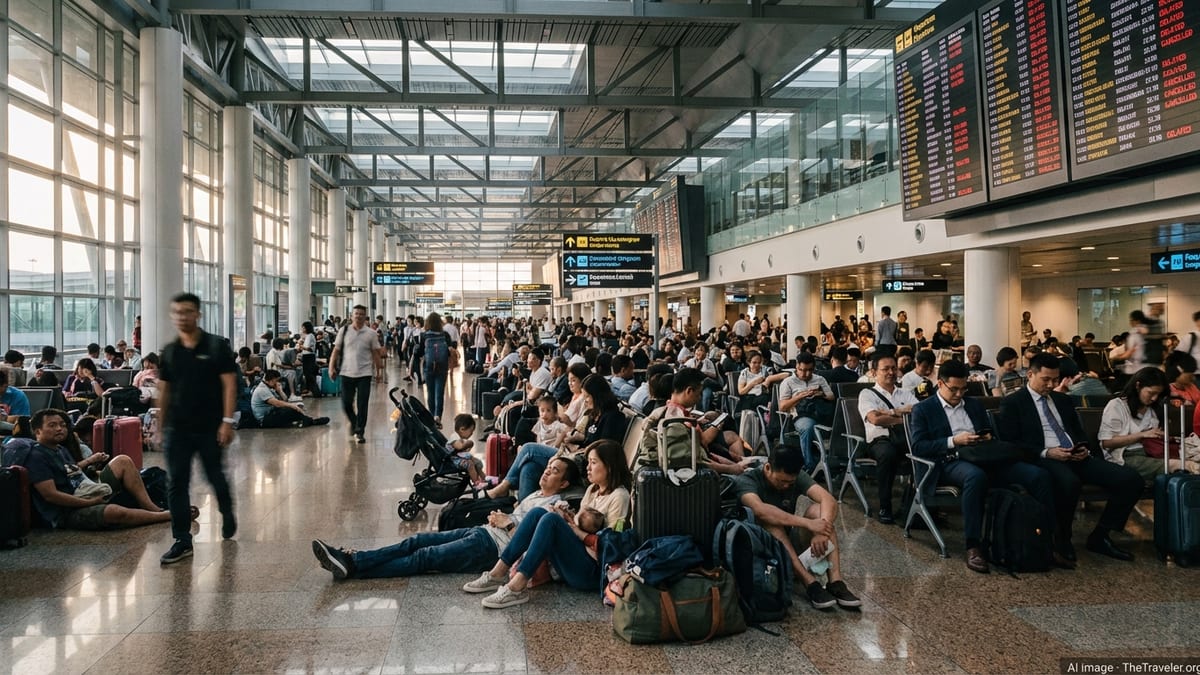
Weather Systems Converge Over Key Asian Aviation Corridors
Publicly available flight tracking dashboards and airport departure boards in early July indicate that a combination of Super Typhoon Bavi, residual impacts from Tropical Storm Maysak and seasonal monsoon storms has produced significant turbulence for the region’s aviation network. Data collated from multiple tracking platforms and aviation news outlets points to hundreds of cancellations and more than ten thousand delays across Asian routes in recent days, with disruption peaking around July 9 and 10.
Super Typhoon Bavi is currently tracking between Taiwan, southern Japan and the East China Sea, bringing intense winds and heavy rain to a corridor that supports dense intra-Asia traffic. This path intersects flight lanes linking major hubs such as Hong Kong, Taipei, Seoul, Tokyo and Okinawa, forcing airlines to divert, delay or cancel services as conditions deteriorate along the storm’s projected trajectory.
At the same time, parts of southern China are still managing the operational aftershocks of Tropical Storm Maysak, which prompted widespread suspensions of flights and ferries in Hainan at the start of July. Monsoon-related thunderstorms and heavy rain over India and along the Bay of Bengal have added further pressure, creating a patchwork of local weather events that collectively undermine on-time performance and network reliability.
Industry analyses and previous studies of typhoon impacts on Asian aviation suggest that such multi-system weather episodes can have an outsized effect on connectivity, particularly where networks depend on tightly timed banked connections through a handful of very busy hubs. Even when cancellation volumes remain moderate, long strings of delays can propagate across the system for days.
Major Hubs From Hong Kong To Taipei Implement Large-Scale Schedule Cuts
According to published airline advisories and airport information feeds, Hong Kong, Taipei and surrounding airports are among the hardest hit as Bavi’s circulation intensifies. Low cost carrier HK Express has cancelled multiple services between Hong Kong and Okinawa for July 10, with notices indicating that flights on this route across July 9 to 11 are either grounded or subject to last-minute changes as the storm approaches the Ryukyu Islands.
Additional disruptions are reported by Hong Kong-based carriers on routes into Japan’s southern islands and Taiwan, with travel-industry coverage documenting a wave of short-haul cancellations and rolling delays across July 10 and 11. Passengers on leisure-heavy routes to beach destinations and resort cities appear particularly exposed, with some flights retimed to operate only after meteorological agencies forecast improving conditions.
In Taiwan, local media reports show that airlines have cancelled all flights to and from Taipei’s Taoyuan and Songshan airports from the evening of July 10 through July 11, with similar blanket suspensions affecting departures from Kaohsiung from mid-afternoon on July 10. Several cross-Strait and regional services to Okinawa and other Japanese islands are specifically listed among the cancellations, while a small number of long-haul services to North America are currently indicated as operating on schedule when weather windows allow.
Travel platforms and passenger accounts also highlight cancellations by other regional carriers serving Taiwan as Bavi’s wind field expands. With the storm projected to influence conditions into the weekend, airport authorities and airlines are signaling that further adjustments remain likely, particularly if ground operations are hampered by flooding or safety restrictions on ramp activity.
Singapore, Japan And India Brace For Knock-On Effects
Singapore’s Changi Airport, one of Asia’s primary long-haul and transfer hubs, is beginning to experience secondary disruption as airlines adjust schedules on routes into the typhoon-affected zone. Singapore Airlines has issued detailed advisories listing retimed and cancelled services to Taipei and other Northeast Asian destinations for July 10 and 11, including the rescheduling of at least one Singapore–Taipei rotation and the cancellation of another as Bavi’s forecast track brings stronger winds to northern Taiwan.
Regional coverage indicates that several other carriers operating from Singapore are enacting contingency plans, including rerouting flights around storm-affected airspace and providing flexible rebooking options. These measures are designed to keep long-haul links functioning while reducing exposure to airports facing the most severe weather, but they also extend some flight times and compress turnaround windows, increasing the risk of missed connections.
In Japan, public notices from the Japan Airlines Group outline special ticket handling for flights touching a wide swath of southern and southwestern islands from July 9 to 11, as Typhoon Bavi interacts with existing low-pressure systems. The measures cover services to and from airports such as Miyako, Ishigaki, Okinawa and multiple smaller island fields, reflecting expectations of strong winds, heavy rain and potentially prolonged operational interruptions.
Farther west, India’s aviation network is contending with heavy monsoon rain and low visibility at major gateways, including Mumbai. Domestic carriers serving these airports have issued advisories warning of likely delays and rolling disruptions, with some flights already operating well behind schedule. Although these conditions are not directly linked to Bavi, they contribute to a broader pattern of weather-related instability across Asia’s skies in early July.
Passengers Face Long Queues, Missed Connections And Limited Alternatives
The operational strain is being felt most acutely by travelers attempting to connect through regional hubs at short notice. Passenger reports on social platforms describe long queues at check-in counters and transfer desks in Hong Kong and Taipei, as travelers seek rerouting options or overnight accommodation after their flights were cancelled or substantially delayed.
Published consumer advisories from travel rights organizations and aviation-focused sites caution that itineraries relying on tight same-day connections through major Asian hubs may be particularly vulnerable during this period. Since many of the affected routes serve leisure destinations and secondary cities, some travelers are finding that alternative flights are either fully booked or available only via extended multi-stop routings that add a full day or more to their journey.
In several cases, online discussions indicate that airlines are prioritizing rebooking on the next available service while waiving change fees and fare differences for trips directly impacted by the typhoon or associated weather advisories. However, passengers with separate tickets or complex itineraries involving multiple carriers may face additional challenges, as protection policies vary and spare capacity is constrained by peak-season demand.
Accommodation availability around certain hubs is also tightening as stranded travelers are forced to remain overnight. Travel forums note increased pressure on hotels near airports in cities such as Taipei and Okinawa, where authorities are urging residents and visitors to stay indoors during periods of strongest winds and rain.
Operational Resilience And The Outlook For The Coming Days
Aviation analysts point out that Asia’s major hubs have invested heavily in infrastructure and contingency planning in recent years, including upgraded runway drainage, improved forecasting tools and more flexible crew and aircraft deployment strategies. These capabilities are intended to help airports and airlines recover more quickly once extreme weather systems move on, reducing the overall duration of disruption.
Nonetheless, historical assessments of previous typhoon seasons illustrate that even brief airport closures and large clusters of delays can have lingering effects. Aircraft and crews may end up out of position, maintenance schedules can be compressed and connecting banks may need to be rebuilt over several days before timekeeping returns to normal levels.
For the current episode, publicly available meteorological guidance suggests that the most intense impacts from Super Typhoon Bavi on aviation are likely to concentrate between July 10 and 12, as the storm passes near Taiwan and the Ryukyu Islands before weakening over cooler waters or land. If this track holds, regional aviation operations could start to stabilize early next week, although residual delays and a backlog of displaced passengers may continue beyond that timeframe.
Travel advisories from airlines and regulatory bodies consistently urge passengers with near-term departures in affected areas to monitor flight status tools and airline notifications closely, arrive at airports earlier than usual and be prepared for schedule changes. With Asia’s summer peak in full swing, the current episode underlines how quickly multiple weather systems can converge to disrupt even the region’s most sophisticated and well-connected aviation hubs.