


More news on this day
Flight delays across the United States have climbed to their highest levels in a decade, according to recent federal and industry data, underscoring how resurgent demand, fragile operations and volatile weather are combining to test the limits of the air travel system.
Get the latest news straight to your inbox!
Delay Metrics Worsen After Post-Pandemic Rebound
Publicly available transportation data indicate that the share of U.S. flights arriving on time slipped again in 2024, erasing gains made as airlines rebuilt schedules after the pandemic. Figures compiled from the Department of Transportation’s Air Travel Consumer Report show an industry-wide on-time arrival rate of just over 78 percent for 2024, a modest decline from 2023 but enough to push overall delays to their highest level in roughly ten years when combined with growing traffic volumes.
Behind the percentages is a steep rise in the number of individual flights experiencing lengthy setbacks. Industry analysis of government statistics points to a more than 50 percent jump in domestic tarmac delays lasting over three hours between 2023 and 2024, an indicator that a relatively small but highly disruptive category of incidents is becoming more common. These figures are drawing scrutiny from regulators and advocacy groups that argue airlines have scheduled aggressively into an already stretched system.
Seasonal swings have also sharpened. Data released by the Transportation Department for late 2024 show that while some autumn months achieved on-time performance in the mid-80 percent range, the December on-time rate dropped to around 78 percent, well below the previous year’s level. Analysts note that such volatility signals a network that has little room to absorb shocks once peak travel periods begin.
Staffing Shortfalls and Weather Strains the System
Operational constraints are compounding the impact of strong demand. Federal aviation statistics highlight continued challenges in air traffic control staffing, particularly in congested corridors around New York and other major hubs, where controller levels have lagged agency targets. When combined with severe thunderstorms, heat events and smoke from wildfires, these staffing gaps limit the ability of the system to reroute traffic and keep flights moving when disruptions occur.
Weather remains a dominant driver of delays, but observers note that its effects are magnified by tight schedules and busy skies. Summer 2024 performance reports from European and North American airspace managers alike describe some of the worst seasonal weather impacts in years, with average en route delays per flight rising and more days exceeding key congestion thresholds. Although these reports cover different regions, they point to a common pattern: localized storms or heat waves now trigger wider, longer-lasting ripple effects through global networks.
Major U.S. hub airports illustrate the pressure. Historical operating tables for facilities such as Chicago O’Hare and Atlanta show rising passenger volumes in 2023 and 2024, along with modest but persistent increases in average delay minutes per flight. Even small upticks translate into significant cumulative disruption when hundreds of thousands of movements are involved, reinforcing concerns that capacity growth on the ground and in the air has not kept pace with the rebound in demand.
Passenger Complaints and Travel Frustration Climb
The worsening delay picture is reflected in a surge of traveler dissatisfaction. Consumer complaint tallies summarized from Transportation Department filings and advocacy group reports show that flight problems including delays, cancellations and missed connections account for roughly one third of all formal grievances about air travel. That share has remained elevated since the pandemic, but recent data indicate that the absolute number of delay-related complaints rose again in 2024.
Studies drawing on federal complaint records highlight not only operational setbacks but also disagreements over compensation, rebooking and customer service during disruptions. Passengers frequently report difficulty in obtaining timely information, meal vouchers or hotel accommodations when significant delays occur, particularly when the causes are attributed to airline-controlled factors such as crew or maintenance. These experiences have become a flashpoint in the debate over stronger passenger rights rules in the United States.
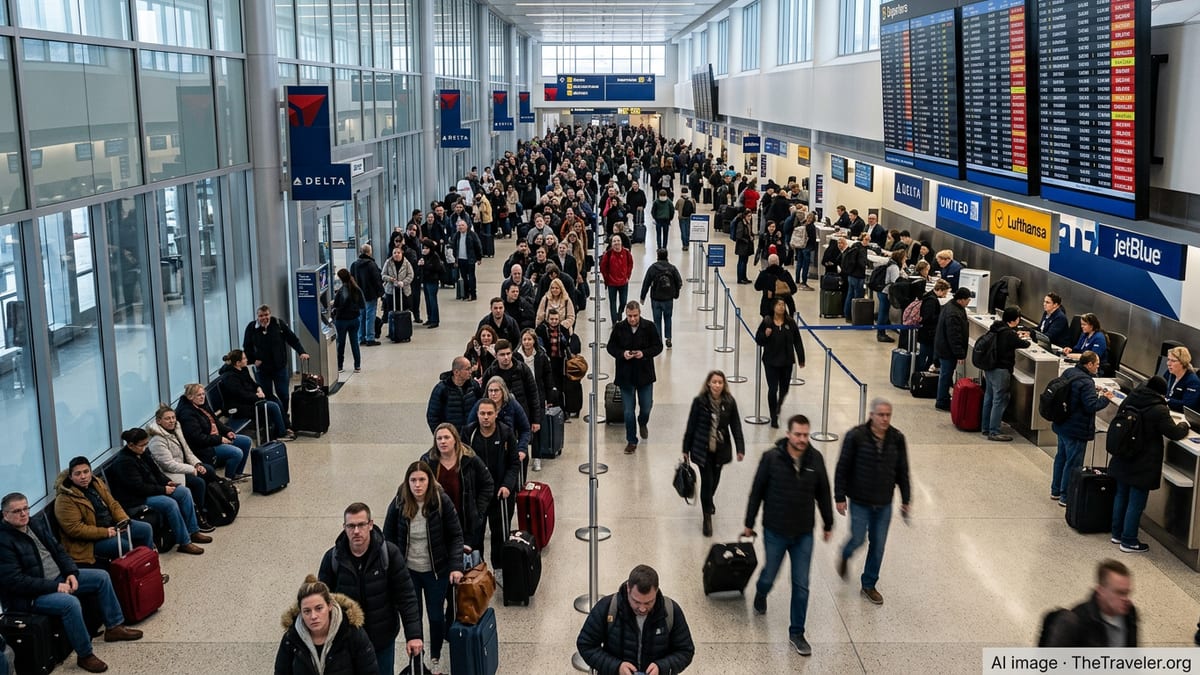
Social media and travel forums further amplify frustration, as images of crowded terminals and lengthy lines circulate widely during holiday and summer peaks. While some carriers point to improvements in baggage handling and lower cancellation rates compared with the immediate post-pandemic period, traveler sentiment remains strained in the face of recurring delays, with many leisure and business flyers indicating they now build extra time or backup options into their itineraries.
Airlines Adjust Schedules as Some Carriers Stand Out
In response to mounting delays and regulatory attention, several large airlines have adjusted schedules, trimming marginal flights and adding buffer time between turns in an effort to improve reliability. Public timetables for 2025 show modest reductions in frequency on certain congested routes and more conservative block times at key hubs, changes that industry analysts say are meant to align operations more closely with realistic conditions.
Performance rankings compiled by aviation data firms and reported in the business press reveal significant variation among carriers. Some large network airlines, notably those with robust hub operations and relatively higher staffing levels, have consistently posted on-time rates several points above the industry average. Others, especially ultra-low-cost carriers that operate dense schedules with limited redundancy, appear more vulnerable to cascading delays when disruptions arise.
Airport-level statistics tell a similar story. Recent summaries of on-time performance at major U.S. airports show that a handful of midcontinent hubs, such as Salt Lake City and Minneapolis-St. Paul, maintain on-time rates near or above 80 percent, while certain coastal and leisure-focused airports struggle to keep even 70 percent of flights on schedule. Travelers watching these trends increasingly factor airport choice and connection points into their planning when possible.
What Travelers Can Expect Heading Into Peak Seasons
Looking ahead to the next wave of summer and holiday travel, forecasts from aviation agencies and traffic organizations suggest that flight volumes will continue to edge higher, keeping pressure on a system already operating close to its limits. Planning documents and annual performance reports from federal transportation authorities underscore ongoing investments in technology and infrastructure, but also acknowledge that many capacity and staffing initiatives will take years to fully materialize.
For passengers, that means delays are likely to remain a defining feature of air travel in the near term. Travel advisors and consumer advocates point to several strategies that can help reduce risk, including choosing early-day departures, allowing longer connection windows at congested hubs and monitoring flights closely through airline and third-party apps. While such steps cannot eliminate disruption, they can provide a measure of control in an environment where systemic factors often dictate outcomes.
At the policy level, regulators continue to refine disclosure and refund rules in an attempt to bring greater transparency to how airlines handle delays. Published proposals under discussion in Washington focus on clearer commitments around rebooking, meal vouchers and hotel accommodations when flights are significantly late for reasons within a carrier’s control. Whether these measures ultimately ease traveler frustration will depend not only on regulatory language but also on how quickly the industry can restore operating resilience after years of upheaval.