


More news on this day
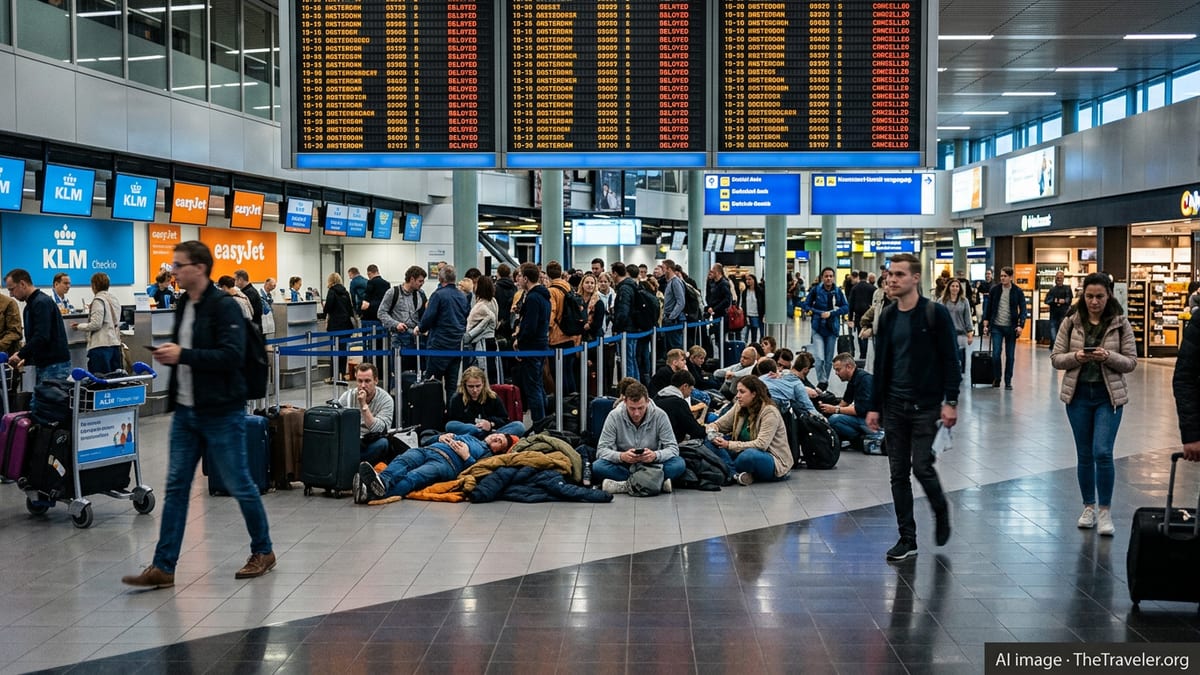
Hundreds of travelers across Europe are facing long queues, missed connections and unexpected overnight stays as a fresh wave of operational disruption delays more than 700 flights and cancels dozens more at major hubs including Helsinki, Madrid, London, Brussels and Paris.
Get the latest news straight to your inbox!
Network Disruptions Ripple From Helsinki to Madrid
Recent disruption at Helsinki Airport has added fresh strain to an already pressured European aviation network. Publicly available information shows that a temporary airspace shutdown around mid May triggered a cascade of delays and cancellations, as flights were held on the ground, diverted to secondary Finnish airports and then re-sequenced into crowded arrival and departure banks.
Finnair and other carriers using the Finnish capital as a hub were forced to reshuffle aircraft and crews, which in turn pushed knock-on delays into key European routes linking Helsinki with London, Brussels, Paris and other cities. Industry tracking data cited in published coverage indicates that dozens of services were delayed and several were cancelled outright, leaving passengers scrambling for alternative routings at short notice.
In Spain, rolling industrial action among air traffic controllers, ground handlers and baggage staff at Madrid-Barajas and Barcelona-El Prat has further complicated travel plans. Reports from local media and aviation specialists describe trimmed schedules, consolidated flights and a pattern of creeping delays that intensify as the day progresses, particularly on high-demand routes to London and Brussels.
As these events play out simultaneously, aggregated operational data from multiple tracking platforms point to more than 700 delayed flights and close to 30 outright cancellations across the region on the worst affected days, underscoring how quickly local issues can become a continent-wide problem.
Major Hubs in the UK, Belgium and France Under Pressure
London area airports are once again featuring prominently in delay statistics. According to recent reports summarizing performance at Heathrow and Gatwick, dense schedules and tight aircraft turnarounds are leaving little slack when disruptions in continental Europe spill over into the United Kingdom. Late arriving feeder flights from Spain, Finland and other points in northern Europe are contributing to missed connections and late departures on onward legs.
In Belgium, Brussels Airport continues to feel the effects of schedule adjustments and periodic labor disputes involving major European carriers. Coverage in Belgian and regional outlets has highlighted the impact of cancellations on links between Brussels and German hubs, with Lufthansa services particularly exposed when ground staff or support functions are affected. Even when full strikes are not in force, residual crew and fleet imbalances are feeding into delay totals.
French airspace has also been a recurring choke point. Recent industrial action by air traffic controllers in France prompted the national aviation regulator to order significant reductions in flight schedules at Paris Charles de Gaulle, Orly and several regional airports. Published summaries indicate that cuts of up to three quarters of normal traffic levels on specific days forced airlines to cancel or reroute services, diverting some passengers through London, Brussels and other neighboring hubs that were already nearing capacity.
Together, these constraints across the UK, Belgium and France have amplified each other, with a delay or cancellation in one country frequently reverberating through the others by way of shared connecting banks, code-share agreements and tightly timed transfer windows.
KLM, Lufthansa, Air France, Finnair, SAS and Others Hit
The latest bout of disruption is affecting a wide spectrum of European and global airlines. Network carriers such as KLM, Lufthansa, Air France, Finnair and SAS are particularly exposed because they depend on complex hub structures that require aircraft, crew and passengers to converge within narrow time windows.
Analysts note that when events like airspace closures, strikes or heightened security checks occur at one or more hubs, these tightly choreographed systems quickly fray. KLM operations have been affected when delays at airports like Madrid or Helsinki disrupt inbound feeder services to Amsterdam, forcing schedule changes or missed onward connections. Lufthansa’s reliance on Frankfurt and Munich as interchange points means that even localized staffing problems or weather events can lead to cancellations on routes to Brussels, Paris and London.
Air France has faced similar challenges, particularly when French air traffic control constraints have required preventative schedule cuts. Finnair’s long-haul and intra-European network out of Helsinki has seen aircraft and crew displaced by earlier disruption, which then resurfaces as delays on later departures to cities such as London and Brussels. Scandinavian carrier SAS has been drawn into the turbulence through its own hubs and shared routes, especially where it interlines with other alliance partners.
Low cost and leisure-focused airlines are not immune, but their point-to-point models can sometimes limit the spread of disruption to specific city pairs rather than entire networks. For hub-and-spoke operators, however, data from recent weeks underscores how a relatively small number of cancelled flights can trigger hundreds of delayed sectors across Europe in the same operating day.
Passengers Face Missed Connections and EU261 Questions
For travelers, the most visible consequences of these disruptions are long queues at check in, security and customer service desks, along with packed departure lounges and sudden gate changes. Social media posts and on-the-ground reporting describe families sleeping on terminal floors, business travelers rebooking at their own expense to avoid missing meetings, and tourists juggling hotel and tour reservations as their arrival times shift by many hours.
Publicly available guidance from consumer groups and legal experts is drawing renewed attention to Regulation EU261, which sets out compensation and assistance obligations when flights are heavily delayed or cancelled in the European Union, as well as in the United Kingdom through mirrored rules. Passengers trying to determine whether they qualify for cash compensation, vouchers, meals or hotel rooms are being urged in that guidance to distinguish between disruptions within the airline’s control and those linked to extraordinary circumstances such as air traffic control strikes or security incidents.
Some airport and airline advisories recommend that travelers keep boarding passes, booking confirmations and receipts for meals or accommodation, since these documents are often needed for post-travel claims. Passenger rights organizations also caution that compensation assessments can be complex in multi-leg itineraries, where the triggering delay occurs in a different country from the final destination or involves multiple carriers on a single ticket.
With information changing rapidly, the most consistent message across official airport updates, airline statements and consumer advocacy material is that travelers should check their flight status frequently, allow additional time at the airport and be prepared for last-minute gate swaps or schedule adjustments, particularly when traveling through affected hubs such as Helsinki, Madrid, London, Brussels and Paris.
Summer Travel Outlook Remains Uncertain
As Europe moves toward the peak summer season, industry observers are warning that the current pattern of rolling disruption may persist. Commentaries from aviation analysts point to a combination of factors, including lingering staffing challenges, tighter security and border checks, higher air traffic volumes and an ongoing cycle of industrial disputes in several countries.
Several recent data sets chart rising delay totals on key days across April and May, with large spikes on weekends and public holidays when leisure demand is strongest. While airlines and airports have been adjusting schedules, hiring additional staff and reconfiguring terminal operations, the margin for error remains slim, particularly at slot-constrained airports where extra flights cannot easily be added to recover from earlier delays.
Travel industry publications note that carriers such as KLM, Lufthansa, Air France, Finnair and SAS are refining contingency plans to cope with sudden airspace restrictions or labor actions, including preemptive cancellations designed to protect the rest of the schedule. That strategy can reduce broader chaos but still leaves hundreds of travelers per affected flight seeking rebooking, refunds or overnight accommodation on already busy travel days.
With no quick fix in sight, prospective passengers booking trips through Finland, Spain, the UK, Belgium or France in the coming weeks are being advised by publicly available guidance to build extra flexibility into their plans, avoid tight connections and monitor operational conditions closely in the 24 hours before departure.