


More news on this day
Hundreds of air travelers faced chaotic scenes at Jakarta’s Soekarno-Hatta International Airport after a cluster of 17 flight withdrawals and 99 delays disrupted operations across key regional routes, affecting services operated by Batik Air, Malindo Air, Citilink, Garuda Indonesia, Lion Air, AirAsia and Malaysia Airlines.
Get the latest news straight to your inbox!
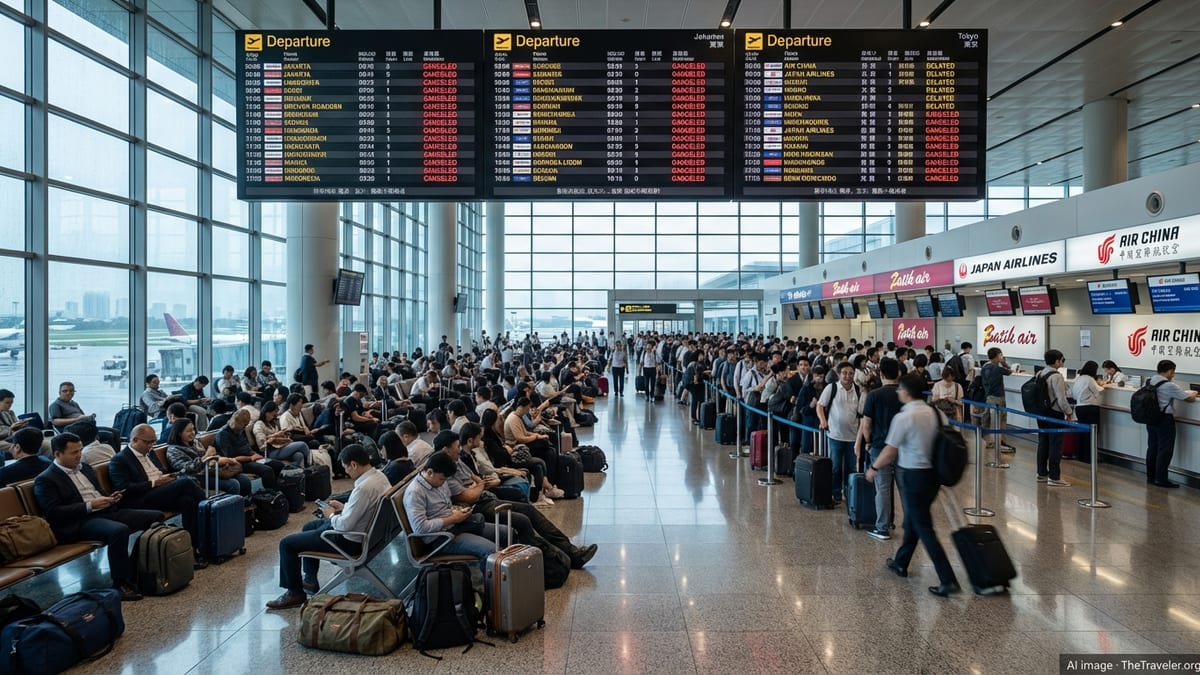
Major Hub Sees Wave of Cancellations and Delays
Jakarta’s Soekarno-Hatta International Airport, Indonesia’s primary aviation gateway and one of Southeast Asia’s busiest hubs, recorded an unusual spike in operational disruption as 17 flights were withdrawn and 99 services delayed over a short period. Publicly available flight-tracking and schedule data indicate that the irregularities were concentrated on popular regional links, including Indonesia’s domestic trunk routes and international connections to Malaysia.
The disturbance hit carriers that collectively move a substantial share of passengers through the hub. Batik Air and its Malaysian sister brand Malindo Air, together with Lion Air, Citilink, Garuda Indonesia, AirAsia and Malaysia Airlines, all appeared among services experiencing cancellations or late operations. The breadth of affected airlines suggests a mix of factors at play, from congestion and aircraft rotations to weather and knock-on effects from earlier delays.
Soekarno-Hatta routinely handles dense traffic across its three main terminals, with multiple daily frequencies on city pairs such as Jakarta to Surabaya, Yogyakarta, Denpasar and Kuala Lumpur. On days when schedules are tight and runway and airspace use are near capacity, even a small number of operational issues can quickly cascade into wider disruption for passengers.
Passengers Scramble To Rebook and Reroute
The wave of disruptions left many travelers scrambling to secure alternatives. With 17 flights withdrawn outright, passengers on those services were forced to seek rebooking on later departures or rerouting via other Indonesian cities and regional hubs. For those on the 99 delayed flights, missed connections were a particular risk on routes linking Jakarta with onward international services.
Given Soekarno-Hatta’s role as a connector between Indonesia’s provinces and overseas destinations, delays on feeder flights can quickly affect itineraries involving multiple airlines. Travelers connecting from domestic services on Lion Air, Citilink or Garuda Indonesia to international departures on AirAsia, Malaysia Airlines or Batik Air Malaysia are especially vulnerable when turnarounds are tight.
Published travel and aviation advisories routinely recommend longer connection windows at Jakarta during busy periods, citing a pattern of schedule slippage for some regional carriers. The latest cluster of withdrawals and delays is likely to reinforce that guidance, particularly for passengers heading to long-haul flights from Kuala Lumpur and other onward hubs.
Multiple Airlines, Shared Operational Pressures
The incident underlines how interconnected operations are at Soekarno-Hatta, where several of the affected airlines share corporate or competitive ties. Batik Air, part of the Lion Air Group, operates as a full-service carrier from Jakarta, while Malindo Air has been integrated into the Batik Air Malaysia brand on the Malaysian side of the network. Lion Air itself runs a large domestic and regional network from the same airport, often using similar time banks of departures.
Citilink, the low-cost arm of Garuda Indonesia, and Garuda’s own mainline operations also maintain extensive schedules through the hub, especially on key domestic and short-haul international routes. AirAsia and Malaysia Airlines add further frequency on Jakarta to Kuala Lumpur services and other regional city pairs, helping to keep fares competitive but also contributing to tightly packed runway and gate usage.
Government performance data for recent years highlight varying on-time records across these carriers, with some Indonesian airlines reporting higher proportions of delays and cancellations than others. Industry analysis points to factors such as rapid growth in seat capacity, fleet utilization strategies, air traffic management constraints and weather-related disruptions as recurring contributors to irregular operations.
Jakarta’s Growing Traffic and Structural Constraints
Soekarno-Hatta’s long-term growth trajectory is another backdrop to the latest disruption. The airport has expanded its terminals and upgraded infrastructure to handle rising demand, yet traffic recovery and incremental route additions have repeatedly pushed capacity toward its limits at peak times. Regional competition among airlines has also driven dense scheduling on popular routes, leaving limited buffer when aircraft or crews are out of position.
Analysts note that Jakarta’s geographical role as a primary gateway between Indonesian islands and international markets concentrates flows through the airport in ways that magnify any operational stress. When departures on busy domestic routes such as Jakarta to Surabaya, Denpasar or Medan run late, aircraft and crew rotations can spill into later waves of flying, sometimes resulting in same-day withdrawals if regulatory duty limits are reached.
In parallel, international links between Jakarta and Kuala Lumpur, served by several of the airlines affected in the latest incident, rely on tight turnarounds and coordinated schedules. Congestion, ground-handling bottlenecks or air traffic flow restrictions can have cross-border impacts, particularly when carriers attempt to maximize aircraft utilization across multiple daily frequencies.
What Passengers Can Do When Disruption Hits
Consumer guidance for travelers using Soekarno-Hatta emphasizes preparation and flexibility when flying on busy regional routes. Passenger rights frameworks in Indonesia and Malaysia provide for compensation or assistance in certain cases of long delay or cancellation, but the precise entitlements vary by jurisdiction, ticket type and cause of disruption.
Travel experts frequently advise passengers to build longer connection times in Jakarta, especially when traveling on separate tickets or mixing different airline groups. Monitoring flight status in real time through airline channels and airport boards, as well as checking for schedule changes in the days before departure, can help reduce surprises and buy time to adjust plans.
The latest cluster of 17 flight withdrawals and 99 delays at Soekarno-Hatta is likely to reignite discussion about reliability on some regional routes and carriers. For Jakarta’s main gateway, the episode serves as a reminder that robust infrastructure, resilient scheduling and clear communication to travelers remain crucial as traffic continues to build at one of Southeast Asia’s busiest aviation crossroads.