


More news on this day
Passengers traveling through Mexico’s busiest air hubs in Cancun, Mexico City and Guadalajara are experiencing a fresh wave of disruption, with publicly available tracking data indicating 209 delayed flights and at least six cancellations across several major airlines in a single day.
Get the latest news straight to your inbox!
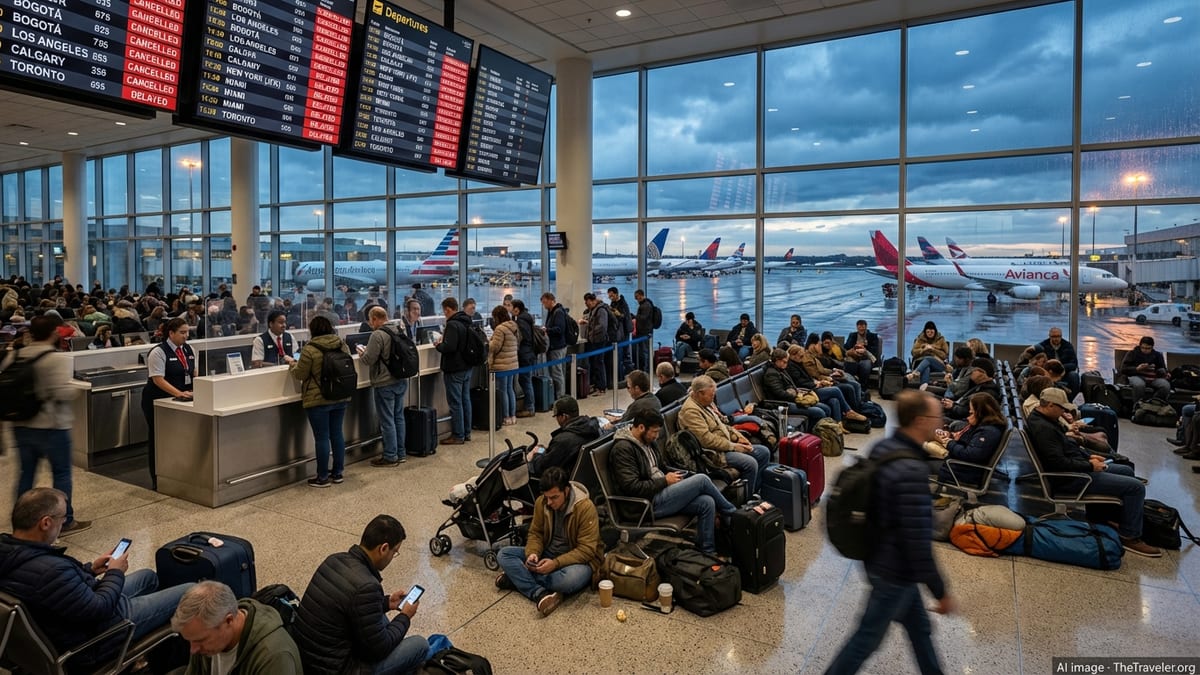
Summer Crowds, Tight Schedules Strain Key Mexican Hubs
The latest disruption comes at the height of the summer travel season and in the closing stages of the FIFA World Cup calendar, a combination that has driven heavy passenger flows through Mexico’s largest airports. Mexico City International Airport, Cancun International Airport and Guadalajara International Airport are all operating near peak capacity on many days in July, increasing the knock-on effect of any schedule changes.
Data from flight-tracking platforms and local media coverage indicate that operations at Mexico City International Airport have been particularly pressured, with more than half of the reported delays concentrated there. A recent tally cited over one hundred delayed operations and six cancellations at the capital’s main hub alone, with additional delays clustered in Cancun and Guadalajara.
Industry reporting points to a mix of congestion, tight turnaround times and weather-related adjustments as primary drivers of the current wave of disruptions, rather than a single systemic failure. However, the volume of affected flights in the three airports underscores how sensitive Mexico’s aviation system has become to even moderate operational strains.
The disruptions are being felt most acutely on trunk routes connecting the three cities with each other and with other major Mexican destinations, where airlines operate dense schedules designed around quick aircraft and crew rotations.
Major Airlines See Knock-On Effects Across Networks
The delays and cancellations are affecting a broad range of carriers, including full-service and low-cost airlines that dominate the Mexican market. Publicly available airline and airport information shows impacts on flights operated by Grupo Aeromexico, Volaris, Viva Aerobus and several foreign carriers that connect Cancun and Mexico City to North America and Europe.
On heavily trafficked domestic routes between Cancun, Mexico City and Guadalajara, recent flight histories show late arrivals and extended ground times rippling through subsequent departures. When a morning or midday service departs significantly behind schedule, aircraft and crews can arrive late into their next city pair, compounding delays into the evening.
International services are not immune. Tracking data for select transborder flights into Mexico City from United States hubs show cancellations and notable delays in recent days, illustrating how congestion at Mexican hubs can reverberate through cross-border networks. Some long-haul services into Cancun have also registered late operations, with carriers citing tight schedules and busy airspace.
While the majority of affected flights are operating with delays rather than being cancelled outright, industry observers note that repeated schedule changes can be highly disruptive for travelers with connections or time-sensitive itineraries, particularly those transiting between the three main hubs.
Mexico City, Cancun and Guadalajara Under Close Scrutiny
Mexico City International Airport remains the country’s primary gateway, handling dense banks of domestic and international flights throughout the day. Recent summer-season reporting describes crowded terminals, ongoing remodeling projects and high passenger volumes as contributing factors to operational complexity, all of which amplify the impact of even minor irregularities.
Cancun International Airport, a critical entry point for beach tourism in Quintana Roo, continues to see strong demand on both domestic and international routes. Public commentary from travelers in recent months has highlighted ground-handling bottlenecks and occasional long waits on the tarmac, issues that can translate into late departures and missed connection windows when schedules are compressed.
Guadalajara International Airport, a major hub for western Mexico and a key base for low-cost carriers, is likewise facing elevated summer traffic. Although the airport has navigated recent security-related episodes without significant long-term closures, past events have shown how quickly access disruptions on surrounding highways can affect flight operations and surface connections.
With all three airports serving as core spokes in domestic and regional networks, any spike in delays at one location can quickly migrate to the others, particularly on days when aircraft rotate through Mexico City, Cancun and Guadalajara in rapid succession.
Travelers Urged to Build in Extra Time and Flexibility
Consumer-rights guidance in Mexico stresses that air passengers have defined protections in cases of long delays or cancellations, including assistance and, under certain circumstances, compensation. Public advisories from Mexican consumer agencies and international consular services encourage travelers to document disruptions, keep boarding passes and receipts, and contact airlines promptly when itineraries are affected.
Given the current pattern of delays, travel specialists recommend that passengers flying into or out of Cancun, Mexico City or Guadalajara this week arrive at the airport well in advance of departure, particularly for international flights. Building in additional time for check-in, security and potential gate changes is seen as prudent, especially at Mexico City International Airport, where terminal works and crowding can lengthen processing times.
Travel planning resources also suggest avoiding tight domestic connections through the three hubs wherever possible, opting instead for longer layovers or non-stop alternatives if they are available. For travelers already in Mexico, monitoring real-time flight status through airline apps and flight-tracking platforms is considered essential to react quickly to gate changes, rolling delays or equipment swaps.
While aviation data indicates that most flights are still ultimately departing, the tally of 209 delays and six cancellations in a day across Cancun, Mexico City and Guadalajara underlines the importance of flexibility. As the summer peak and major sporting events continue to funnel traffic through Mexico’s core airports, travelers are likely to face intermittent disruption and should plan accordingly.