


More news on this day
Summer travelers at San Antonio International Airport faced cascading delays after an air conditioning problem in the airport’s air traffic control tower forced a temporary slowdown of flight operations, disrupting dozens of departures and arrivals.
Get the latest news straight to your inbox!
Cooling failure disrupts critical tower operations
Reports from aviation tracking services and local coverage indicate that an air conditioning malfunction in the air traffic control tower at San Antonio International Airport led to a temporary reduction in traffic capacity. The issue emerged during a busy summer travel period, when high outdoor temperatures already place added strain on airport infrastructure and personnel.
Air traffic control facilities depend on stable indoor temperatures to protect sensitive electronic systems and to maintain workable conditions for controllers. When cooling systems falter, standard practice is often to scale back the number of aircraft moving through the affected airspace, which in turn slows arrivals and departures. That precautionary approach appears to have been applied in San Antonio, where flights were held on the ground or assigned later departure times while the tower issue was addressed.
Publicly available operational data showed arrival and departure banks bunching up through the day, with knock-on effects lasting well beyond the initial technical problem. Some flights departed significantly behind schedule, while others experienced extended gate holds as airlines and controllers adjusted to the reduced flow.
Although the tower remained in service, the air conditioning disruption effectively acted as a capacity constraint, similar in impact to weather-related flow control measures that limit the number of aircraft moving through a given airport each hour.
Dozens of flights see schedule changes
Flight status boards for San Antonio International Airport reflected widespread adjustments, with dozens of services listed as delayed as airlines re-timed departures to fit within the slower traffic rate. The mix of affected flights included both short regional hops within Texas and the surrounding states and longer domestic routes to major hubs.
Some aircraft were reported holding at gates while waiting for revised departure slots, while others pushed back but remained in ground queues. Travelers described rolling delay estimates as crews and dispatch teams received updated information about when their flights could be handled by the tower.
The timing of the disruption meant that early delays propagated into later bank periods, a common pattern when a large airport briefly loses capacity. Even after cooling service was reportedly stabilized, aircraft positioning, crew duty limits and missed connections contributed to additional schedule changes as the evening progressed.
Available tracking data suggested that cancellations were limited, with most affected flights eventually departing or arriving late rather than being removed from the schedule outright. For passengers, however, the concentration of delays in a single day created crowded gate areas and prolonged waits during peak summer heat.
Heat, infrastructure strain and system resilience
The San Antonio incident highlights how summer heat can stress support systems that typically receive less public attention than runways and terminals. Cooling systems in towers, radar rooms and equipment centers must manage both the ambient outdoor temperatures and the heat generated by computers, communication gear and displays that run continuously.
Industry analyses and government reports have noted that when those systems come under pressure, even localized issues can limit the capacity of a facility that is otherwise structurally sound. In practice, this can translate into short, sharp disruptions in which a technical problem inside one building temporarily constrains an entire airport’s throughput.
Aviation observers point out that similar episodes have occurred at other U.S. airports in recent years, including cases where smoke, odors or HVAC failures in towers and control facilities prompted brief ground stops or reduced arrival rates. In each case, the priority has been to protect personnel and equipment while maintaining essential services at a lower tempo until conditions stabilize.
The event in San Antonio fits that pattern, with operational data showing a discernible but time-limited dip in the airport’s ability to process flights. For travelers, the effect was felt as a succession of delay notices, even though the underlying infrastructure issue was confined to a single, specialized building on the airfield.
What travelers experienced at San Antonio
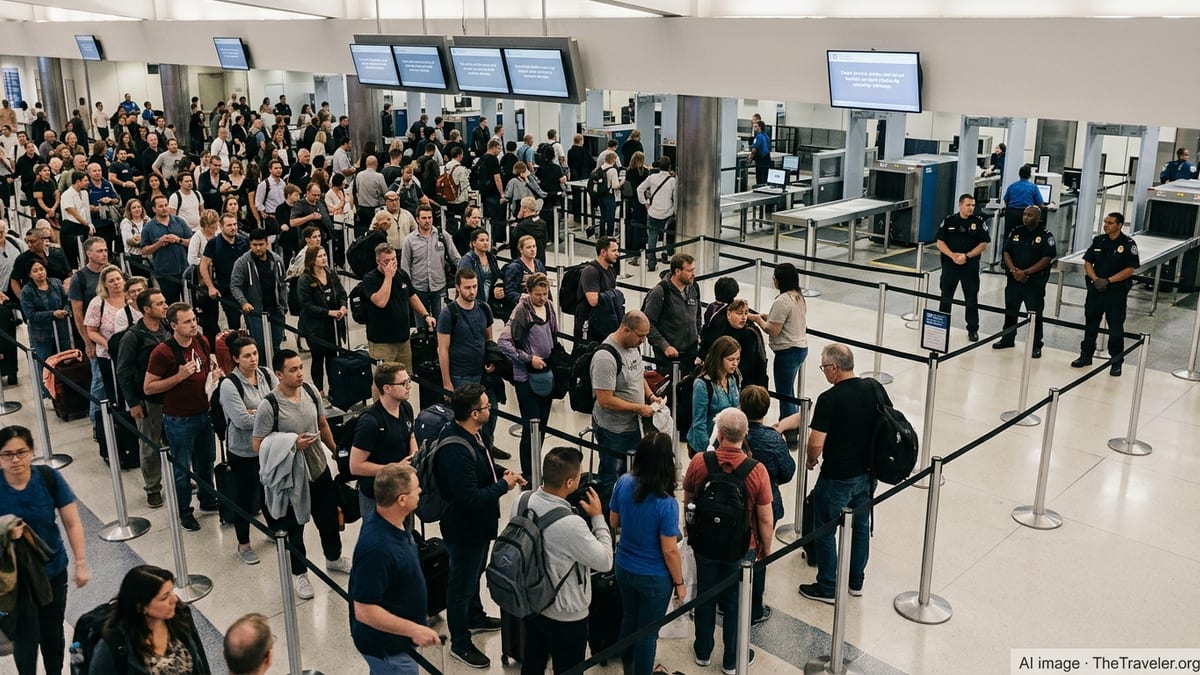
Passengers moving through San Antonio International Airport during the disruption encountered longer than expected dwell times in concourses and boarding areas. Many learned of the tower-related issue indirectly, through airline notifications noting air traffic control constraints or through airport announcements referencing operational impacts.
The delay pattern disrupted connection plans for some travelers who relied on San Antonio as a link in multi-leg itineraries. Missed onward flights meant additional rebooking activity at customer service counters and via airline apps, contributing to congestion both physically and digitally.
Families and leisure travelers, who make up a significant portion of the airport’s summer clientele, were particularly affected by shifting boarding times that turned routine hops into lengthy travel days. Reports described aircraft that boarded, paused for updated clearance times and then sat on the ramp before finally departing once slots became available.
Despite the frustrations, most passengers ultimately reached their destinations the same day, albeit later than planned. For those with flexible schedules, the main consequence was time lost in the terminal, while travelers with tight connections or evening commitments faced more consequential disruptions.
Broader questions about backup systems and planning
The air conditioning problem in San Antonio’s tower adds to an ongoing conversation about the need for robust backup systems and contingency planning in critical aviation facilities. While flight delays help preserve safety margins during infrastructure issues, they also underscore the importance of preventing single points of failure from constraining major airports.
Publicly accessible planning documents for airports and air navigation services frequently reference upgrades to HVAC, power and environmental control systems as part of broader modernization efforts. The San Antonio disruption is likely to draw further attention to how such systems are maintained and tested in regions where extreme heat is a recurring challenge.
Travel analysts note that airlines and airports may also review how they communicate infrastructure-related disruptions to passengers. Clearer, more timely explanations of why delays are occurring can help set expectations and may ease some of the tension that arises when schedules change repeatedly over the course of a day.
For now, the disruption at San Antonio International Airport serves as another example of how complex and interdependent the aviation system has become. Even a localized cooling failure in a single tower can ripple outward into a day of delays, reminding travelers that the smooth flow of flights depends not only on clear skies, but also on the quiet reliability of the systems behind the scenes.