


More news on this day
A freight train derailment in southwest Calgary sent more than a dozen railcars into a wetland pond early Monday, disrupting a major rail corridor and raising fresh concerns about the vulnerability of urban wildlife habitats that sit alongside busy freight lines.
Get the latest news straight to your inbox!
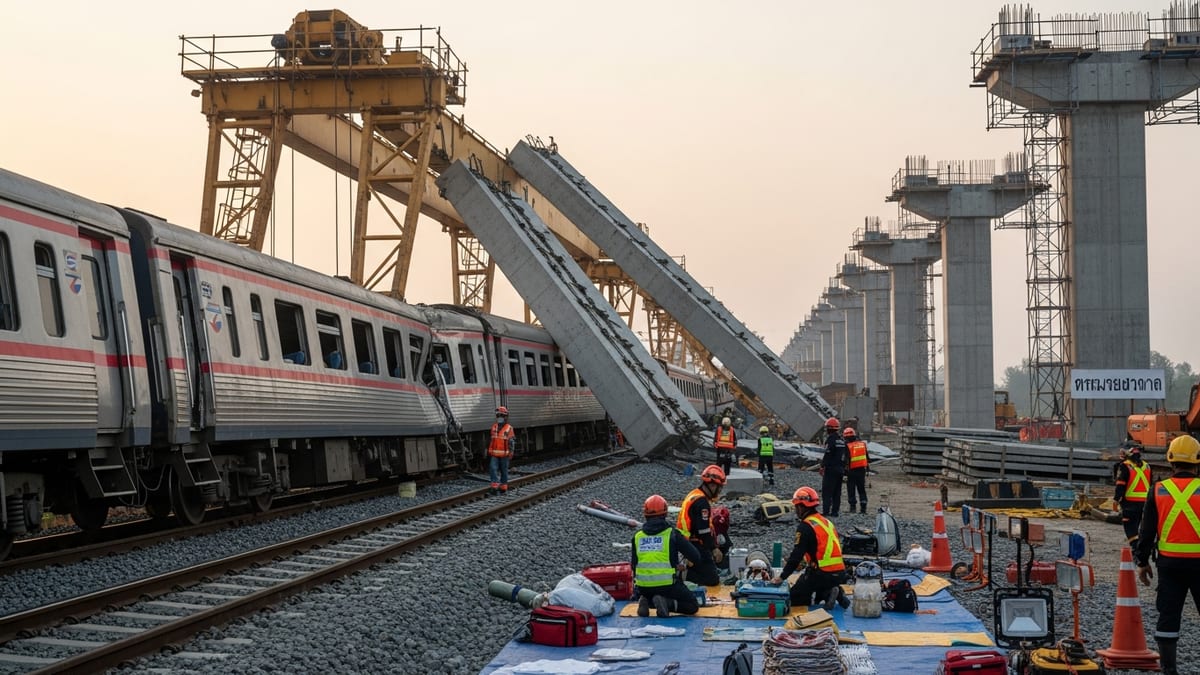
Cars leave the tracks near Priddis Slough
Published coverage indicates the derailment occurred in the early hours of Monday near Priddis Slough, a low-lying wetland just west of Macleod Trail between the communities of Silverado and Chaparral. The location is a well-known stopover for migratory birds on Calgary’s southern edge and sits immediately adjacent to a busy freight route.
Reports describe at least 13 cars of a Canadian Pacific Kansas City freight train leaving the tracks, with several ending up partially or fully submerged in the shallow pond. Video and images shared through local media show a string of derailed cars scattered along the bank and into the water, with tracks twisted and embankment rock displaced.
According to publicly available information, the consist included cars carrying lumber, plywood, propane and argon, as well as other mixed freight. Early accounts suggest that a number of the cars in the water were loaded with construction materials, while pressurized tank cars came to rest primarily on or near the rail bed.
Initial reports from the scene indicate there were no fires and no immediately apparent leaks from the derailed tank cars. Rail personnel and municipal emergency responders converged on the location shortly after the incident to assess the condition of the train, crew and surrounding wetland.
Cargo mix limits acute risk but raises safety questions
Publicly available coverage notes that some of the derailed cars were carrying propane and argon, both classified as dangerous goods under federal regulations. Propane is highly flammable, while argon, an inert gas used in metalworking, can pose an asphyxiation hazard at high concentrations in confined spaces.
In this case, reports indicate that none of the pressurized tank cars were breached, significantly reducing the likelihood of a fire or major hazardous release at the site. The absence of visible vapour plumes or flames in images from the scene supports early indications that containment systems on the cars functioned as designed during the derailment.
Even with limited immediate danger to nearby communities, the incident highlights how frequently dangerous goods move through urban corridors in western Canada. Previous investigations by the Transportation Safety Board of Canada into other derailments have pointed to track conditions, train handling and weather as recurring risk factors across the national network, though the specific cause of this Calgary event remains under review.
For surrounding neighbourhoods, the sight of tank cars resting just metres from a residential roadway and popular driving corridor underscores ongoing public concern about what might happen in a derailment involving more volatile cargoes or closer to homes and commercial areas.
Environmental focus on sensitive wetland habitat
Priddis Slough is regarded locally as an important urban refuge for waterfowl, with marshy shallows that provide resting and nesting space for ducks, geese and other migratory birds. Public information on the area notes that deer, coyotes and foxes also move through the surrounding grasslands and tree stands, taking advantage of one of the last larger wetlands in this rapidly developing corner of the city.
With multiple railcars now sitting in the water, environmental risk assessments are expected to concentrate on potential fuel leaks, disturbed sediment and longer term contamination from lubricants, paints or other residual materials. Even if all tank and hopper cars remain intact, heavy equipment recovery operations can churn up banks, compress vegetation and introduce fine sediments into the water column.
Regional experience from earlier rail incidents in Alberta indicates that containment booms, water sampling and wildlife monitoring are likely elements of the response around the slough. Any visible sheens on the surface, unusual odours or wildlife distress typically trigger more intensive investigation and, if required, targeted cleanup of shoreline areas.
Local conservation advocates have previously pointed to the narrow buffer between the rail line and wetland edge as a point of vulnerability. The visual of railcars resting among cattails and emergent vegetation is likely to prompt renewed debate about whether existing setbacks and protection measures are sufficient for ecologically sensitive zones within city limits.
Cause under investigation as rail operations adjusted
According to regional news reports, the Transportation Safety Board of Canada has deployed investigators to the scene to examine track infrastructure, rolling stock and recorded operating data from the locomotive event recorder. Investigators typically review past maintenance records, recent weather conditions, train speed and the distribution of weight along the train to determine what combination of factors led to the derailment.
Canadian Pacific Kansas City is reported to be managing site access, coordinating with emergency services and organizing specialized crews and heavy machinery to rerail cars that can be moved and dismantle any that are too badly damaged. The complexity of working in saturated ground and shallow water is likely to extend the duration of the cleanup and repair effort.
Rail traffic on the affected line was disrupted in the immediate aftermath of the incident, with freight movements rerouted where possible. For a network that serves as a key conduit for prairie commodities and consumer goods moving to and from the United States and Pacific ports, even short outages can ripple through schedules and logistics chains.
Once the damaged cars are removed and track rebuilt, the line is expected to reopen under temporary speed restrictions while inspections continue. Any safety advisories or recommendations that follow from the investigation could influence operating practices on similar stretches of track that run close to sensitive waterways or residential developments.
Urban growth and rail safety at Calgary’s edge
The derailment comes at a time when Calgary’s southern suburbs are pressing ever closer to long-established rail and industrial corridors. New housing, shopping centres and road expansions have wrapped around transportation infrastructure that predates many of the surrounding communities by decades.
Urban planning discussions in the region have increasingly grappled with how to balance the economic necessity of heavy freight with the expectations of residents living near the tracks. Issues such as train length, speed, noise, whistle bans and emergency access routes have all surfaced in public consultations and council debates in recent years.
Incidents like the Priddis Slough derailment are likely to intensify scrutiny of setback policies, stormwater management and the design of wildlife and drainage crossings under and around rail lines. They may also renew calls for more transparent disclosure of the types and volumes of dangerous goods passing through metropolitan areas on a daily basis.
For travelers and residents alike, the sight of railcars tipped into a wetland on the city’s fringe is a stark reminder of how closely major transportation corridors and sensitive natural spaces coexist in many Canadian cities, and how quickly routine freight movements can turn into complex environmental and infrastructure challenges.